Lili Reinhart has been having a fair bit of fun with her wardrobe for The Love Hypothesis press. In Brazil, the actress paid homage to Kate Hudson’s Andie Anderson from How to Lose a Guy in 10 Days, wearing a ’00s Caché remake of that yellow Carolina Herrera dress. Referencing an extremely pivotal moment from the beloved romcom, the dress is memorable for the scene alone: after a constant push-pull dynamic between the two, it is the first time Andie and Ben realises there’s been something simmering between them all this time.
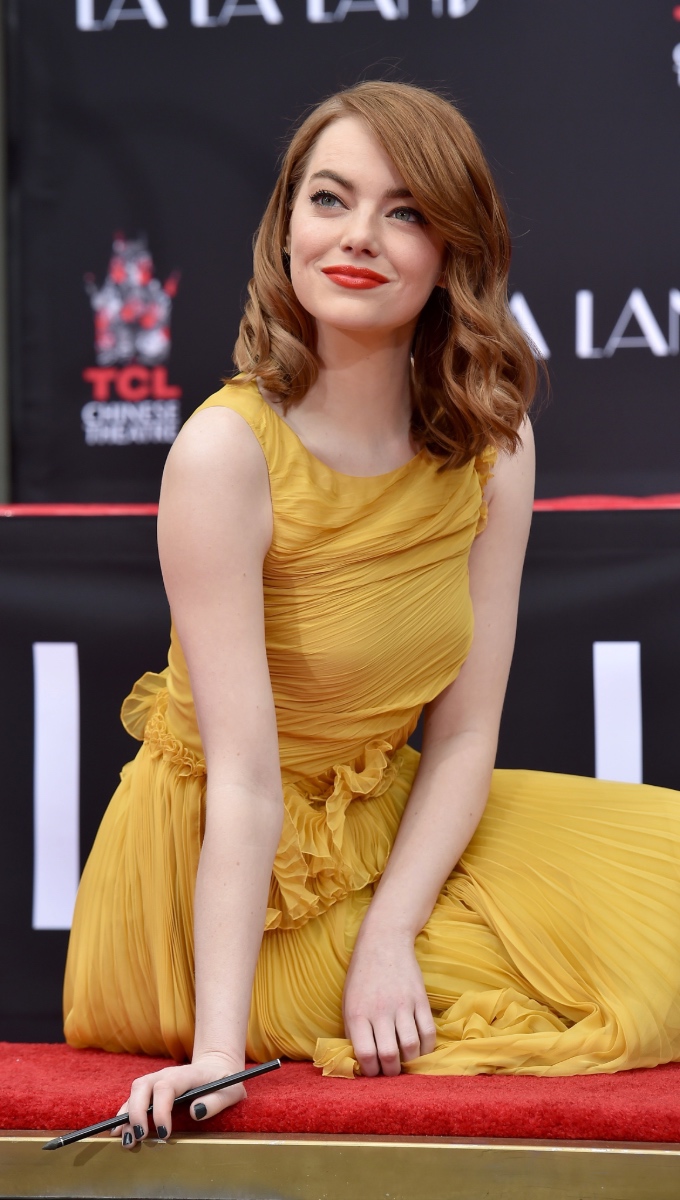
The popularity of the infamous yellow dress is not a surprising one. The sunshine hue has had a perennial relationship with film and television over the years, often a marker of the sparking chemistry between two romance leads. There was Andie, but as far as iconic yellow dresses go, Emma Stone’s cheery dance number as Mia in La La Land is permanently plastered in every Tumblr girl’s moodboard.
View this post on Instagram
Perhaps Andie’s dress walked, so that Mia’s could run. Celebrated through the unforgettable dance number, Mia’s canary-yellow dress flows and swishes against a Los Angeles sunset. While the chemistry between them is electric, Mia’s growing confidence is highlighted through her bright midi. She is energetic, yet remains coordinated and graceful. No longer is she the struggling, closed-off actress.
More recently, Netflix’s Voicemails for Isabelle features Jill and Wes in a montage as they first begin dating, and Jill dons a pastel-yellow mini dress printed with florals. Jill is the spontaneous, cheerful and self-assured sister until Isabelle’s death. Her romance with Wes, is a turning point, signalling Jill’s hope: for a relationship, for healing from her grief, and for a reversion to who she was before her sister’s death. Her relationship with Wes is immediately vulnerable and intimate, but the yellow dress she wears is also reflective of her inner child: calling to mind an innocence that brims with fun femininity.
In daylight, yellow has been scientifically proven as the colour that is most easily visible and attention-catching to the human eye. It is also most likely to trigger a stronger neural response from the brain, as the colour is automatically recognised as brighter and more noticeable compared to its environment.
This fact parallels an even grander notion—that seems to complete the female lead’s character arc. Whilst they are usually accompanied during core romantic scenes happening on screen, look closer and you’ll realise that they often only emerge after the female leads have come into their own, and actively made a decision for themselves. To heal, to let go, to be vulnerable, to grow.
The colour theory speaks for itself; yellow draws us in, and is meant to shine bright. It transcends the romance, or perhaps it’s more accurate to say that the romance is only made all the better because she’s chosen it for herself. Her desire is her own.
In How to Lose a Guy in 10 Days, Andie’s vulnerability shines through. But so does her warmth and charm. She is the epitome of femininity, achieving what viewers can only hope to aspire to. Breathtaking in luminous, radiant silk, she is bright and expressive, inviting both Ben and viewers to celebrate how she has changed.
View this post on Instagram
On screen, yellow has become more than just aesthetic costume design. The colour has always been semiotic in nature, used in film and media to symbolise love, but also the evolution of identity, development of perspectives, and changing emotions. The hue has become synonymous with a female lead’s homecoming, as she embodies an aspirational femininity and steps into her most authentic, expressive and confident self.