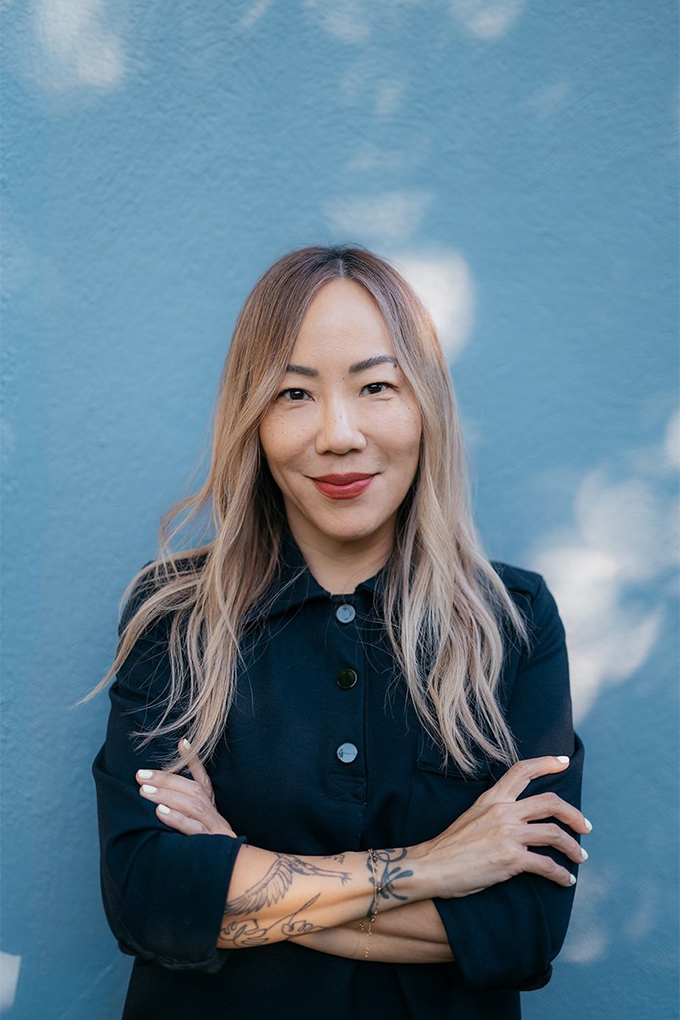
Korean-American filmmaker Sue Kim describes The Last of the Sea Women as the passion project of her life. The first feature from Malala Yousafzai’s new production company, Extracurricular Productions, the film premiered at the Toronto International Film Festival earlier this year, where it won the NETPAC Prize which honours the best film from the Asia-Pacific region. In the documentary, the haenyeo—or the female divers of South Korea’s Jeju Island—take centre stage.
For centuries, the haenyeo have been diving to the ocean floor without oxygen to harvest seafood for their livelihood. Today, this ancient culture is disappearing. As new generations turn to other industries, their numbers are rapidly declining, with most divers now in their elderly years. And with environmental threats looming overhead, the haenyeo‘s way of life is in imminent danger.
“It was on one of my trips to Jeju Island about 10 years ago that my mum and I started speaking with this haenyeo that had just come out of the water. She was 84 years old, and she was telling us all about her life. Behind her, I could see other haenyeo who were still in the water. They all looked like grandmas,” Kim recalls.
“We are not sad. We love doing this work. This is not a tragedy. This is our joy and our strength.”
“I asked her, where are all the younger haenyeo? Because when I last saw them at eight years old, they were a multi-generational group of women. She said, ‘This is it. We are probably the last generation, because there are no more younger women coming up behind us.'”
“I’ve always thought about working on a project related to the haenyeo, but that was the exact moment where it became an urgent mandate. Even if it was not myself, I wanted to make sure someone made a documentary about them, while they were still here, and could still tell their story in their own words.”
True enough, the haenyeo in The Last of the Sea Women are portrayed with moving honesty. They are a group of feisty older women waging a battle against oceanic threats, as much as they are a tight-knit sisterhood supporting each other through vulnerable times. Supported by a younger generation’s efforts to reclaim the historic culture through social media, the film unfolds into an empowering tale of women, both young and old, fighting to protect and pursue that which they love most.
In time with the documentary’s release on Apple TV+, Kim opens up about working alongside the haenyeo, unexpected turns along the way—and what it was like to fulfil a life-long dream.

Were there any aspects of the haenyeo culture that you knew from the very beginning that you wanted to explore and highlight on screen?
In a lot of news pieces and documentaries about the haenyeo, they’re shown to be like sad grandmas that have to keep working in their 80s. When I first met them, that’s something that they talked about a lot. They were very clear, “We are not sad. We love doing this work. This is not a tragedy. This is our joy and our strength”. I wanted to make sure that I portrayed them in that joyful, empowered spirit—and also just showed them as they really are. You’ll see in the film that they are quite feisty and funny and loving. They’re fighting half the time, but they’re also taking care of each other and constantly sharing their catch. They function as a sisterhood completely. I wanted to capture that intimate, familial aspect of their lives.
Then there’s the conflict in the film that I wanted to show, but that took an unexpected turn. Initially, I thought that it was just younger women not being interested in taking on this tradition, which is partially true, but as you’ll see in the film, we did end up finding younger haenyeo. The real existential threat to this community is actually these devastating environmental factors that are leading to the destruction of the marine ecosystem altogether. So I wanted to show the power and the beauty of this community, but I also wanted people to understand how vulnerable and fragile they are because of what we’re doing to our oceans and our planet.
Tell us a bit about the production process. You mentioned that things took an unexpected turn?
This documentary took almost two years of filming, and so we got to build a great rapport with the haenyeo. But there were so many things that happened in their lives that we couldn’t have anticipated—and that ended up being really vital to the telling of their story.
One of our haenyeo in the documentary is Kang Joo-hwa. She’s one of the best haenyeo on the island, but she has an accident, and ends up not being able to dive for a year. She’s completely helpless in that situation, because the haenyeo occupation is so dangerous that they can’t get health insurance. There are no benefits for them if they can’t physically do that job anymore. It was such an unfortunate accident for her, but it really brought to the forefront how unprotected they are as a community. I’m glad that we were able to show that, so that maybe the government of Jeju or the Korean government can see that and start to put in some infrastructure to support them more.
Then there’s the situation with the Fukushima treated radioactive water being released into the ocean. We knew it was going to happen, but we didn’t know when, and I didn’t know how the haenyeo would react to it. So all of the things that followed, from the protests to Jang Soon-duk being invited to speak at the UN, happened so organically in a way that we could not have foreseen. But it was such a meaningful storyline to see how much one of our haenyeo would fight to protect the ocean.

What was it like to film with the haenyeo? After doing so much research on them, was there anything that still surprised you after getting to know them in real life?
In Korea, a very typical way to show your love is to try and feed someone or to ask them if they’ve eaten. Whenever we were filming with them, they were constantly breaking the fourth wall and walking over to our cinematographers to try and feed them the sea urchin that they had just gathered from the ocean that morning. They were so kind, and always worried that we might be hungry after we’ve been filming for a while. They were just always looking out for us, and caring for us almost like aunties or grandmothers. I was a little bit surprised. I thought they’d be more like tough love sort of aunties, but they were caring and nurturing aunties. It was pretty special. It felt like a family.
You also worked with two of the younger haenyeo divers. What was that like?
There’s not that many younger haenyeo, so discovering So-hee and Jeong-min was such a treasure. They’re so delightful and funny. They love shopping, they put makeup on before all of their dives, and they just have these bubbly and fun personalities. I found them so inspiring, because they really love the haenyeo culture, and it is not easy work. Most people would not want to dive seven hours a day. They’d rather just work behind a computer and send emails, but that’s one thing both of them didn’t want to do. And Jeong-min specifically wanted a job where she could have flexibility as a working mother. And so they found this ancient culture, and were drawn to it for very modern reasons.
You also worked alongside producer Malala Yousafzai for this film. What was it like working with her?
It was such a gift to partner with Malala and her company, Extracurricular Productions. She just brings so much integrity to the project. Her working on this project felt like such a perfect fit because she’s also a voice for intergenerational relationships amongst women, and that’s really what this film is about. She’s also just been a wonderful producer. She’s very respectful and very empowering to me as a creative, but she also assists and helps out in any way that she can. I can’t overstate it: I really don’t think our film would exist if it weren’t for Malala and her team.

Have the haenyeo seen the documentary? How did they react?
They were all very emotional. They were definitely laughing at themselves during the little fights and the jabs that they gave each other, but they were also emotional and teary during the parts that were harder to watch like the Fukushima radioactive water release. I think they all have a specific memory of the day that they found out that that wastewater release was starting. They’ve also expressed so much surprise and gratitude that they were being showcased and recognised in this way in their later years. I don’t think they ever saw themselves as potential heroic subjects in a documentary. Seeing them recognise how epic they are because they saw themselves portrayed that way in the film is the most meaningful part for me.
You’ve spoken about how you’ve been fascinated by the haenyeo since you were young, and this project is a long time in the making. Was it everything you expected and envisioned it to be?
Having the opportunity to tell the story of the haenyeo with such incredible partners has been a bit of a dream. I almost can’t believe it worked out the way it did. To be honest, I was worried about coming in as an American, telling a distinctly Korean story. Even though I’m Korean-American and my parents are Korean immigrants, and I grew up with a very hybrid Korean and American culture, I was very worried that the lens I was portraying the story through would be Western. I wanted it to feel super authentic to Korean culture. Luckily, I found the most incredible Korean production crew and team and we were all on the same page. The entire making of the film had such an alchemy to it. The chemistry between myself and the film crew I was working with, and then with the haenyeo together and all of our subjects, created this deeply emotional and inspiring energy. Every single person contributed a sort of special magic, and I feel so privileged and honoured to have experienced it. That’s not something I could have imagined when I thought about making this film. That’s probably my biggest takeaway to this day.
The Last of the Sea Women is streaming on Apple TV+ now.