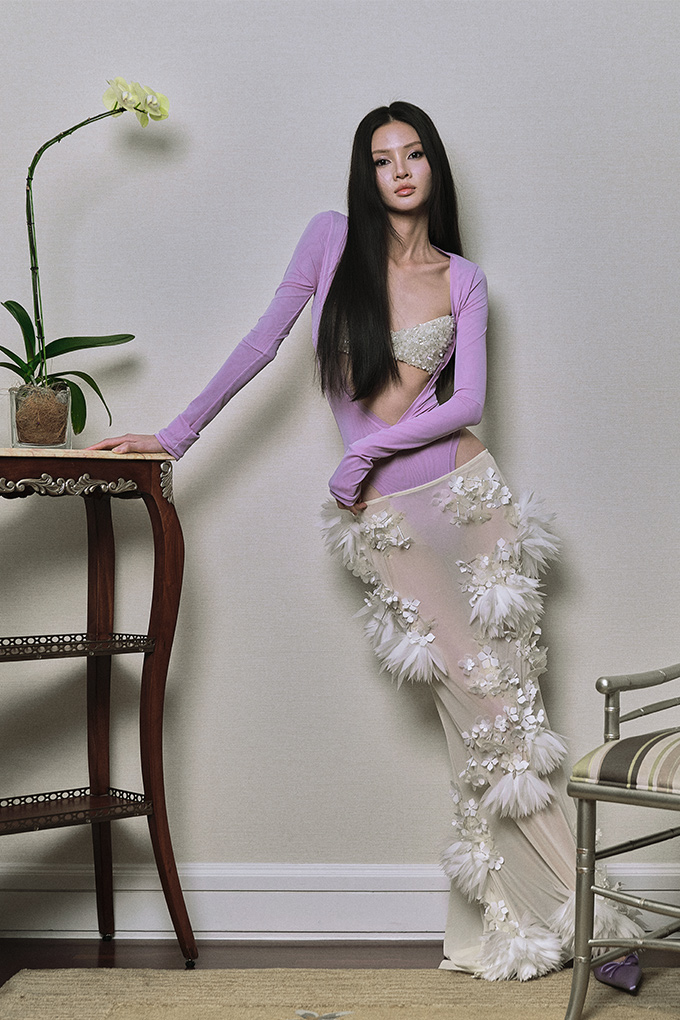
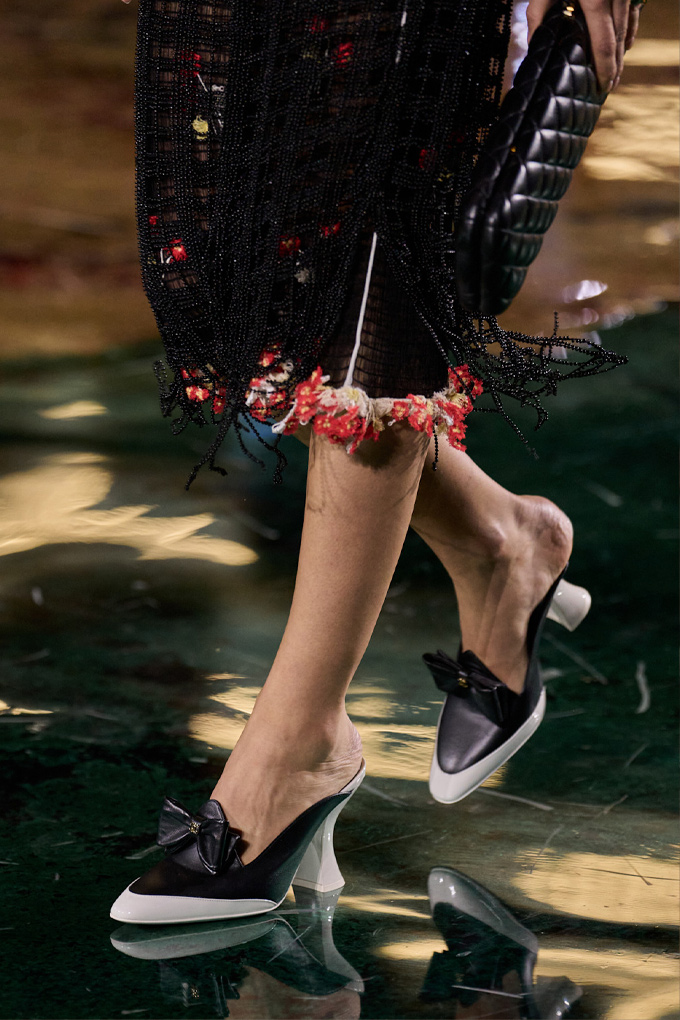
Indonesia’s sprawling archipelago is home to rich heritage and skilled artisans, reflected in the work of Lakon Indonesia and the annual JF3 Fashion Festival. Leading this movement are Mr. Soegianto Nagaria as the Chairman of JF3 and Mrs. Thresia Mareta, founder of Lakon Indonesia and advisor for JF3. Held from July 24 to 27 at Summarecon Mall Kelapa Gading and July 30 to August 2 at Summarecon Mall Serpong, their vision embraces the richness of their culture by building a comprehensive ecosystem that preserves and uplifts their country’s craft, empowers local communities, and hence contributes to the growth of Southeast Asia’s creative landscape. The festival’s programme spans runway shows, retail exhibitions such as Niwasana by Fashion Village, streetwear programmes like Code Street by DRP Jakarta, and educational initiatives including JF3 Talk, with its recent panel with Vogue Singapore and VMAN SEA on 30 July. It also champions talent regeneration through the PINTU Incubator, JF3 Model Search, and the newly introduced Future Fashion Award.

“Lakon Indonesia products are primarily handcrafted traditional fabrics,” Mareta shares about her brand. “The majority is authentically Indonesian, made by artisans across our many islands, each full of heritage.” Lakon’s mission clearly goes beyond fabric; it’s innately human. The founder explains, “We’re building an ecosystem where artisans can earn a living from their craft and have stable jobs. This also helps regenerate the younger generation’s interest in continuing these traditions.”
This ecosystem addresses a critical challenge: preserving storied craft when many young artisans lack the resources and support to continue and grow their work. Many hesitate to follow their parents’ craft due to livelihood concerns. “With schools, retail spaces—like our Kelapa Gading store hosting over 200 local brands—artisans now find pride and a future in their heritage,” she adds.
JF3 began as a Jakarta-focused fashion and cultural event, initially attracting crowds through food before integrating fashion to support the industry and local passion. Nagaria recalls, “We first brought crowds through food, but we also wanted to introduce fashion—supporting the industry and local passion.” Over its 21-year journey, JF3 transformed into a fixture on the national agenda. “After 10 years, we connected with international networks, and in the last five years, the focus sharpened on ecosystem support and craft preservation.”
“After 10 years, we connected with international networks, and in the last five years, the focus sharpened on ecosystem support and craft preservation.”
A major milestone for JF3 and Lakon Indonesia has been their collaboration with the French Embassy, connecting Indonesia to one of the world’s fashion capitals. Marking 75 years of diplomatic ties this year, this partnership brings fresh momentum and official recognition. According to Nagaria, “Each batch of designers supports the previous one, creating a ripple effect that will elevate Indonesian fashion globally.”
Despite this global connection, the vision remains rooted in the region. They emphasise that while the French partnership is important, strengthening Asia is essential—the region they belong to—with growing collaborations across Asia, particularly Korea. One key initiative is the PINTU Incubator, a six-month fashion incubation program created in partnership with Lakon Indonesia and the French Embassy, which supports creative talents with expert mentors from both Indonesia and France.
Beyond its collaborations with France and Korea, JF3 also works closely with the ASEAN region—featuring designers from Singapore, the Philippines, and Vietnam in 2024, and from Thailand, Vietnam, and Laos in 2025. Following the festival in Jakarta, JF3 expanded its international presence through a partnership with Japan at the Osaka World Expo, Kansai. Lakon Indonesia represented the nation alongside Hong Kong brand Comfiknit, presenting the Soroyuru collection on 8 August at the Jellyfish Pavilion.
Navigating this evolving landscape requires professionalism and discipline across all creative fields. Strict standards apply not only to designers but also to models and journalists, raising the ecosystem’s overall quality and credibility. JF3 actively nurtures new talent through initiatives like the JF3 Model Search and a journalism competition, ensuring Indonesia’s fashion industry grows on a solid foundation.

Persistence runs through every thread of this journey. Nagaria reflects, “Planning decades ahead, adapting to changing trends, and collaborating with influencers keeps the spirit alive. It’s not easy, but commitment brings progress.” As for Mareta, the focus remains clear: “We need to focus our efforts, direct them with purpose. This is how culture lives and grows.”
All in all? Seeing their successful growth over the past two decades, there is no doubt that JF3 and Lakon Indonesia are crafting a future that will inspire and uplift generations to come—one rooted in the heart of Indonesian craft and driven by breakthrough thinking.