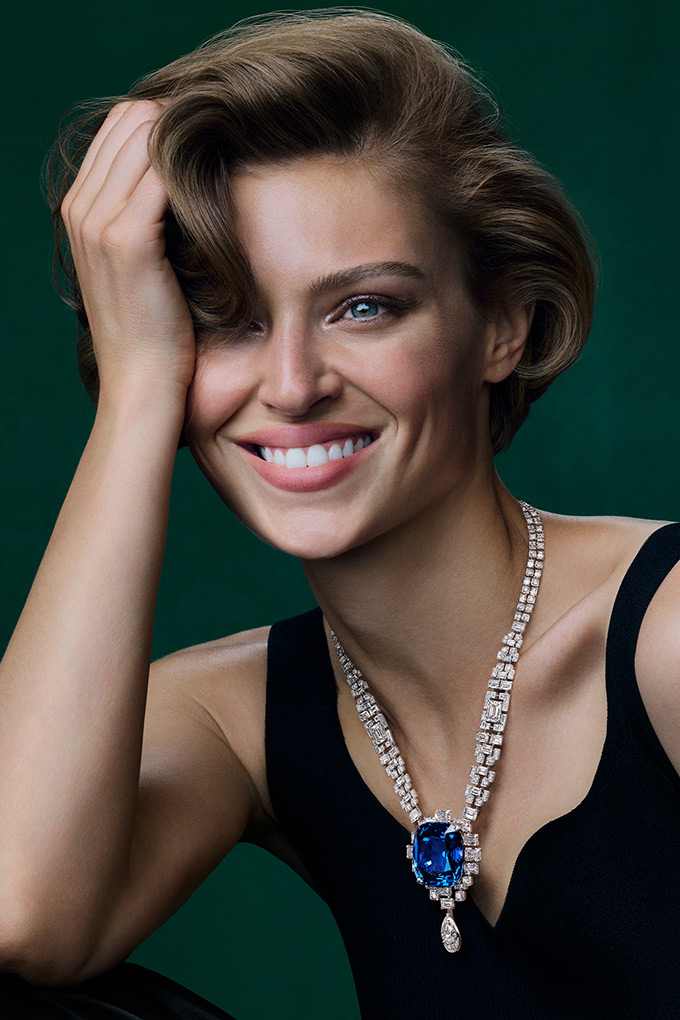
Say the word ‘sapphire’ and a picture of pure, celestial blue comes to mind. Among the precious gems of the world, only a few have such powerful holds on ideals of colour: the fiery red of rubies, the verdant green of emeralds, and, of course, the heavenly blue of sapphires—the birthstone of September.
This gemstone has been cherished for millennia. On the adornments of ancient royalty, it was thought to have protective powers of warding harm and envy. (Useful for those in high places!) In the hands of the literary and imaginative, sapphires—both the stones itself and its blues—represented the heavens and the seas, the majesty of the world around us embodied in these precious gems.

A connection to royalty comes up often with sapphires. There are sapphire jewels that date as far back as the Roman empire and believed to have been worn by emperors, but we need not look that far for an iconic example. One of the most famous royal jewels of our times, in fact, comes from 1981: the Garrard sapphire and diamond engagement ring of Princess Diana.
The Princess of Wales’s sapphire ring is—even as celebrities continue to one-up each other with massive-carat diamond solitaires—so influential because it is both simple and decadent. British firm Garrard and its director William Summers were the Crown Jeweller at the time, and the choice of this ring represented a moment of modernity for highly visible young royals in the eyes of the public.

Princess Diana’s engagement ring was designed with a halo of diamonds, and set in its centre with a 12-carat royal blue Ceylon sapphire. A stone of such quality might sit in the realm of royalty and high society, but the fact was that Princess Diana selected its design from the Garrard catalogues. It set off a trend for coloured gemstones and diamond halos, sure, but the more tantalising idea was that you too could walk into a jeweller and order something similar. Today, the Garrard brand offers a collection named 1735 that is inspired by that very ring’s design; and its beauty and modernity have proven lasting: in 2010, Prince William proposed to Kate Middleton with the same ring.
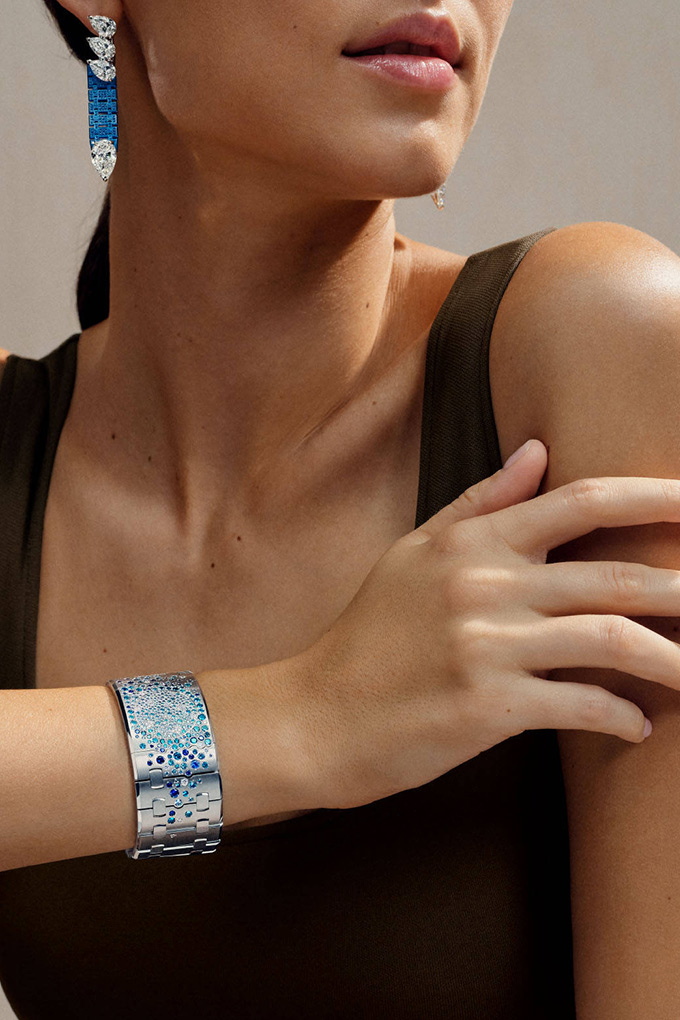
From the light shades of cloudless skies to the darks of stormy seas, sapphires are historically associated with a range of blues. This classical association is where we get its name from: the ancient Greek sappheiros, which refers simply to a blue stone. In the gem trade, blue sapphires are marketed with several unique names to denote the character of their colour. Royal blue sapphires are perhaps the most traditional picture of this gemstone, with a rich, vivid, and slightly dark tone. Think of the royal blue’s archetype, perhaps, as akin to the purity of colour Yves Klein’s blue.
View this post on Instagram
Then there is cornflower blue, which is described as having a more medium hue and, importantly, a velvety quality. A cornflower blue sapphire may be saturated in colour, but there is a softness to its appearance like the petals of its namesake. The reason for this is the presence of microscopic rutile inclusions that create a soft diffused look when light interacts with the gemstone.
Cornflower blue colour intersects with one more differentiator of the world’s finest sapphires. These gems were sourced mostly from Kashmir, which produced, to put it simply, the very best sapphires the world has ever seen. The legendary Kashmir sapphire mines were unearthed around 1881, and the discovery of such beautiful gems led to a rush of mining from around 1882. Never mind that its precarious, remote and high-altitude location in the Himalayas was hard to reach. By 1887—in just five years!—the famous mines were depleted and the number of true Kashmir sapphires in the world made finite.

That is why in high jewellery collections or at auctions the term ‘Kashmir origin’ can send the price of a sapphire jewel soaring. Gems with this provenance are something of a holy grail for connoisseurs and collectors, and its combination of extreme rarity and beauty is potent. Often, Kashmir sapphires have long been set into antique or vintage jewels, and many of the most remarkable stones sit in brand archives, museum collections, or hidden from view in private collections.
Cartier, for instance, has one of the world’s most spectacular stones in the Panthère brooch of Wallis Simpson, the Duchess of Windsor. The jewel, which depicts a big cat baring its fangs and resting on a sapphire of the world, is part of the Parisian house’s historical collection and goes on view regularly at exhibitions around the world.

Some proof of the Kashmir name’s power. In 2025, the auction house Phillips mounted a sale of jewels from the Vanderbilt family collection. A star lot was an early 20th century Tiffany & Co. brooch named The Vanderbilt Sapphire, set with 42.68-carat sugarloaf Kashmir sapphire. It more than doubled Phillips’ high estimate of CHF1,200,000 and sold, in the end, for 2,876,000 Swiss Francs.
View this post on Instagram
Because these legendary gems are so very rare, they have also come to represent, for younger brands in the high jewellery world, reaching a level of sophistication. If you are without, say, a century or more’s heritage in making jewellery, offering Kashmir sapphires in your collections presents a picture of seriousness.
Louis Vuitton, for instance, has made very quick progress since introducing high jewellery in 2008. The collector value of Vuitton’s jewellery grew from 2018 after former creative director Francesca Amfitheatrof joined the house. She brought with her a bold sense of design and an almost ravenous appetite for rare, special gemstones. In 2024, Louis Vuitton revealed a bespoke creation (and the house’s single most valuable order at the time): the Aster necklace, set with 23 Kashmir sapphires weighing over 125 carats in total—oh, and with some custom-cut Vuitton diamonds too.

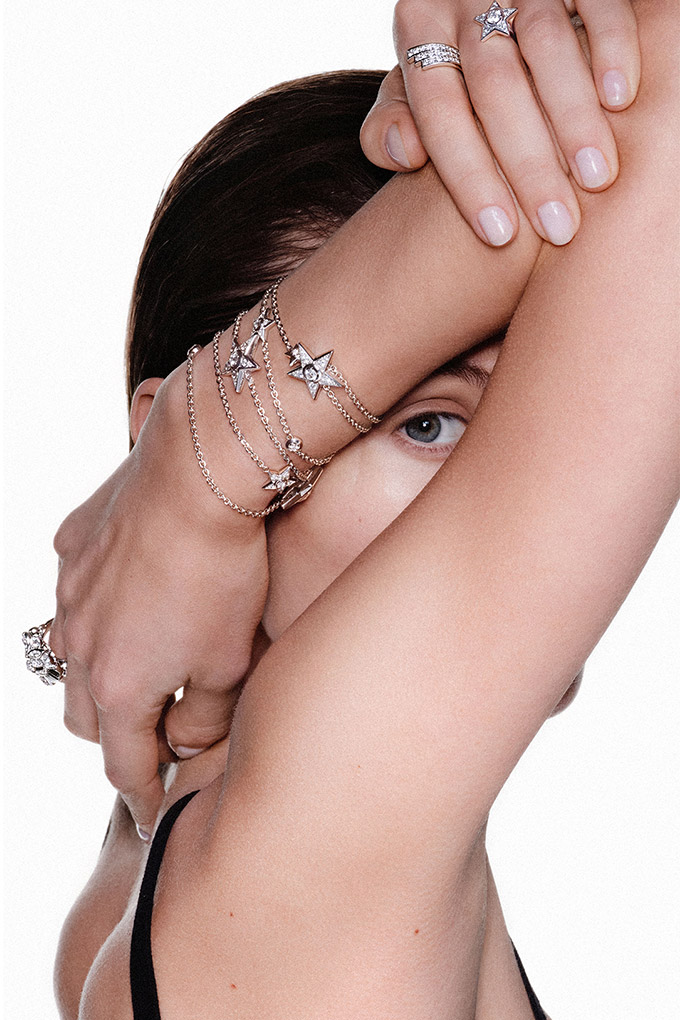
And when Chanel revealed its Haute Joaillerie Sport collection in 2024, the prize pieces were those set with five Kashmir sapphires that took the house five years to source. A ten-carat stone went into the collection’s masterwork necklace, two cushion-cuts found their place on cocktail rings, and a pair were set on earrings. To gem connoisseurs, pieces with such esteemed origin and provenance can mark a ‘made it’ moment for a jeweller.
Sapphires, of course, can be found in many more places than just one long-depleted mine. The most prestigious after Kashmir are Sri Lanka and Myanmar. Sri Lanka is historically famous as a source of fine sapphires, for well over two millennia, and the riches of its lands is what gave it the nickname of the ‘Island of Gems’. Sri Lanka produces a wide range of sapphires, from the kinds of stones that adorn more everyday, accessible jewellery to investment-grade pieces in the high end.
Myanmar’s sapphires are fewer, though they continue to hold high prestige with over a thousand years of history as a source of fine stones. The prized rubies of Myanmar, in fact, share a mineral identity with sapphires: both are varieties of corundum. Further abroad, Madagascar and Tanzania have emerged as more recent and plentiful sources of sapphires, making up large portions of the natural sapphire supply today.

When it comes to highly collectible sapphires, there are two special kinds worth knowing about. The first is the star sapphire, which flashes in the light with a star ray effect. This phenomenon, known as asterism, is caused by needle-like inclusions that interact with light and the hexagonal crystal structure of the gem. Gem cutters identify rough stones with this quality, and polish them into round cabochon shapes to allow the stars to show. The best-cut star sapphires have strong, visible asterism that is well-positioned in the centre of the gem.

The second special kind is the Padparadscha. Sapphires, in fact, come in many more colours than simply blue. Pink, purple, yellow, orange and green, and in a spectrum of hues, are all known as fancy sapphires. The rarest among them is the orange-pink Padparadscha, which derives its name from the Sinhalese for lotus blossom. Sapphires with this particular colour, a little bit like salmon, come primarily from Sri Lanka, and their rarity and beauty has catapulted them to the upper echelons of collector’s gemstones today.

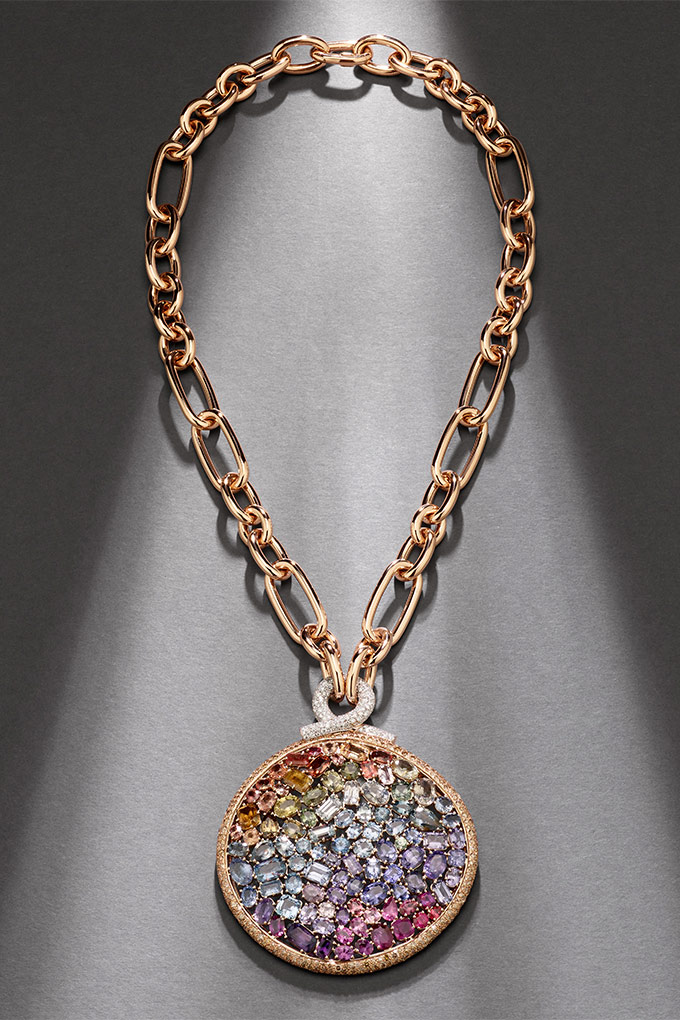
Because sapphires come in such a wide range of colours, this gemstone is often used in rainbow or gradient designs where jewellery designers get to paint with tint and hue. One of the more impressive pieces unveiled this year was Pomellato’s Mandala Chromia necklace, from the Milanese jeweller’s Stile Libero high jewellery collection. 99 fancy colour sapphires of different cuts are assembled to form a spontaneous-looking chromatic wash. Each gemstone is impressive on its own, but the real triumph, creative director Vincenzo Castaldo told me, was how the design incorporated “a range of colours that nature rarely brings together in a single creation”.
Though as varied as the chromatic world of sapphires may be, it is still blue that is the most historic, timeless, and representative of this gemstone’s sparkling, noble allure. The great Romantic poet Percy Bysshe Shelley invoked its beauty well in his work Hellas of 1822: “The fairest of those wandering isles that gem / The sapphire space of interstellar air”.

1 / 18
Triomphe de Chaumet ring in platinum with diamonds and a sapphire, $6,290
Available from Chaumet.

2 / 18
Persée Iris necklace in 9-carat yellow gold with a sapphire, from €700
Available from Persée.

3 / 18
Damiani Mimosa necklace in white gold with diamonds and a sapphire, $11,280
Available from Damiani.

4 / 18
Tiffany & Co. Sixteen Stone ring in platinum with sapphires and diamonds, $22,000
Available from Tiffany & Co.


6 / 18
Elyzian Serpent bypass ring in 14-carat gold with sapphires and diamonds, US$1,997
Available from Elyzian.

7 / 18
Garrard 1735 ring in platinum with a sapphire and diamonds, from US$15,000
Available from Garrard.

8 / 18
Prounis Selene earrings in 22-carat gold with purple star sapphires and South Sea pearls, $17,050
Available from Prounis.

9 / 18
Van Cleef & Arpels Perlée Couleurs ring in yellow gold with sapphires, $14,500
Available from Van Cleef & Arpels.

10 / 18
Kavant & Sharart Mingle Cascading Ombre earrings in yellow gold with blue sapphires, US$12,320
Available from Kavant & Sharart.

11 / 18
Martha Calvo Protection choker in gold-plated brass with a sapphire, $285
Available from Martha Calvo.

12 / 18
Buccellati Macri Capri Eternelle ring in yellow and white gold with sapphires, $10,000
Available from Buccellati.

13 / 18
Anita Ko Cosmo Orion bangle in yellow gold with sapphires, $26,480
Available from Anita Ko.

14 / 18
State Property Edessa Mist Minor Drop earrings in yellow gold with sapphires, $5,500
Available from State Property.

15 / 18
Marina B Trisolina Dolce choker in yellow gold with sapphires, US$18,500
Available from Marina B.

16 / 18
Panthère de Cartier bracelet in white gold with sapphires, emeralds and diamonds, $219,000
Available from Cartier.

17 / 18
Aurate tennis bracelet in vermeil with lab-grown sapphires, from $875
Available from Aurate.

18 / 18
Bee de Chaumet earrings in white gold with sapphires and diamonds, $19,600
Available from Chaumet.