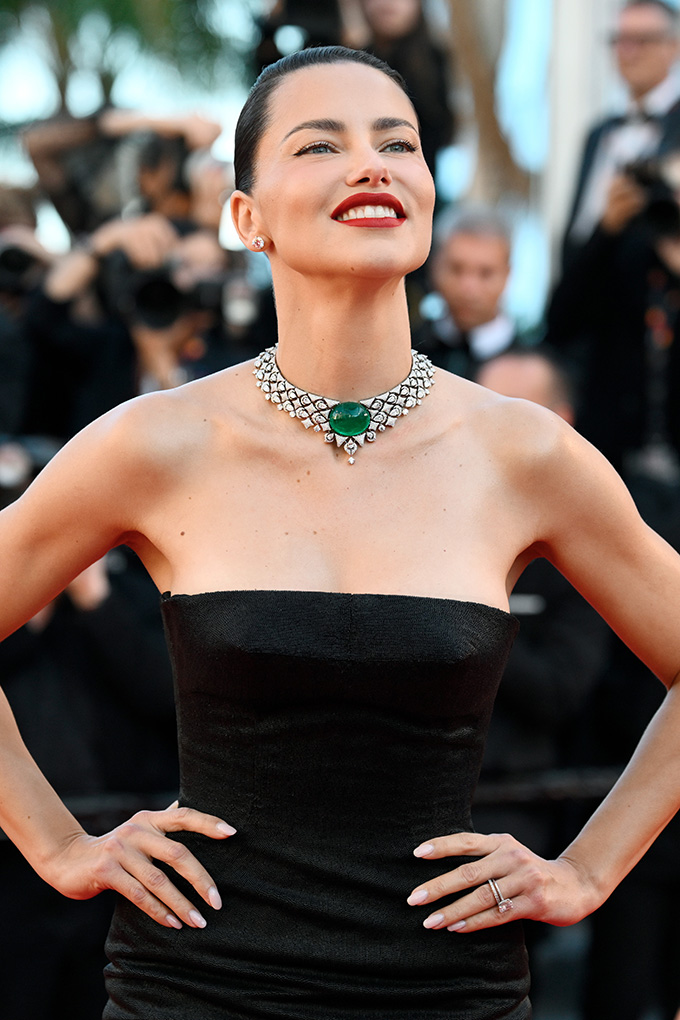
Perhaps you’ve heard of the mythical city of El Dorado? A fabled city of gold in South America that sent Spanish conquistadors scrambling in search of treasure in the 1500s. The pre-Columbian indigenous peoples had fabulous works of gold, sure, but a city made of gold was and is most certainly fiction. What the Spanish found, though, might have been even better: emeralds, the precious gem that’s the very quintessence of the colour green.
Emeralds had been unearthed, cherished and turned into jewellery as long ago as in ancient Egypt, but it was not until the conquistadors wrested the gemstones from the Colombian peoples that a sizeable volume of fine emeralds truly spread to the rest of the world. Even today, the world’s bulk of the gemstone—and still the most esteemed provenance—comes from Colombia.

As historic as this gem is, its appeal has never waned, and in fact some of the oldest ways of using emeralds as carved gems or as beads remain popular today. What we’re seeing in a lot of modern high jewellery collections, for instance, is a favour for the round cabochon. Rather than facetting and cutting the gem, some of the loveliest designs of our time use emeralds polished to a round, domed shape—a silhouette that really lets both colour and size shine.

We’re seeing this trend for rounded cabochon emeralds in creations by Van Cleef & Arpels. One of the masterpiece necklaces from its Treasure Island collection of 2025, the Palmeraie Merveilleuse pictured above, was set with a 47.93-carat emerald cabochon. In a new high jewellery campaign by Graff this year, there is a demi-parure ring and necklace combination set with a 9-carat sugarloaf and 10-carat pear-shape cabochon emeralds.


Investment-grade gemstones are nothing new to high jewellery, of course, but there are signs we’re seeing a renewed attention to remarkable gems in the collections. Just this month, Cartier unveiled a new high jewellery line in Saint-Tropez called Le Choeur des Pierres, or The Choir of Stones, that is entirely about special, one-of-a-kind gemstones. One of the highlights the Parisian maison showed was the Olorra necklace, dotted with five Colombian emeralds on a lapis, turquoise and diamond design.

Large gemstones are always impressive, but doubly so for ones as precious as emeralds. Gem-grade emeralds are said to be about 20 times rarer than diamonds, and the combination of its scarcity and chromatic beauty gives it a different nature of appreciation. Emeralds are inevitably and almost always included, but that is a fact of its nature that is embraced in jewellery—the inclusions in an emerald are called a jardin, or garden, akin to marks of individuality.
Minerally, the emerald is a variety of beryl, similar to blue aquamarines, golden heliodors, and pink morganites. What gives the emerald its distinct green colour are trace amounts of chromium and vanadium, which are introduced to the mineral almost by geological happenstance when they form in the Earth.

The name of the gem comes likely to us from the Ancient Greek word ‘smaragdos’, which roughly translates to ‘green gem’. It passed into the Latin smaragdus, then Mediaeval Latin’s esmeraldus, the French emeraude, and eventually ‘emerald’ in English. What’s notable is that ’emerald’ has been since antiquity a catch-all term for a classical green gem. We describe all manner of things of a verdant hue even today as emerald in colour, and though there are gems like peridots, tsavorites, tourmalines and more that are green—it is the emerald that is the archetype.

Its influence and hold in jewellery extends even into the conceptual and romantic picture of the craft. The emerald cut, for instance, was popularised and named after the gem even as it’s been applied to other gemstones like diamonds, sapphires, rubies and more. The eight-sided silhouette of Place Vendôme, the world’s heart of high jewellery, is doubly romantic because it echoes the emerald’s shape. Jewellers like Boucheron and Harry Winston, which do not work exclusively with emeralds, nonetheless invoke the gem with its shape in their logo; while Graff and Boucheron, too, use the colour of emeralds in their boutiques and advertising.


Of course, the green of emeralds is no monolithic thing. Like all coloured stones, each gem is individual and the differences speak to a range of tastes. There are, broadly, two qualities to keep in mind when considering an emerald jewel. The first is the intensity of colour, whether you prefer a deep, forest-like green, or lighter hues that are more reminiscent of spring leaves.
The second is a certain luminosity, best observed in person and in daylight. The chromium and vanadium traces that colour emeralds can absorb UV light and become ‘excited’, emitting a quite literal glow. It’s not dramatically obvious, but enough in fine specimens to catch the eye and charm it.
View this post on Instagram
Fine emeralds today come from numerous places, but three main sources stand out: Colombia, Zambia and Brazil. Colombian emeralds are historically the most cherished because they combine intense colour with the most ideal proportions of chromium and vanadium for that radiant quality. Zambian emeralds tend to have intense colour, and a clearer look to the eye. Brazilian emeralds tend to be lighter in colour, with a clearer, less included look. Regardless, these discrete qualities vary based on the individual stones and so provenance should not be confused for inherent quality.
As far as they influence jewellery design and how it looks when worn, colour is perhaps the most important quality. Dark green emeralds have a worldly, mysterious look to them that suits maturity and designs that emphasise or put the focus on centre stones. Lighter emeralds have a more youthful appearance to them, and their levity makes them easier to wear in daytime jewels. These also play well with other coloured gemstones—dégradé gradients of green with tsavorites perhaps, or in combination with the reds and blues of rubies and sapphires.

Before it became such a symbol of luxury and jewellery artistry though, emeralds were believed to soothe the eyes. Roman philosopher Pliny the Elder wrote that these were the only gems to “delight the eye without fatiguing it”, and even that when one’s vision was wearied it “gained renewed strength by viewing an emerald.” Tantalising, and not so far fetched as it turns out—green is the colour we process with the least strain, and precisely why opticians recommend gazing at trees at a distance to rest the eyes.
That sense of vitality and how the green of emeralds mirrors the leaves of plants make it no surprise that it is the classical birthstone of the month of May. Famed gemologist George Frederick Kunz wrote in his 1913 book The Curious Lore of Precious Stones that “For spring, no precious stone is more appropriate than the emerald. Its beautiful colour is that of Nature, for Nature clothes herself with green when she awakens from her long rest of winter.”

1 / 12
Van Cleef & Arpels Perlée Couleurs ring in yellow gold with emeralds, $12,700

2 / 12
Anita Ko Lola ear cuff in yellow gold with emeralds, and round and baguette diamonds, $6,370

3 / 12
State Property Edessa eternity ring in yellow gold with emeralds, $4,550

4 / 12
Fred Force 10 large model bracelet in yellow gold with emeralds on multi-chain bracelet, price upon request

5 / 12
Bowen NYC Circle & Dot necklace in yellow gold with emeralds and a diamond, price upon request

6 / 12
Buccellati Macri Positano Eternelle ring in yellow and white gold with emeralds, $8,100

7 / 12
Greg Yüna necklace in 14-carat yellow gold with emeralds, $8,575

8 / 12
Patcharavipa Sugar Green earrings in Siam gold with Zambian sugarloaf emeralds, £9,920

9 / 12
Bangelle Flat Pave cuff in yellow gold with emeralds, US$8,610

10 / 12
Van Cleef & Arpels Frivole bracelet mini model in yellow gold with an emerald, $3,500

11 / 12
Zahn-Z Beluga 02 ring in 14-carat yellow gold with an emerald, $13,900

12 / 12