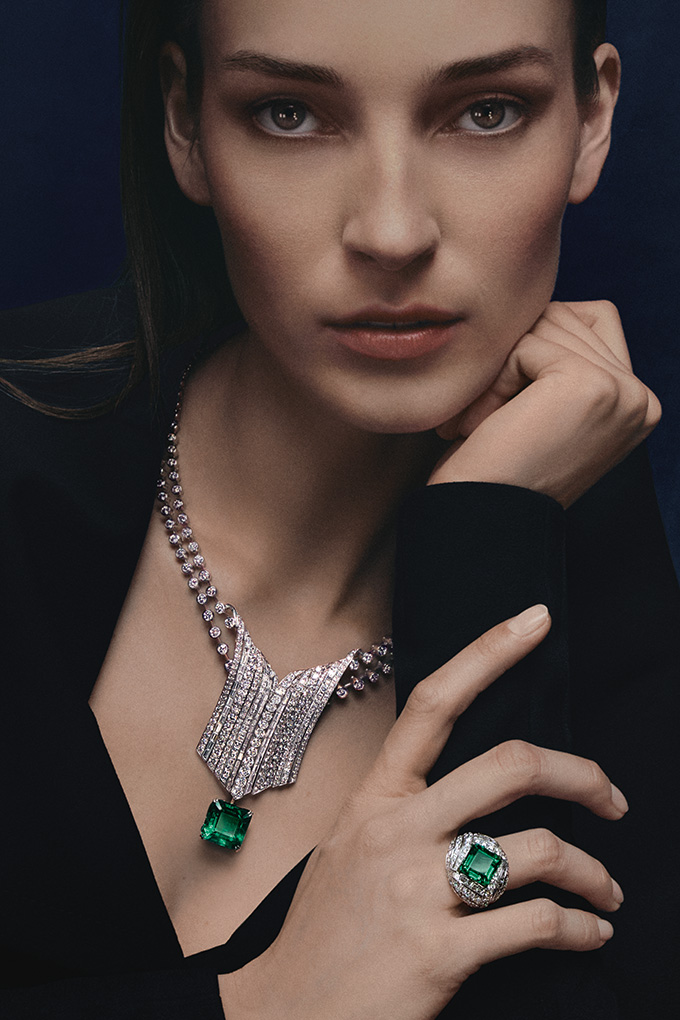
At the Golden Globes this year, a true standout jewel on the red carpet could be seen on Zendaya. Yes, she may have stolen headlines for a newly debuted Jessica McCormack engagement ring, but what she had on her neck was equally spellbinding. A high jewellery creation by Bvlgari, the necklace, pictured above on the actress, featured about 48 carats of diamonds. But even those were secondary to the radiant, lagoon-like, blue-green gemstone at its centre: an oval 31-carat Paraíba tourmaline.
In-the-know connoisseurs of coloured gemstones will have appreciated the moment, when one of the gem world’s in-the-know treasures got a big moment of visibility. Trends in jewellery, after all, are often guided by the styles and details seen on celebrities.

But for the uninitiated, here’s the lowdown. What we have in Paraíba tourmalines is in fact one of the rarest, most enchantingly beautiful gemstones on the planet at the moment. Rarer than diamonds, in fact, or even the big three stones of emeralds, sapphires and rubies.
A short history of Paraíba tourmalines
Tourmalines have been around for a long time, and for the most part they have been classified as semi-precious stones. This family of gemstones can come in a veritable rainbow of colours: blacks, browns, yellows, blues, greens, reds, pinks and even rare bicolour ‘watermelon’ tourmalines with red and green.

But none of these varieties compare remotely— in price, for one—to the electric, neon blue-green of a Paraíba tourmaline, the rarest and most precious variety of this gemstone.
Paraíba tourmalines were first discovered in 1989 in the Paraíba state of Brazil, from whence it got its name. For over a decade, just a handful of mines in Paraíba produced the gemstone. It wasn’t until the 2000s that alternative sources in Mozambique and Nigeria were discovered—and today, these are the only known locations in the world where the gemstone can be unearthed. It is said that the original mines in Brazil have been depleted—which makes gem-quality stones all the rarer.

An electrifying blue
This gemstone is beautiful in a way that few others are. First, its colour: the most classical type of Paraíba tourmalines bear a blue-green hue. Somewhere beguilingly between the shades of cyan, turquoise and aquamarine, a Paraíba’s chromatic effect is sometimes described as being like a lagoon. The second quality, and which is best appreciated in person, is an electric, neon tinge to its colour. It’s different from the fire of diamonds. A good Paraíba will seem to almost energise the light that enters it and radiate that. The key to its magic lies in its mineral composition: trace elements of copper and manganese, which are key to giving Paraíba tourmalines its characteristic colour and radiance.
Paraíba tourmalines have grown in value and stature among collectors and jewellers—so much so that in 2024, a book on the subject, Paraíba: The Legacy of a Color, co-authored by jewellery expert Katerina Perez, and gemologist and dealer Kevin Ferreira, was published.

“I remember participating in an online discussion during the pandemic with a panel of accredited industry gemologists—this must have been in 2022—and noticing the limited understanding these professionals had about the stone,” shared Ferreira, over email, on the impetus behind the book. “The driving force behind this book,” Ferreira continued, “was the need for a more comprehensive dialogue between the trade and the end consumer.”
Perez, meanwhile, felt a confluence of both the stone’s diminishing availability and growing popularity. “The timing was right because, frankly, there aren’t many Paraíbas out there,” she said candidly. “The original mine in Brazil is already depleted, and now the primary source is Mozambique. These are the only known localities for this gemstone, which makes it all the more important for people to truly appreciate and understand just how rare and unique it is.”

To wit, prices for the gemstone have increased nearly tenfold since its discovery in the 1980s. Naturally, stones with a Brazilian provenance can command a handsome premium. These days, these Paraíba tourmalines from Paraíba, said Perez, “can only be found through collectors who acquired them early on or from repurposed gems in vintage jewellery.”

What’s in a name?
Now, on to a matter of possible confusion: naming. Paraíba tourmalines are indeed named after where they were originally discovered; but these days the general usage of the term has expanded to also include gemstones mined in Mozambique or Nigeria. You might even come across terms like Paraíba-type tourmalines, or cuprian—or copper-bearing—tourmalines, which in most cases refer to the same thing. Nonetheless, leading international gem labs have largely agreed that the word ‘Paraíba’ need not be an indicator of geographic origin.


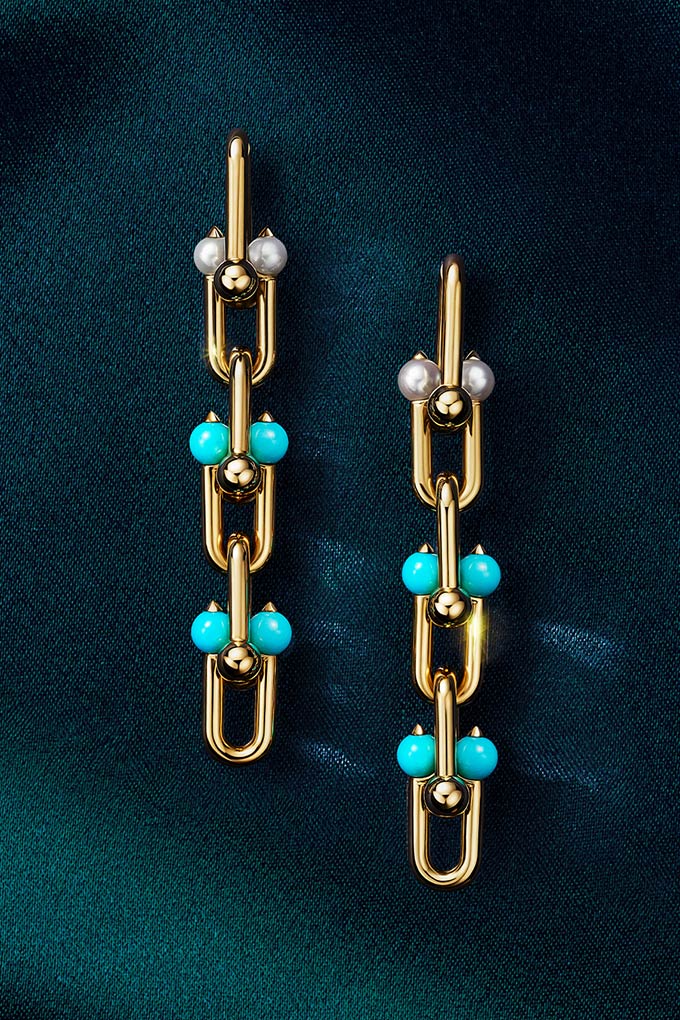
The determining factor is no longer geographic, but mineral: these tourmalines must be coloured by traces of copper. Some jewellery houses, like Tiffany & Co., prefer a more purist, technical verbiage—the maison uses ‘cuprian elbaite tourmaline’. Victoria Reynolds, the house’s chief gemologist, explained over email that because the Brazilian Paraíba mines were only productive for a few years, gemstones with that provenance are “the rarest of rare”. Beautiful cuprians, she added, are also highly sought after. These gemstones tend to be found in Tiffany’s Blue Book high jewellery collections, their electric vibrant blue colour a nod, Reynolds suggested, “that is perhaps a bit reminiscent of our own robin’s-egg blue.”

Beyond the solitaire, or, painting with Paraíbas
There’s little question, then, that the vibrant colour of Paraíba tourmalines make them ideal centre gemstones. Perez, for example, described these gemstones as “the ultimate conversation piece”, and gems that refuse to go unnoticed. But as availability of big, clear specimens shrinks, smaller cuts of Paraíbas have emerged in many collections of high, and even fine, jewellery as one more paint in a jeweller’s palette. Its unique hue no longer relegated to a centrepiece, but as an expansion of possibilities in colour combinations.

Take, for instance, the Summer Crush high jewellery necklace introduced by Piaget nearly a decade ago. Engraved rose gold, white diamonds and pink sapphires evoke the light and warmth of the sun, while the cool, blue-greens of Paraíba tourmalines add a bracing “ahhh” respite of cool water—imagine a lagoon, or la piscine.


At Cartier, meanwhile, the Parisian jeweller has been subtly introducing a wider colour story of Paraíba tourmalines. Rather than the classic blue-green, the maison has sourced and used green Paraíba-type tourmalines in some recent high jewellery creations. In watches, though, traditional blue-green Paraíbas still reign—although as smaller, melee stones that form part of a larger design as seen in the Reflection de Cartier introduced in 2024.
“In the past, Bvlgari created a collection focused on Paraíba tourmalines,” Perez recounted. “But they don’t use the stone as extensively any more. It was more of a singular exploration, rather than an ongoing focus.” Very few companies in the world do, in fact, because of its scarcity; which makes the few that do exceptional. When asked about foremost designers and jewellers who work with Paraíbas, Perez named two: Zurich-based private jeweller Doris Hangartner, and Antwerp-based jewellery designer Jochen Leën.

A gemstone to covet
Unlike diamonds, and like every other coloured gemstone, the pricing of Paraíba tourmalines can be complicated. Subjective beauty and a lack of standardisation means that prices are mutable, though fairly reliable as an investment. Ferreira explained: “During Covid, we saw a perfect example of individuals seeking alternative securities, with many capitalising on the Paraíba tourmaline. Those who purchased during this time can expect at least a 30 to 50% return on investment today, even on the conservative side.”

Perez’s advice if you’re considering a Paraíba tourmaline as an investment: go for top colour (swimming pool blue), Brazilian origin and clarity over size. For acquisitions of style: go for a larger stone, consider Mozambiques which tend to be cleaner and less included, and look for a design where the gemstone is part of and enhances an overall design.
But what’s most important when wearing a Paraíba tourmaline jewel is a matter of emotional readiness. The gemstone is a statement, bold, eye catching and impossible to ignore, said Perez. Or, as she put it rather more simply: “Are you ready to turn heads and embrace the attention?”
The March 2025 ‘Vigour’ issue of Vogue Singapore is available now on newsstands and online.