Sapphire is an incredible thing. At its core, the mineral corundum is made up simply of aluminium and oxygen. The most fortuitous touches of chemical happenstance—trace amounts of iron, titanium or chromium, for example—tints and colours the otherwise clear mineral. And with a Mohs Hardness rating of nine, just below diamonds, it has been cherished and coveted since antiquity as a cardinal gem.

The hand of god is difficult to mimic or even surpass, but that seems to almost be happening in the field of synthetic sapphires. These are man-made sapphires—physically, chemically and minerally identical to what’s found in the earth— grown with extreme precision. As far as watchmaking goes, synthetic sapphires have been in use in two main ways: on the fronts of timepieces as clear panes of crystal that protect the dial, and inside the movement as ‘jewels’ that reduce friction between moving parts.


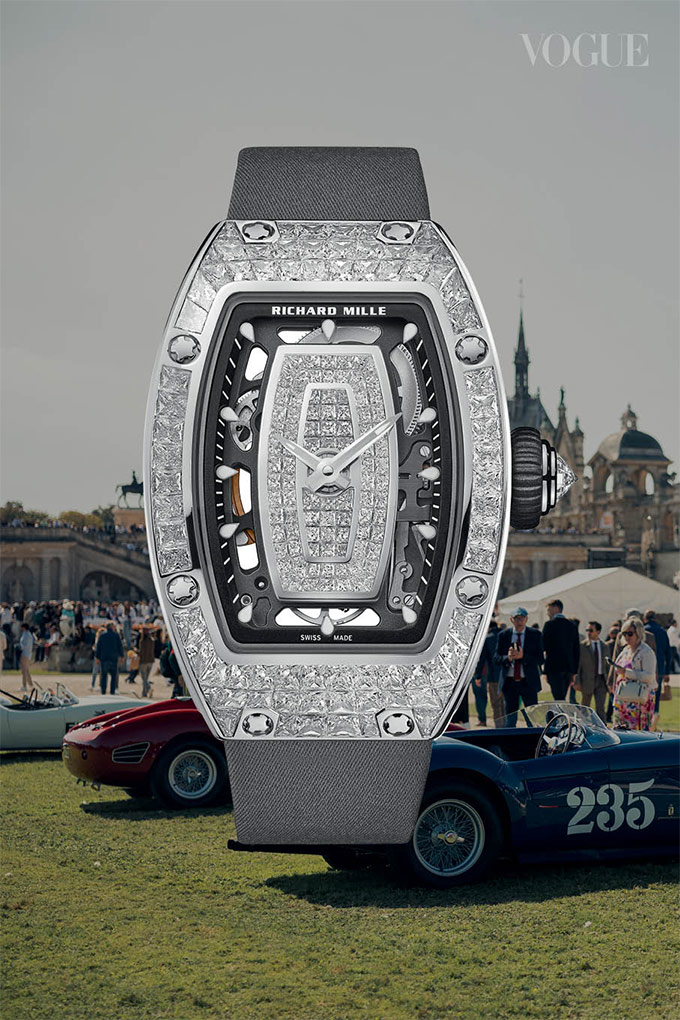
At the Swiss luxury watchmaker Richard Mille, sapphire is taken to another level entirely as the material itself for watch cases. Imagine this: finely ground aluminium oxide powder is heated to astounding temperatures of between 2,000 and 2,050 degrees Celsius in controlled environments, from which sapphire crystals grow and form. That’s the baseline of transparent sapphire. To achieve colour—which Richard Mille introduced in 2015 with the RM 07-02 Automatic Sapphire line, with shades of blue, pink, green and orange—metal oxides are carefully fed into the mix.
It’s a highly sensitive process. The slightest deviation or miscalculation could cause uneven colours or bubbles to form in the sapphire. In nature, these flaws might simply hamper value or exclude a sapphire from being gem quality; but in the service of fashioning a full sapphire case for a watch these flaws are, in a word, intolerable.


The challenges don’t end when the sapphire is grown. Because the mineral is one of the hardest substances on the planet, specialised tools are required for the acts of cutting, shaping, milling and polishing. At Richard Mille, cases are fashioned from blocks cut from a single piece of sapphire, calling for more than 1,000 hours of work by highly skilled artisans. And in a nod to beauty and preciousness, the brand has also developed the feat of setting diamonds directly into sapphire. Channels are cut into the crystal, into which are inserted individual hand-polished gold prongs that hold the rows of diamonds. Imagine that: gems within a gem.
Vogue Singapore’s January/February ‘Resolution’ issue is available on newsstands and online.