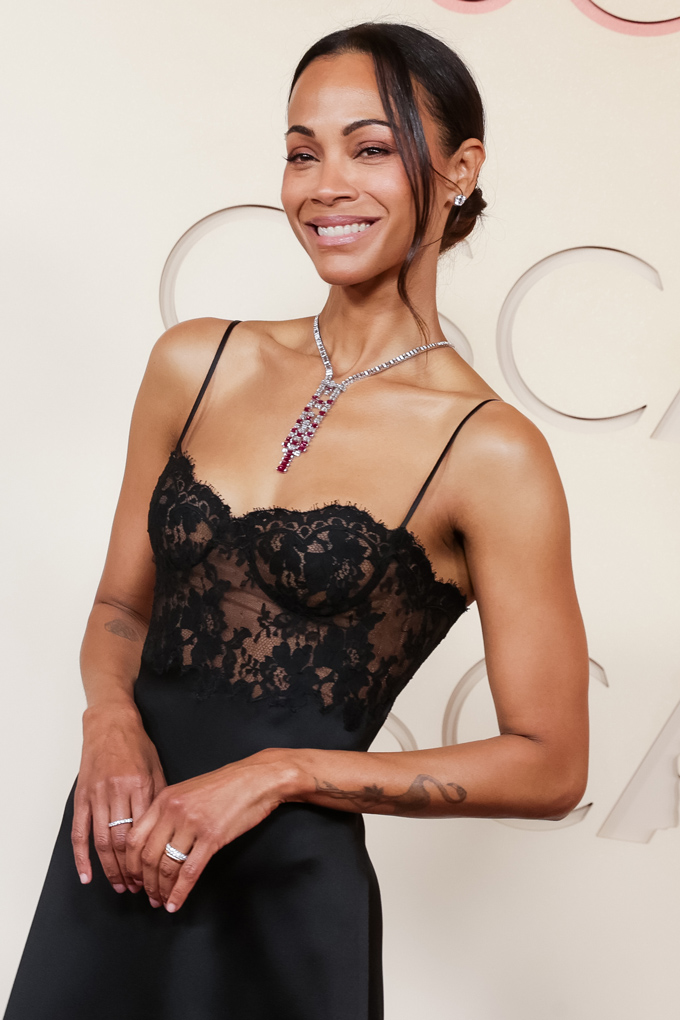
It is no simple feat to craft jewels fit for royalty, but there is one precious gemstone that comes to the fore: the ruby, the birthstone of July. Since antiquity, rubies have been coveted by royals and those in power. Its name comes from the latin ‘ruber’, which means red, but its name in ancient Sanskrit might be more evocative. Ratnaraj, which translates to mean ‘the king of precious stones’, was offered to the Hindu god Krishna in the belief that it would ensure rebirth as emperors in their next lives. Royal blood, written into the name of this gemstone.
Kings and queens of medieval Europe paid good money to adorn themselves with rubies, believing that the gems would turn a deeper shade of red if there was danger nearby. The myth of the stone traversed boundaries too. In ancient China, legends boast of the searing gemstone being the crystallised blood of dragons that would protect you from evil spirits. Religious texts hold it in great regard as well; from the Bible to the Qur’an, the ruby is often referred to as a symbol of sacrifice or divine purity.

In addition to power, the red of rubies almost always carry a story of love. The precious stone was heavily coveted by kings and queens not just as protective amulets, but also for the way they inspired romance; reflective of a time when royal courtship came with grand gestures and even grander jewels.
This certainly rang true for the British royal family. In 1960, Lord Snowdown proposed to Princess Margaret with a ruby engagement ring in a floral design with diamonds. The late Queen Elizabeth II was also famous for her ruby-filled jewellery box, much of them inherited from her grandmother, Queen Mary, who received a flurry of ruby jewels as wedding gifts in 1893. Later in their marriage, King George V also gifted Queen Mary a glittering pair of ruby earrings for Christmas—jewellery that Queen Elizabeth II was later seen often wearing.
View this post on Instagram
But perhaps the most famous of ruby gems given in the name of love might be Elizabeth Taylor’s stunning Van Cleef & Arpels ring. Surrounded by a circle of diamonds, the darling oval ruby in the centre weighs 8.24 carats and was a magnificent gesture of love from her husband, Richard Burton, who famously took years searching for the perfect stone with the jeweller.

It set the tone for Van Cleef & Arpels, which also works with rubies with its patented Serti Mystérieux, or Mystery Set, technique. The revolutionary gem-setting method secures cut stones on a mount to reduce the appearance of metal, and affords each piece the illusion of an expansive, velvety sheen without prongs. While Van Cleef & Arpels also crafts Mystery Set high jewellery with precious gems like emeralds and sapphires, rubies are some of the most coveted and beautiful—a harmonious relationship that the maison has continued to cultivate with even entire collections of high jewellery dedicated to the gem.

A standout masterpiece from the maison’s most recent Fascinating Egypt high jewellery collection is the transformable Déesse Ailée Mystérieuse necklace, which challenges the Mystery Set technique still, revealing a complex, winged articulation of rubies anchored by a magnificent 14.05-carat pear-shape DFL Type IIa diamond.

Van Cleef & Arpels is, of course, not the only maison with a storied history with the stone. Cartier’s famous fruit-and-berry Tutti Frutti design features a vibrant mix of carved rubies, emeralds and sapphires. In its recent Le Chœur des Pierres high jewellery collection, the maison reimagined this signature with the Tutti Kanya necklace. An arresting pick, the carved tutti frutti motif is straight out of the Cartier vault, enhanced with a tassel of rubies.
Whilst engagement rings might be the most romantic expressions of this gemstone, the rarity and preciousness of fine rubies ensures it continues to have a place in high jewellery collections where it is set with other beautiful gemstones. At Chanel’s newest Signes & Symboles collection, the maison created a line of ‘Precious Four’ gemstone rings. The Lion Millénaire toi et moi ring sees the gorgeous red of an oval ruby exquisitely contrast against the shine and geometry of a lion in diamonds set on an onyx base.
View this post on Instagram
Notably, there is a variety of factors that come into play when picking out a ruby. The colour of a ruby is clearly what draws the eyes immediately, and it makes the most sense to ruminate over this first. The rarest, and most ideal kind of red is known as ‘pigeon’s blood’, a name derived from Mogok in Myanmar where miners in the past compared the treasures they unearthed, in a macabre way, to the scarlet drops of a freshly killed pigeon.
Rubies are a variety of the mineral corundum, or sapphires, and get their distinct red colour from the presence of chromium. Rubies can range from pinkish to deep red, with variants of warm orange or cool blue undertones, but what separates a ruby from a pink sapphire tends to be the saturation of red and the concentration of chromium in a gemstone. Brighter stones with a more fire-engine-red hue can feel more fearless or vivacious to the naked eye, while darker, more purple-hued rubies can have a look of mystery to them.

To put it simply, a ruby’s chromium concentration contributes to the intensity of its shade; a smaller concentration of chromium in the corundum might lend the stone a more pink appearance overall. Past a certain point, it may tread a fine line where it would be considered a pink sapphire to some, whilst still a ruby to others. That same chromium is fluorescent, meaning that many rubies will literally glow under UV light—an illuminating way of looking at the gemstone.
The next most important factor would be how clear a ruby appears. This might mean formations of crystals; or any fractures or other tensions within the stone. A common type of inclusion is the presence of silk, a formation of fine rutile needles that can appear in rubies.


Whilst the rule of thumb in gemstones is usually the lesser inclusions the better, for some, the presence of silk is a telling sign that the stone has not been heat-treated. Heat treatment in rubies is fairly common; a method that enhances the colour and clarity of a stone. For serious collectors and true gem lovers, though, the ‘improvements’ from heating or oiling a gemstone make it far less attractive. An untreated, untouched find—one that has its beauty made in the rough and the cut—is that much more valuable.
When it comes to the provenance of the finest rubies, Myanmar (ancient Burma) is one of the main sources. The Mogok Valley and Möng Hsu mines have a long history with the divine ruby, and its steady source of deep, crimson rubies is what gives the origin of Burmese rubies and the pigeon’s blood colour its repute.
View this post on Instagram
An example of how coveted the combination of Burmese provenance and untreated status is: the famous 25.59-carat Sunrise ruby—a gemstone of Burmese origin, with pigeon’s blood colour, and no heat treatment, and set by Cartier on a ring—obliterated world records back in 2015 when it sold at a Sotheby’s auction. One of the finest, biggest and most precious rubies, it went under the hammer for US$30.42 million, fetching the highest price at the time for a coloured gemstone sold at Sotheby’s, and held its record for eight years.
View this post on Instagram
Burmese rubies are the classical cream of the crop, but over in East Africa, Mozambique has also become a famed producer of dark, clear rubies. Mozambican rubies have started to become a common presence in the high jewellery collections of the world’s major jewellers, and its value and esteem continues to grow. The stone that broke the Sunrise Ruby’s record at auction in 2023, for example, was the Estrela de Fura, a 55.22-carat Mozambique ruby that is said to be the largest gem-quality ruby ever discovered. In more recent times, other hotspots for mining rubies include Sri Lanka, Thailand, Vietnam and Tanzania.

It is a mysterious stone, the ruby. It is one of the most precious, if not already recognised as the most precious gemstone after the diamond. For a long time, it was wielded as an amulet; craved by royalty and employed in war for its protective powers. In ancient Burmese legends, it was said that if embedded beneath the skin, rubies were believed to bestow warriors with invincible power on the battlefield. Then there are its associations with romance; a stone that carries with it the colour of passion and love.
An enduring stone that has been etched into countless narratives of love and war, inciting a spirit of unbridled passion as it goes—there’s good reason why it is the birthstone of July, one of the hottest months of the year. Just as it has for centuries, make no mistake that the ruby will continue to beguile and entice for time to come.

1 / 12
Graff Icon engagement ring in white gold set with a ruby and with diamonds, from $57,500
Available at Graff.

2 / 12
Brooke Gregson Flower necklace in yellow gold with rubies and a purple sapphire cabochon, £5,200
Available at Brooke Gregson.

3 / 12
Buccellati Opera high jewellery cuff bracelet in yellow and white gold with rubies and diamonds, price upon request
Available at Buccellati.

4 / 12
Van Cleef & Arpels Perlée secret pendant watch in rose gold with rubies, diamonds and mother-of-pearl, $97,000
Available at Van Cleef & Arpels.

5 / 12
Tiffany & Co. Sixteen Stone by Tiffany ring in platinum and yellow gold with rubies and diamonds, $24,600
Available at Tiffany & Co.

6 / 12
Cartier Destinée pendant in white gold with a ruby and diamonds, price upon request
Available at Cartier.

7 / 12
Shahla Double Band ear cuff in 14-carat yellow gold with a ruby, $2,316
Available at Shahla.

8 / 12
Spinelli Kilcollin Vesta Heart necklace in yellow gold with a ruby, $6,100
Available at Spinelli Kilcollin.

9 / 12
Marei Ayla Arabesque ring set with a marquise-cut ruby and with yellow diamonds, price upon request
Available at Marei.

10 / 12
Anita Ko Bella pendant in yellow gold with a ruby, $17,030
Available at Anita Ko.

11 / 12
Marie Lichtenberg bracelet in yellow gold with rubies, €17,000
Available at Marie Lichtenberg.

12 / 12
Ana Katarina Pierce Your Heart necklace in yellow gold with a ruby and diamonds, $5,400
Available at Ana Katarina.