Raise your hand if you were raised by one or more of the following women: Carrie Bradshaw, Bridget Jones, Hannah Horvath, Andie Anderson, Rachel Green, Cher Horowitz, Elle Woods. Those leading ladies are just a few who have dominated millennial pop culture since the nineties and noughties. They seeped into our very pores (which were themselves decimated by St Ives apricot scrub); we watched them, we quoted them, we dressed like them. Did we like them? It’s questionable. ‘Love to hate’ is an expression which was made for these women. It could also have applied to the likes of Don Draper or Jerry Seinfeld, let’s face it, but they got off much more lightly back then. Rightly or wrongly, the female leads of the time were written as largely self-indulgent, narcissistic, disconnected from reality and, often, materialistic. They were also confident, funny, fabulous and quick-witted. They were deliciously flawed.
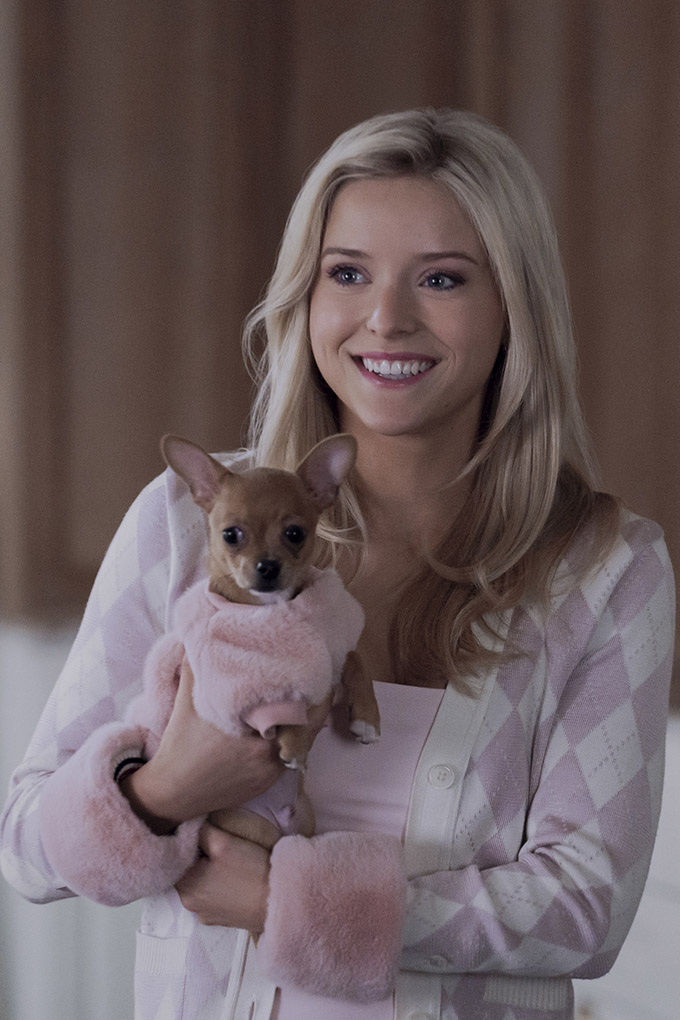
When Prime Studios announced a Legally Blonde reboot, Elle, by showrunners Laura Kittrell and Caroline Dries, in 2024, there was a flurry of excitement. Reboots, remakes and prequels have become tiresome, but this one felt different. Reese Witherspoon and her production house Hello Sunshine were on board, after all, which surely meant it would be true to its roots. “I truly couldn’t be more excited about this series!” Witherspoon shared at the time. “Fans will get to know how Elle Woods navigated her world as a teenager with her distinct personality and ingenuity, in ways that only our beloved Elle could do. What could be better than that?!” We patiently awaited the promise of pizazz, but its drop on Prime this week has been a bit less “bend and snap”, more “flop and turn off”, with reviewers pointing out its distinct lack of sparkle and camp compared with the Legally Blonde films.

It is Elle herself who feels like the biggest let down—and not through any fault of Lexi Minetree, who was handpicked by Witherspoon from 5,000 wannabe Elles and embodies the actress’s original mannerisms. The premise itself feels rather forced; it’s a prequel in which we meet Elle two years prior to the original 2001 film. We follow the Woods family from Beverly Hills to Seattle, where they are ‘laying low’ after her father (Tom Everett Scott) conducts a botched nose job on a high profile celeb. The colour is drab. As Elle is transplanted from her pink, frothy LA life into a grunge-tastic Seattle high school, full of skateboards and Nirvana T-shirts, the screen goes from a colour pop of Beverly Hills to endlessly greige in Seattle. It’s a pathetic fallacy for the fading of the titular character.
The original Elle Woods became a Halloween costume caricature, a cult classic of a performance thanks to her peppy body language, scrappy mentality and snappy satirical lines such as, “Whoever said orange was the new pink was seriously disturbed”, and, “Exercise gives you endorphins. Endorphins make you happy. Happy people just don’t shoot their husbands.” Minetree’s Woods is far less fun. She delivers such muted lines as, “I would just like to raise a glass to all of you. My friends, my world, I’m so lucky to have this life”, and, “I like iced coffee, the month of July and when people dress kinda tennis-y even if they don’t play tennis.” Even poor Bruiser seems a bit depressed.
For those of us raised by the ‘me, me, me’ protagonist, this watered-down Elle Woods adds another name to the growing pile of almost interchangeable lead characters currently on screen. Indeed, while Belly Conklin (Lola Tung) from The Summer I Turned Pretty and Hannah Wells (Ella Bright) from Off Campus, or the titular Emily in Paris (Lily Collins), are driving wildly popular shows, they also represent the rise of this vaguely unproblematic, earnest, play-it-safe lead which has become popular today. Think Joey from Dawson’s Creek, with an iPhone.

As a viewer, I’m afraid I just need my heroines to be a touch more jarring. I feel most at home when my leading lady refuses to listen to advice and has a serious case of the ‘What About Me-s’. Sex and the City’s Carrie Bradshaw, for example, was in a full narcissistic flow state when she forced Samantha Jones to listen to her love life woes, when the latter was in a hospital gown about to receive breast cancer treatment. She ripped a cig whilst demanding Charlotte hand over her diamond ring to pay for her apartment. Girls’ chief whiner Hannah Horvath was living her truth when she voiced worry not for his family, but for the future of her book when she heard her editor had suddenly and tragically died. Bridget Jones leaves her best friends, who have cheerfully arrived to take her on an all expenses paid trip to Paris, high and dry to chase after Mark Darcy. That’s not to say we don’t have splashes of problematic brilliance, of course. How can one ignore Jean Smart and Hannah Einbinder in Hacks, Megan Stalter in Too Much and Lucy Punch in Amandaland? Our screens were once a veritable sea of egotistical indulgence, however, and these characters were a darn sight more memorable as a result.

Of course they became sources of huge public derision, too. Carrie, for example, has an entire website dedicated to her: carriebradshawistheworst.com. Friends’s Rachel Green was the butt of every episode’s punchline for her spoiled girl mentality. Hannah from Girls was so intensely disliked when the show originally aired in 2012, that it’s taken until now for creator Lena Dunham to disentangle herself from her onscreen persona. When Hannah uttered the line, “I don’t wanna freak you out, but I think that I may be the voice of my generation”, everyone rolled their eyes. Dunham, it turns out, truly was.
We look back with such fondness, perhaps with rose tinted glasses (look, they were annoying, we can admit that), and a wish we could replicate their magic today. We aren’t earmarking Belly for a Halloween costume, let’s put it that way. And maybe that’s okay—maybe it is time to move on from the caricatures which pigeonhole women as selfish or spendthrift. I do find it amusing, however, that while there’s a lot of talk of ‘main character energy’ these days, its meaning has changed so much, I don’t think I even recognise it anymore.
This article was originally published on British Vogue.