Sometime early last year, I woke up in the middle of the night with scorching back pain. I could not—and still, cannot—quite describe any pain like it. I had found myself, out of nowhere, unable to lie flat on my back. No amount of stretching or shifting my posture would resolve it. Despite living a relatively active lifestyle, I couldn’t figure out the root cause. This would go on for multiple nights in a row, ultimately leaving me restless for months on end; I found myself slower, sluggish, and relying on caffeine to beat the brain fog when morning arrived.
As it turned out, my initial symptom was characteristic of someone experiencing nerve pain. According to physician Zick of Oriental Remedies Group, the disruption—and the resulting exhaustion—of the central nervous system can also affect our internal energy levels, known as shen (神) in traditional Chinese medicine (TCM). “Nerve pain notoriously intensifies at night when body temperature and movement drop, sleep disruption is common,” explained Zick. “Over time, this unrelenting distress exhausts the central nervous system and depletes our energy level, leaving people feeling wired, tired, and mentally foggy.”
I spent a large part of October in and out of the hospital undergoing MRIs and consulting orthopedic surgeons. The conclusion, in brief, was a compression of the sciatic nerve, caused by a lumbar disc protrusion. Although my case represented a more advanced progression, it belongs to the same spectrum of conditions that includes carpal tunnel syndrome, piriformis syndrome, sciatica, wrist stiffness, and the tingling sensation in the hands or feet commonly described as “pins and needles.”
Fortunately, one common misconception proved untrue: nerve damage is not always permanent. As I write this, a little over a year later, I have regained full mobility; and now sleep blissfully through my nights.
“Peripheral nerves possess remarkable plasticity,” says Zick. “Once mechanical compression is relieved and vascular nutrition is restored, nerve tissue can heal and regenerate over time.” Despite this, nerve-related pain—and the rehabilitation that follows—remains surprisingly absent from mainstream conversations. According to Harvard Health, around 40% of people will experience sciatica at some point in their lives. Addressing nerve irritation early may not only relieve pain and stiffness but also reduce recurring strains and improve long-term mobility.

What is nerve function?
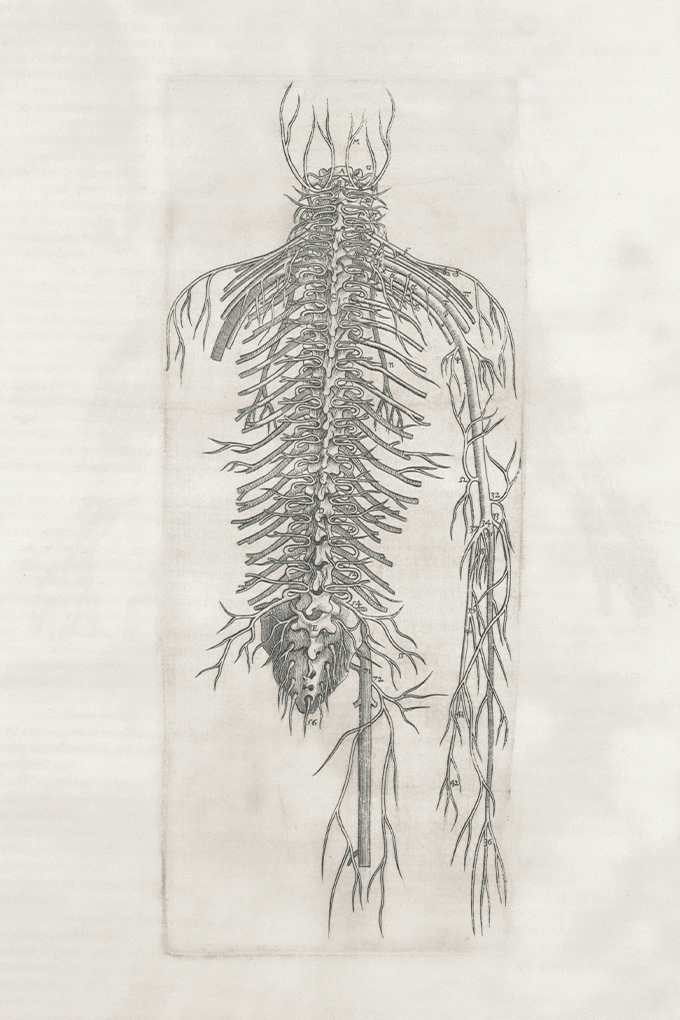
Perhaps one way to dissect nerves in relation to muscle and joint pain is treating it like the body’s communication highway. When that highway becomes compressed or irritated, the signals travelling along it become disrupted. The result may be burning pain, numbness, or tingling—the equivalent of a traffic jam interrupting the body’s messaging system. This can result in that “pins and needles” feeling, which can be normal on occasion; but point to underlying health issues if it occurs frequently.
“When a nerve is irritated,” explains Zick, “the brain automatically alters movement patterns to protect that pathway. Over time, this imbalance creates joint asymmetry, accelerating cartilage wear, disc degeneration, and eventually osteoarthritis.” From a TCM perspective, chronic nerve entrapment also impairs microcirculation, depriving tissues of blood (xue, 血). Healthy, elastic tendons (jin, 筋) gradually become dry, poorly lubricated, and increasingly vulnerable to stiffness and recurrent injury.
TCM further associates tendon health with the liver and structural support with the kidneys. According to this framework, chronic stress, inadequate sleep, and overwork deplete these internal reserves, reducing the body’s ability to keep nerve pathways well supported and nourished. During my own cupping treatment, I noticed the darkest marks around my lower back and kidney region, including the area corresponding to the disc protrusion identified on my MRI.
Symptoms that signal nerve irritation
Whether viewed through Western medicine or TCM, nerve irritation ultimately disrupts the normal function of the affected pathway. Initially, this often presents as burning pain; electric shocks; or sharp, radiating discomfort. If compression or inflammation persists, those signals may begin to fade, leading to numbness, pins and needles, or reduced sensation in the hands and feet. Within TCM, this later stage is also thought to reduce nourishment to the surrounding muscles and tendons (jin, 筋), contributing to chronic tightness and weakness.

Microdosing recovery with nerve flossing
One of the biggest lessons from my recovery was that nerves respond very differently from muscles. Unlike muscles, nerves generally don’t benefit from aggressive stretching. Instead, by implementing a 15 minute mobility routine to the start of my strength workouts three to four times a week, it was sufficient to see results—in essence, microdosing recovery. Even on days when I wasn’t at the gym or playing sport, I made it a point to stretch.
Nerve flossing quickly became the cornerstone of that routine. In my personal experience and subsequent research on the topic, it turned out to be a core finding in both western medicine and TCM. As a well-established physiotherapy technique, nerve flossing involves moving a nerve gently back and forth through its surrounding tissues to improve mobility and reduce irritation. Interestingly, Zick points out that the underlying principle also aligns with longstanding TCM concepts favouring continuous, gentle movement over forceful stretching.
“It achieves 通经活络 (tong jing huo luo)—unblocking the meridians and invigorating the collaterals. It clears local qi stagnation and pumps fresh blood back into dry, starved nerve pathways, which in the modern understanding, translates into breaking down micro-adhesions, reducing internal fluid pressure (edema), and restoring the natural flow of nutrient-rich fluid within the nerve fibre,” explains Zick. He also emphasises a common misconception: that a stretch is only effective if it feels intense.
In fact, Zick commented that this was a common misconception around stretching—that the intensity of a stretch was tied to its effectiveness. Rather, nerves thrived on frequent, dynamic motion.
How contrast therapy helps
I also found contrast therapy to be particularly helpful in activating the extremities of my nerve pathways—places where the nerve signals had become numb. My hands and feet often became cold easily, and prolonged periods of sitting would quickly make them feel sluggish. Contrast therapy involves rapidly cycling between a cold plunge and a hot soak, moving the body between rest and fight-or-flight states to activate the nervous system—and I found it useful in stimulating areas that had become difficult to activate.
Although it isn’t a replacement for actual medical treatment, I found that it was a great way to stimulate areas of my body which I had previously struggled to activate. Generally, contrast therapy is more associated with fitness recovery and musculoskeletal health—but its benefits to nerve pain, I found, were helpful in realising which parts of my body needed the extra boost.
“Cold water immersion activates the body’s natural response to cold, stimulating the release of neurotransmitters such as noradrenaline, which may enhance alertness and temporarily influence how discomfort is perceived,” says Rosalin Lau, director of wellness at Initial Sama, who holds certifications in integrative therapies and functional medicine. “While it should not replace medical treatment, it can support recovery, reduce post-exercise muscle soreness, and contribute to overall wellbeing as part of a balanced lifestyle.”

Home-based exercises to soothe nerve irritation
As daunting as nerve damage may be—and as excruciating as the symptoms become when left untreated—what is perhaps most comforting is that the problem can be resolved, and that exercises can be done preventatively.
A few important guidelines apply. All movements should be pain-free. Mild tension (around 1—2 out of 10) is acceptable, but stop immediately if you experience sharp, burning, or shooting pain. Move slowly and deliberately, and most of all, avoid forcing any range of motion.
For those wanting to try the exercises at home—whether it may be for preventative measures or beginning the road to recovery—Zick recommends the following three exercises:
The sciatic nerve glide (for lower back and leg pain)
Sit tall in a chair. As you extend one leg forward and pull your toes back toward you, gently tilt your head up toward the ceiling. As you bend your knee back down, lower your chin toward your chest. Move smoothly between these two positions 10 to 12 times.
The median nerve glide (for neck, shoulder, wrist & carpal tunnel)
Extend your arm out to the side at shoulder height, palm up, pointing your fingers toward the floor. Gently tilt your head toward your extended hand. As you curl your wrist back toward your body, tilt your head away to the opposite side. Repeat 10 slow reps.
Spinal wave cat-cow (for spinal decompression and autonomic reset)
On all fours, slowly ripple through your spine—inhaling as you expand the chest, exhaling as you round the back. This gentle spinal flexion and extension pumps fluid around the spinal nerve roots, integrating the central du (governing) and ren (conception) energy pathways.