To identify the origins of viral wellness trends of today is to acknowledge the formidable hold that traditional healing techniques continue to have globally. From the transformative powers of sound healing to the concept of navel oiling for improved digestion, a multitude of Asian healing techniques especially, have taken the wellness world by storm and honestly, we’re here for it. The latest to hit TikTok’s radar? Cupping therapy.
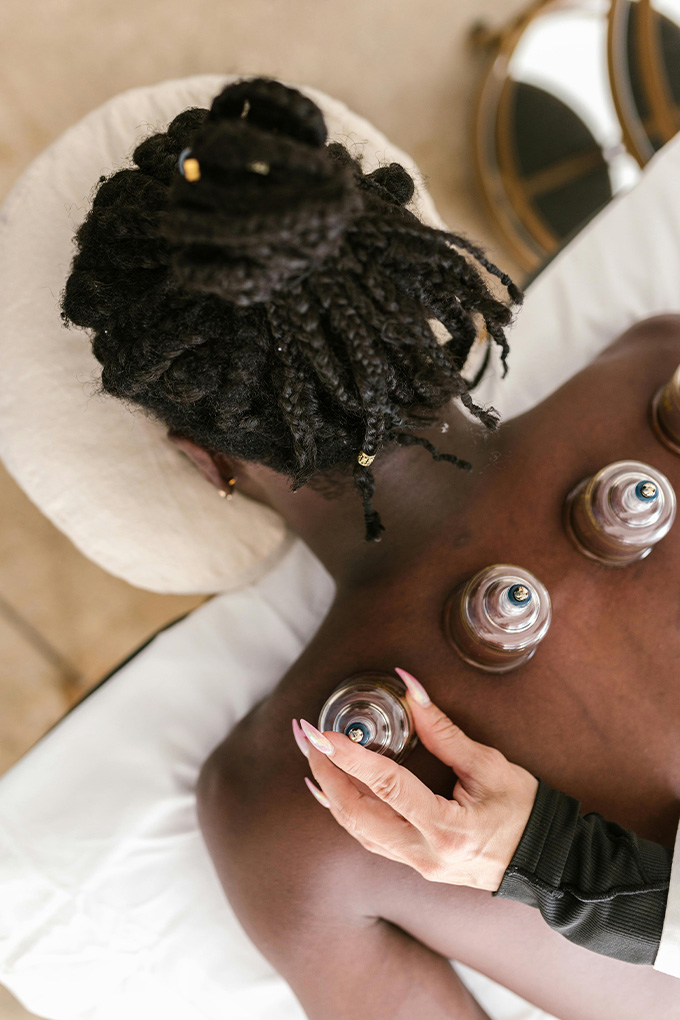
If you’ve spent any time online, you’ve likely seen the marks—circular, reddish-purple circles stamped across the backs of celebrities, athletes, and influencers alike. So what exactly is cupping therapy, and what do these marks mean? In Traditional Chinese Medicine, the body’s energy is believed to flow like a river. When stress, tension, or lifestyle choices get in the way, that flow slows down, and discomfort follows. By placing specially designed cups on the skin, controlled suction is created to clear blockages in the body by opening up pores and gently separating the skin from the muscle. This encourages circulation, releases tight fascia, and helps stubborn knots to relax. In the words of our trusted expert, Physician Leong Weizhen, lead physician at Oriental Remedies Clinic: “Cupping is a natural regulating therapy. It doesn’t force the body to do anything unnatural; it simply helps the body do what it is trying to do— moving the lactic acid trapped in the muscles faster, thus facilitating vasodilation to bring better circulation to different muscle groups, which helps the body heal faster.” The benefits include improved circulation, which in turn helps alleviate chronic pain, provides muscle relief, and reduces inflammation.
To learn about the different types of cupping therapy, its actual effects on the body, plus the mystery behind those circular marks, we spoke to Leong for everything there is to know about cupping. Should you ever decide to embark on your own journey.
What exactly is cupping therapy?
In the TCM point of view, we visualise the body as a landscape of flowing energy, or Qi. When you are healthy, this energy flows like a river. When you have pain or tension, that river is blocked. Cupping is a method to unblock the flow, as it uses a vacuum suction to clear the blockages of the body. This is done so by opening up the pores and creating space between your skin and muscle. It physically draws out what we call ‘pathogenic factors’—like trapped coldness, dampness, or blood stagnation—that have settled deep in the body, allowing your natural Qi to flow freely again. Based on the presentation of the colour, coldness results in a purplish hue instead of red colour; dampness is portrayed as water droplets inside the cup and patients with blood stagnation will have blood clots protruding at the skin.
In a mechanical point of view, you can think of it as myofascial decompression. By creating a vacuum seal on the skin, the layers of skin, fascia, and muscles are pulled apart, creating space in between them. This expansion allows fresh blood to rush in and flush out tension or lactic acid, almost like taking a deep breath for your muscles. It’s an intense sensation, but with a relaxing aftereffect.
There are different styles of cupping. Which methods do you practice, and how do you decide which one a client needs?
We decide based on the eight principles of diagnosis—specifically checking if a patient is dealing with a ‘cold’ or ‘hot’ condition, or if they have ‘excess’ or ‘deficiency’ of energy in their body. This is also coupled with the assessment of the patient’s muscular condition, area of discomfort as well as overall circulation of blood in the body.
- Fire Cupping: This is our gold standard. We use a real flame to create the vacuum in the cup. This is suitable for ‘Cold’ conditions (muscle stiffness that feels worse in the cold). The heat from the fire dispels the ‘cold’ from the meridians.
- Gliding Cupping: This is suitable for larger surface area of the body. We often use this method along the bladder meridian on the back of the body, running vertically along both sides of the spinal column. This meridian governs the body’s detoxification as many acupoints on this meridian correspond to key organs within the body. Gliding the cups helps move systemic Qi, essentially sweeping the debris out of the body’s channels, at the same time, releasing any neck and back tensions.
- Flash Cupping: Suitable for patients who are generally more deficient (weak or tired), we use quick suction-and-release. This stimulates the Qi without draining the patient’s energy.
- Stationary Cupping: This method is performed by creating the vacuum in the cup, placing the cup on the treatment area and leaving the suction on for 5-15 mins. This is generally done for most patients, except for those who are extremely deficient and weak.
In a clinical setting, it is also possible for us to use a combination of the above techniques for a more holistic and effective outcome.

Let’s talk about the marks left behind. What do those marks actually tell you, and how long should they last?
We call these marks ‘Sha痧’. In TCM diagnosis, the ‘Sha’ is a map of your internal health. It is the visible manifestation of the overall circulation and health of your body. Due to the vacuum suction and vasodilation explained earlier, there will be slight redness under the skin surface and this is normal.
- Dark Purple/Black: This indicates severe blood Stasis or long-standing Cold. We often see this in old injuries or chronic frozen shoulders.
- Bright Red and bigger patches: This indicates heat (inflammation) in the body.
- Wet looking or with water droplets: This indicates dampness in the body.
- Pale or hardly any redness formed: This indicates Qi deficiency and weakness. This patient might not be suitable for cupping.
The marks usually fade in one to three weeks, depending on the severity of the stagnation. As we continue treatment and your Qi flow improves and the body has less stagnation, you will notice the marks become lighter and disappear faster.
When people talk about the benefits of cupping, they often mention circulation and muscle relief. From your perspective, what’s actually happening in the body during a session?
There is a famous saying in TCM: ‘不通则痛 (Bu tong ze tong),’ which means ‘Where there is no free flow, there is pain.’ When we apply cups, we are addressing stagnation. In modern life, stress causes our Qi to stagnate, and in return, this inactivity can cause our blood to be poorly circulated. The suction from cupping creates a localised vacuum that forcefully pulls this stagnated blood to the surface. By clearing this blockage, we allow fresh, nourishing Qi and blood to rush into the area. We aren’t just relaxing a muscle; we are restoring the energetic highway that feeds that muscle. When we place a cup, the vacuum creates a negative-pressure environment. This does three main things:
- Vasodilation: It widens the blood vessels, flooding the area with nutrient-dense, oxygenated blood for cellular recovery. Research demonstrates that cupping can increase peak skin blood flow by over 16 times compared to baseline (Wang et al., 2020).
- Fascial Release: It physically lifts the fascia (connective tissue) away from the muscle. If your fascia is sticky or tight (adhesions), this pulling action separates the layers, restoring movement. Improvement in range of motion (ROM) is critical for demanding physical activities.
- Lymphatic Drainage: It draws old, non-circulating stagnant blood and metabolic waste (i.e. lactic acid) from deep within the tissues to the surface (interstitial space), where the lymphatic system can easily drain it away.

Can cupping play a role in long-term wellness, or is it mainly helpful for short-term relief?
In TCM, illness doesn’t happen overnight; it penetrates from the outside in. It starts at the skin level (卫气 Wei Qi) and moves deeper into the organs (脏腑 Zang Fu). Regular cupping acts as a defence mechanism, strengthening the first line of defence of our body’s immune system so that we can be less prone to illnesses. By regularly clearing the superficial layers of the body, we prevent pathogens—like the ‘dampness’ from a humid climate or the ‘cold’ from air conditioning—from settling deeper into your internal organs. It keeps the body’s pathways clear so your internal resources don’t have to fight so hard.