For Elena Velez, nourishment begins in discomfort. Her process is shaped by pressure—whether emotional or material—and sustained by the need to keep producing in unstable conditions. Raised in Milwaukee and now based in New York, she continues to build her label through a rhythm that reflects the pace and friction of real life inside the studio.
That tension came to life during New York Fashion Week with her spring 2026 collection, Badland. Drawing on frontier mythology and ’30s literature, the show reframed Americana through the lens of spiritual dislocation. Corsetry and military jackets were reimagined with a kind of poetic urgency—pieces that held you in, even as they looked like they might unravel. “My country is in a moment of acute spiritual transformation,” she says. “This season’s sensation was shaped by destitution, dislocation and the electricity of a culture in flux.”

Among the collection’s highlights was Velez’s collaboration with Singaporean jewellery label Ask & Embla—a meeting of design worlds, melded together by shared symbolism. “We played with the idea of prospecting for precious minerals out West,” she says. “There was a character this season who was a dark mystic—a fortune teller, a spirit guide. That muse felt like one we shared.” The result: a story that moved between mediums, and mysticism, uniting Southeast Asian craftsmanship with Velez’s American narrative of resilience.
Despite the weight of her subject matter, Velez speaks with clarity and self-awareness. She’s blunt about the business side of fashion—the post-COVID challenges, the loneliness of being outside the industry’s usual power centres, the need to build infrastructure for an artist’s life. And yet, there’s a sense of hopefulness. “Each story begins with a sensation and a quest to situate it in time,” she says. “It’s how I self-soothe. To prove that others have survived these spiritual tribulations before—and that I can too.”
What’s next? A shift in pace. “I’m going to insist harder on forcing this system to work for me: my priorities, my process,” she says. “Creatively, my next body of work may have a biblical origin story. More will be revealed.”

Please briefly introduce your label and how it started.
I don’t know if there was ever a moment where I started my brand officially. I’ve been fascinated with the craft of fashion design since childhood and was always drawn towards the collaging of shapes and textures onto the human form. I attended Parsons and Central Saint Martins, and from there, my work started to gain a wider audience in the fashion industry.
Can you share some of the inspirations that have shaped your design philosophy?
My work is highly tactile and inspired physically by a very industrial and imperfect maker’s hand. I’m the daughter of a ship captain mother in Rust Belt America, and I’m principally drawn to the artisanal heritage and broader conceptual identity of the US. A lot of the themes of my work stem from American mythology, apocalypses and the duality of women.
Your aesthetic has often been described as industrial-meets intimate. What led you to explore that combination of raw construction and emotional femininity?
A lot of my work is paradoxical—two separate realities that share a singular truth. I see womanhood through this lens and like to build silhouettes that challenge the viewer’s perception of fragility, strength and autonomy. I like to work with steel, which has precedent in women’s fashion through the architecture of corsetry, but I also love working with textiles that are gauzy and ephemeral—that evoke a sense of fragility: not through preciousness but through constant use and endurance.

Reclamation has been a recurring theme in your work. Was that always a conscious approach or something that developed over time?
The notion of reclamation in my work isn’t necessarily conscious, but a fact of making space for my perspective in the industry. I want to see an American fashion narrative that speaks to broader cultural swathes of our country, not just LA and NYC.
Could you take us through your creative process—how does the idea evolve from sketch to end product?
My perfect process, which is rarely achievable within the reality of the commercial fashion industry, starts with the attempt at articulating a sensation of the times. The US right now has such an electrically charged energy, and it’s been a topic of my work to make sense of the experience—not through language but through sensation. Like many contemporary artists, I start by distilling words or imagery—historical, modern, memetic—to begin finding conceptual through lines that elevate the mundane and point to something larger in the continuity of the human experience. I also like to work with site-specific materials that are original to the source of inspiration for each season.
Your creative philosophy can be seen as nourishment, in a sense of turning personal struggle into something beautiful and freeing. How has that shaped the way you design and build a collection?
Adversity and hardship provide the friction through which character is forged. It’s hard for people to think about the possibility of running a fashion brand in NYC as some sort of act of spiritual resilience, but I think the difficulties of a precarious creative lifestyle, the vulnerability of sharing your art, and the discipline required to fight for your existence is universally understood. It would be a disservice to myself and to those who have sacrificed on my behalf to use the opportunity to create platitudinal work.
“It would be a disservice to myself and to those who have sacrificed on my behalf to use the opportunity to create platitudinal work.”
Your latest collection Badland drew on frontier and Americana references: corsetry, military jackets, distressed tailoring. What were you looking to express through that world?
My country is in a moment of acute spiritual transformation. I like to look to the stories of the past to understand how other luminaries have addressed these apocalyptic sensations. The Great Depression era informed this season’s sensation of destitution and dislocation. 1930s literature and fashion was foundational to building this portrait.
You collaborated with Singaporean jewellery label Ask & Embla on your latest runway. What was that creative exchange like and how did your two design languages come together?
Working with Ask & Embla was an incredible opportunity to activate different characters in the story of the season. We played a lot with the notion of prospecting for precious minerals out West and dripped the characters in different elements of gold and silver. Another character of the season was a sort of dark mystic—a teller of fortune and a spirit guide. This is a muse we share with the Ask & Embla universe, which incorporates a lot of beautiful sigilism and biblical references.
You’ve always embraced imperfection: oxidised hardware, raw seams, exposed linings. How instinctive is that for you and what do those details mean in your work?
I attribute a lot of this to the idea of a maker’s mindset—an activity of method acting that forces you to consider the priorities and restrictions of the muse each season. It’s hard not to feel like I’m living through a spiritual dystopia or apocalypse, and this translates into a sensation of urgency—things that are made with a sort of shell-shocked pragmatism: made for speed and utility versus perfection and beauty, and constructed with scraps and ignoble textiles.

Have there been any challenges that you’ve faced working on your brand?
The biggest challenge I’ve faced in the day-to-day is in learning how to run a business in a post-COVID economy and create the infrastructure for an artist’s life. The biggest challenge I’ve faced as a person is in making public work that exists outside the political spectrum and that doesn’t receive the protection of either warring cultural tribe.
Could you walk us through a recent piece or collection that felt especially personal or meaningful to you?
Each season is highly allegorical—even the activity of being a public entrepreneur is also an extension of the conceptual process. Each story begins with a sensation and then a quest to situate it in time and across different mediums (usually literary), in the service of, I suppose, self-soothing. To prove to myself that we’ve seen these spiritual tribulations before throughout human history and found unique ways to master them at every turn.
And finally, what’s next?
Logistically, I’m pushing harder for the system to support my process and make the energetic expenditure of this mission more sustainable. Creatively, I think my next body of work may have a biblical origin story—more will be revealed soon.
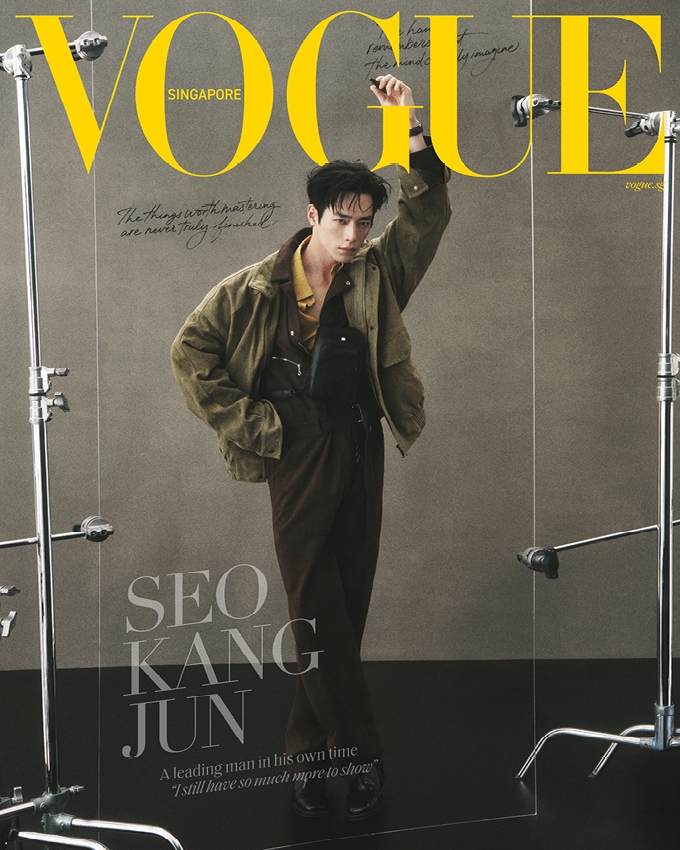
The November issue of Vogue Singapore—themed ‘Nourish’—is available to pre-order online and on newsstands from 14 November.