Ramadan may be the month of fasting, but no Ramadan is complete without an elaborate iftar. After a day of restraint, the dinner table often fills with plates of slow-cooked rendang, jewel-toned kerabu, steaming bowls of bubur lambuk and baskets of freshly fried gorengan. In recent years, desserts have taken a more prominent place in the spread. Biscoff cheesecake and kunafe are constantly reimagined in increasingly decadent forms, and sugar-dusted indulgence has become part of the visual language of Ramadan tables, glossy and golden for the camera.
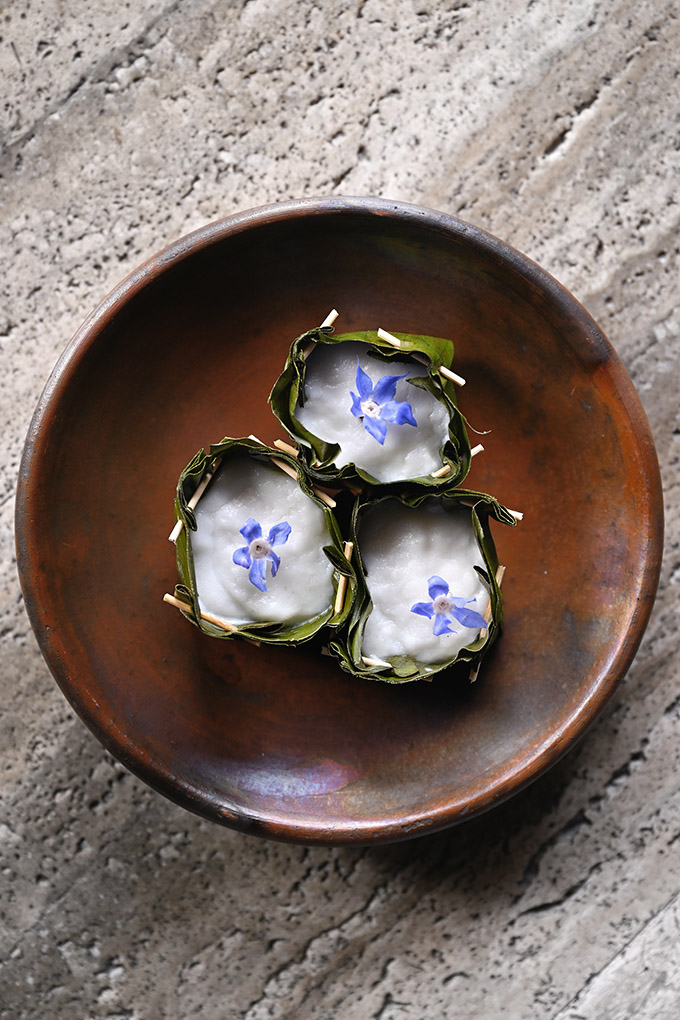
This year, Chef Hafizzul of Restaurant Fiz offers a local dessert to add to your iftar rotation: Tepung Pelita, a classic Malay kuih of pandan custard crowned with salted coconut cream.
At Restaurant Fiz, sourcing is central to the cooking. A meal there makes that clear. Each dish is carefully considered, and every ingredient feels purposeful. For Chef Hafizzul, cooking begins with respect for the produce itself. As he puts it, “real cooking is about following your heart and thanking the gifts of the earth.” That philosophy carries into how he approaches cooking during the fasting month.
“Ramadan in the Malay world is deliberate,” he explains. “The kuih that emerge during this month are not casual sweets. They are measured expressions of balance and restraint.” With that in mind, the ingredients for his Tepung Pelita are chosen with equal care. The santan is freshly pressed from Geylang Serai. Pandan leaves are selected for fragrance rather than colour intensity, with younger leaves preferred for their higher concentration of aromatic oils. Refined sugar is replaced with finely shaved palm sugar, adding depth and mineral complexity along with a grounded sweetness that lingers rather than overwhelms.
For those looking to expand their dessert rotation this Ramadan, Chef Hafizzul shares his thoughtfully crafted Tepung Pelita recipe below.

Tepung Pelita
Ingredients
For the green pandan custard base:
– 80g rice flour
– 30g tapioca starch
– 140g finely shaved organic palm sugar
– 600ml fresh pandan juice, double strained
– A pinch of sea salt
– 1/8 tsp alkaline water, optional and minimal
For the salted coconut cream:
– 500ml freshly pressed coconut milk
– 40g rice flour
– 15g tapioca starch
– ¾ tsp fine sea salt
For the banana leaf vessels:
– Young banana leaves, cut into 12cm circles
– Bamboo toothpicks
Method
Green Pandan Custard Base
Begin by whisking the rice flour, tapioca starch and salt together in a mixing bowl until evenly combined, ensuring the starches are well distributed. Gradually pour in the pandan juice while whisking continuously to prevent lumps from forming. If a brighter hue is desired, add a very small amount of alkaline water, using only the minimum necessary.
Strain the mixture through a fine sieve into a saucepan to ensure a smooth custard. Place the pan over medium-low heat and cook the mixture, stirring constantly with a spatula and scraping along the base and corners to prevent sticking.
Continue stirring until the custard thickens into a glossy, elastic consistency with a nappe-like body. It should hold its shape softly without becoming stiff. Remove the pan from the heat as soon as this stage is reached to avoid overcooking, which can encourage starch retrogradation and result in a rubbery texture once the custard cools.
Salted Coconut Cream Layer
In a bowl, dissolve the rice flour and tapioca starch with a small portion of the coconut milk, whisking until a smooth slurry forms. Meanwhile, warm the remaining coconut milk in a saucepan over low heat. Once gently heated, stir in the slurry along with the salt, mixing continuously to keep the emulsion smooth.
Cook the mixture gently, stirring without pause, until it thickens slightly but remains fluid and pourable. Remove the pan from the heat before it comes to a boil, as aggressive boiling may cause the coconut fat to separate and result in a grainy texture.
Crafting the Banana Leaf Vessels
Wipe the banana leaves clean with a damp cloth. Lightly pass each section over an open flame for about three to five seconds per area to soften the fibres and release their aromatic oils. Place a 12 cm circular cut flat on a clean surface, then lift one side upward to about 3 cm in height. Lift the opposite side to mirror the height, overlapping the sides slightly and securing them with a bamboo toothpick. Adjust gently so the base sits level and stable. Once shaped, pre-steam the empty vessels for two to three minutes to help them hold their structure and to intensify the fragrance of the leaves.