When is a bar not a bar? At a guest shift, of course. Put the pedantry aside, if you can—at a guest shift, a bar does still function as a bar. But at a guest shift, a bar is not really, truly itself. It is, for one night only, something else entirely.
The energy in a space occupied by a guest shift flows differently, the air infused with a different charge. That great social lubricant, alcohol, certainly helps, but something else is at play here. On shift, something is given up to the whims of fate—the affair is not your run-of-the-mill night of service at the local watering hole. What, then, is different?
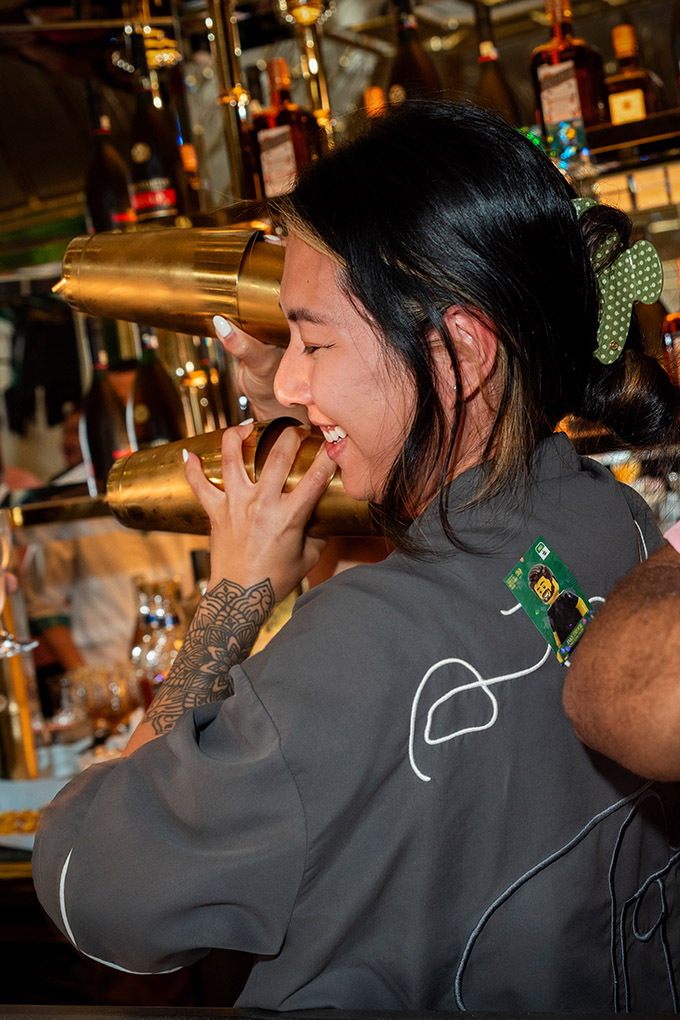
A quick crash course for the uninitiated: a ‘guest shift’ is the term used to refer to any shift at a bar run by, or in collaboration with, bartenders from a different establishment. So in lieu of normalcy, the guest shift offers novelty: signature (perhaps strange) drinks hailing from a foreign (possibly overseas) bar, crafted by unfamiliar (yet no less practised) hands. It should come as no surprise that the phenomenon is also referred to as a ‘takeover’.

Guest shifts are moments suspended forever in time. The beauty of the practice is found in its fleeting nature—cherished precisely because it is short-lived, never to be repeated. Even if another guest shift run by the same guest bartenders crops up, it will not be that night—with those drinks, with that crowd.
If you want to be pedantic about things, you could say the same could technically apply to any night in anyone’s life. But a bar is not an island and the patrons and bartenders do not live in silos. During a guest shift, everyone makes space for each other in that same momentary, beautiful blip in time.
However, it is important to remember that the patrons are not the only ones present during a guest shift. Someone has to make the drinks. But besides the work, the bartenders have plenty to look forward to.
Many industry veterans have long-standing, healthy relationships with the bars they guest at, making their trip away from home a kind of homecoming in its own right. If said homecoming is an opportunity to spread the word about their own business, all the better. And for both host and guest, the night is a chance to rub shoulders with peers—and possibly learn a thing or two along the way. It seems like everyone wins, right? Well, yes and no.

The same fickle mistress that lends a guest shift its spark—ephemeral time—happens to play for both teams. Guest shifts are special because they’re one-off events, but working hours are a zero-sum game. Those shifts take time out of the home bar’s schedule, which does the comings and goings of their regular clientele no favours. The more guest shifts run by a bar, the less time is afforded to loyal customers expecting familiar sips and service.
In Singapore, this can be an especially sensitive topic—not for nothing have we been called the ‘cocktail capital’ of Asia. Here, competition is as stiff as it gets, which also influences the other spanner in the works: guest shifts take money to run. And, as we all know, money has been increasingly hard to come by in 2026, especially in the food and beverage industry.
In a world where profits must be maximised and output is everything, it takes a lot to keep pace. Besides ensuring the lights stay on, flights and accommodation for visiting bartenders are expensive. To offset this, guest shifts will often be fronted by sponsors—typically prominent alcohol brands—so bartenders might be (understandably) tempted to put on a face to appease the powers that be.
At the end of the day, amid all the myriad logistical hang-ups, one thing remains: community. And if that community is the only reason guest shifts persist as an industry staple, I would argue that might just be enough. Thankfully, there is no shortage of skilled, hard-working bartenders to reach out to in Singapore for input on the matter. Take, for example, Sylvia Chong (bar manager, Pop City), Poh Chuan (head bartender, Night Hawk) and Erika Danielle (assistant bar manager, Burnt Ends Bar). Besides loving drinks, people and making drinks for people, these seasoned bartenders are also no strangers to guest shifts. Here are their takes on the practice.

Sylvia Chong, bar manager, Pop City
What kind of work goes into a guest shift?
Preparation is everything. Once a guest shift is confirmed, the first thing we work on is which cocktails to feature and how many serves to prepare, and whether our drinks will resonate with the host bar’s cocktail culture and local guests’ flavour profile. You’re not just transplanting your menu. You’re translating it for a different environment. There’s also a lot of practical groundwork: managing schedules, sourcing ingredients, making sure everything is ready before you get on the plane.
I still remember being incredibly nervous for my first guest shift. Over time, I learned that the best thing you can do is just be yourself—the same bartender you are at home. Enjoy it, connect with the team and stay curious. That curiosity is where the real value lives. Every bar does things differently, and I always come away with something.

How do you balance the ins and outs of the job with the fun of the experience, especially when you’re overseas?
Being somewhere new does something to your energy. Everything feels sharper, more alive. That’s a gift, and I try not to waste it. On shorter trips, I maximise every hour: making lists, doing research, mentally mapping out what I need to do at the bar, even in transit. And when I visit bars, it’s not just for fun. They’re some of my best sources of inspiration. On longer trips, I give myself more room to breathe—I explore the city, see what’s around. But the principle stays the same: work comes first, and then you take every opportunity to learn and experience what the city has to offer.
Authentic community is something people are valuing more and more. How are guest shifts keeping those fires of connection burning in 2026?
I think what people are looking for today goes beyond a great cocktail—they’re looking for genuine connection. Guest shifts create that in a very natural way, bringing together different bar communities, regular guests, industry friends and people who are looking to experience something new. It’s also a learning opportunity for the bars involved, to exchange ideas and build friendships across borders.
For our guests, it’s a chance to meet bartenders they may have only seen online or heard about, and to experience another bar’s culture without the travel. In 2026, when so much of our lives happens online, guest shifts remind people that hospitality is ultimately about being together in the same room, sharing stories, conversations and memorable experiences. Those real, face-to-face moments are what build lasting communities.

Poh Chuan, head bartender, Night Hawk
Why are guest shifts special?
A guest shift is a unique interlude in the regulated rhythm of a bar. I’m certain that many people who frequent a venue of their choice might subconsciously attune themselves to the pace and flow set by the ensemble of the team and their fellow guests. A guest shift is a moment when this ebb and flow is different, depending on the chemistry of the guest bartender and their host bar for the evening.
The closest comparison that comes to mind is when musicians have guest features on their tracks—they can provide a unique perspective to create a different experience. You never quite know what the final result is until the deed is done.

In what ways does Singapore’s scene stand out?
The biggest difference here compared to the rest of the world is also one of our biggest strengths: Singapore’s bars are so varied and offer totally different experiences. In spite of that, we not only all coexist, but are united in our differences, and complement each other as unique pieces of one big beautiful puzzle.
We celebrate each other, and that shows when any bar here hosts guest shifts—a significant portion of people who attend will be industry guests. We also take pride in being great hosts. Whenever friends from overseas come and visit, we try to give them a great slice of the Singapore experience.
Do you think guest shifts will still be around in the future? If so, how do you see them evolving over time?
I think guest shifts will stick around, but I am not sure if they will be in the same format. The practice is slowly changing into an experience that goes beyond the guest bar and what they have to offer. But it’s still important to retain the novelty of the experience, so one example that comes to mind would be bringing bartenders to visit local markets and utilise different, unfamiliar ingredients in their recipes, which could go on to create a special menu—a new and fun experience unique to the relationship between host and guest.

Erika Danielle, assistant bar manager, Burnt Ends Bar
What’s one thing you think most people don’t know about guest shifts that they should?
How intentional the good ones are. From the outside, a guest shift can look like a fun night—a few special cocktails and some photos behind the bar. But there is usually a much bigger conversation happening underneath that. The bars need to make sense together.
There should be an alignment in philosophy, hospitality, technique or even a point of difference that makes the exchange interesting. The guest gets access to a new community, the host team learns from someone they may not normally work alongside and guests get to experience something that could not happen during an ordinary night of service.
How does hosting a guest shift differ from working a takeover?
Hosting is definitely more operationally intensive. Depending on where guest bartenders come from, you have to manage flights, accommodations, visas, itineraries, recipes, ingredient sourcing and preparation, and media requirements. During the shift itself, the host team also has to understand how best to support the guest bartender. Every bar is laid out differently and every team has its own service rhythm.
Being the guest is different. Your responsibility is to arrive prepared, communicate clearly and respect the hospitality being extended to you. You need to provide recipes and requirements early, be adaptable if something cannot be sourced exactly as you would at home and understand how to work within someone else’s space. Once service starts, you also need to be fully present. You are not only serving drinks. You are representing your bar, your team and, particularly when travelling internationally, a part of where you come from.

The food and beverage industry is notorious for its sky-high costs, so there are naysayers, understandably. What’s the upside here? How might guest shifts help keep businesses floating (and, fingers crossed, flourishing)?
I don’t think guest shifts are a silver bullet for the challenges that bars face, but they can give people another reason to leave the house and experience the venue in person. A guest shift creates a sense of occasion. You have somebody in the room who may only be there for one evening, serving drinks that guests cannot normally experience at the bar. That can bring together regulars, cocktail enthusiasts, people from the industry and guests who may be visiting for the first time. But the bigger opportunity is what happens after that night.
If somebody has a memorable experience during a guest shift, hopefully they become curious about the host bar itself and return for a normal evening. Over time, programming and collaborations can help build a community around the venue, rather than having to rely entirely on one-off transactions. For a bar, creating reasons for people to return and discover something new is incredibly valuable. The collaboration itself can draw somebody through the door, but the hospitality they experience once they’re inside is what determines whether they come back.
The October 2026 ‘Artisanal’ edition of Vogue Singapore is available online and on newsstands.