Science fiction nerds have been eating good over the last few years. Sure, Star Wars has always been popular, but the genre’s headier stories have flourished in particular in the cultural zeitgeist as of late. Heaven knows we’re excited for the third instalment of Denis Villeneuve’s film adaptation of Frank Herbert’s Dune, slated for release at the end of the year. But outside of the silver screen, the storied genre has taken root in fertile soil—thanks in large part to the stable of Apple TV’s excellent offerings.
Take, for example, their television adaptation of Foundation, based on author Isaac Asimov’s seminal work written in the 1950’s. The fourth season is in the final stages of production and, despite the cerebral, time-hopping nature of the story, comes hotly anticipated. The same goes for the upcoming third season of Silo. The show transforms Hugh Howey’s 2011 trilogy of the same name into bracing television spectacle, with all the bells and whistles you would expect from a gripping post-apocalyptic tale.

There are many reasons for Silo’s success. Its setting might not reside amidst the stars, but the same themes of wrestling with mounting ecological concerns and impending technological disaster rings as loudly here as it does in The Three-Body Problem and Star Trek. But what really makes it special is the fact that the show treats its audience with respect. Silo and its writers, in particular showrunner Graham Yost, knows what it means to show, not tell. And what it shows in its third, latest season is a sweeping saga of brutal control and triumphant humanity, all embedded within the claustrophobic limits of—you guessed it—a silo.
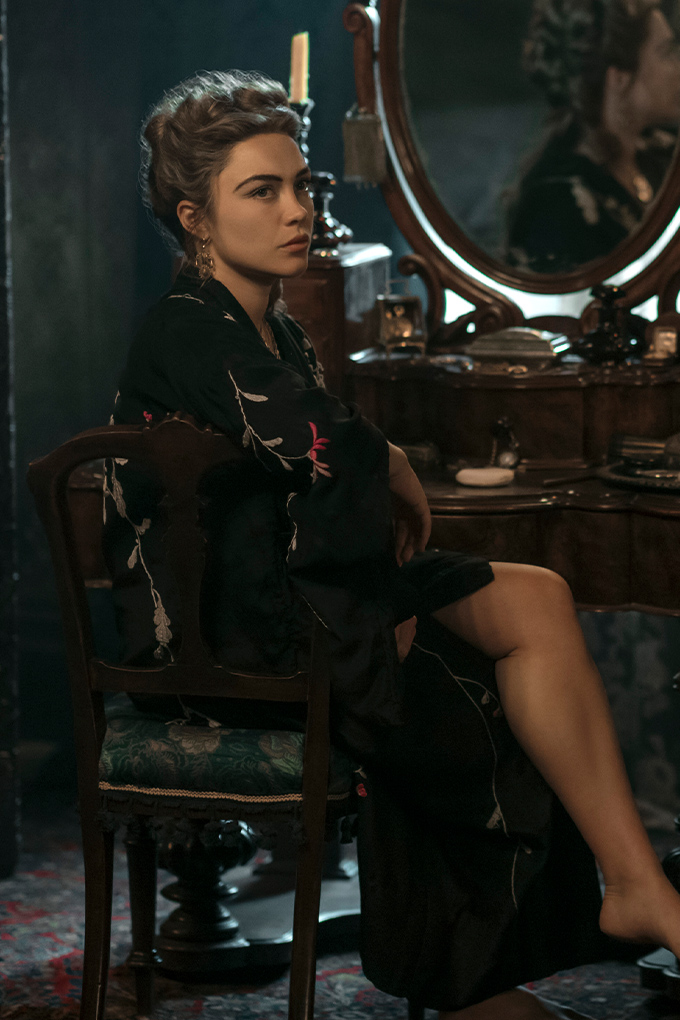
The series takes place almost entirely underground, with the survivors of a mysterious global catastrophe struggling to keep the dwindling flame of mankind from burning out. Tensions are, understandably, high, with the people in power fighting to keep all notions of rebellion buried as deep as their confines. Main character Juliette Nichols, played by Rebecca Ferguson, is one such dissenter, and in Season 3 she comes face to face with Camille Sims, played by Alexandria Riley.

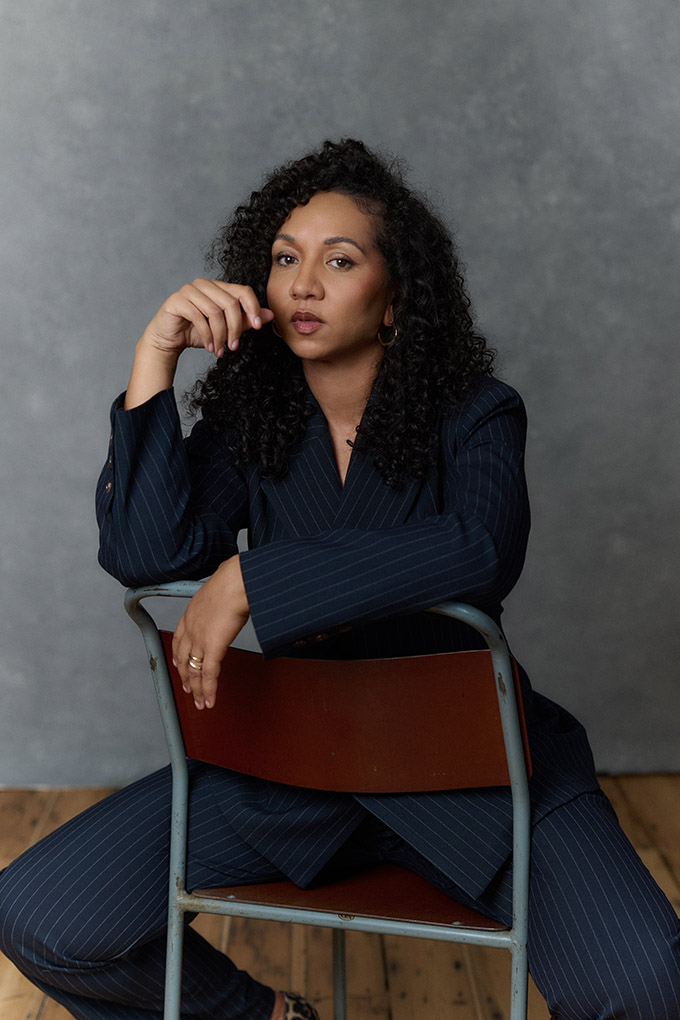
Riley’s role has expanded in the newest season, and we’re all the better for it, with the Welsh actress bringing her very best to keep viewers’ eyes glued to their screens. As Sims, she contains multitudes: she is a wife, a mother, a member of the last vestiges of humankind. But she was also an enforcer for Judicial—the silo’s lawkeepers—and in the latest season, has taken on the mantle of the head of IT, a department whose relationship with the rest of the silo is, at best, distant and mysterious; at worst, conniving and authoritarian.
As the latest, tightly-woven thread in science fiction’s grand tapestry, Silo succeeds because of the canvas it paints—bleak, beautiful and an utterly compelling mirror of our own. Ahead of the release of its thrilling third season, Riley sat down with Vogue Singapore to talk about solidarity in the face of tyranny, the importance of pursuing truth and the enduring power of memory.

How did you come across Silo, and what does your relationship with science fiction look like?
I’ve had the honour of doing quite a few sci-fi pieces. My first opportunity was with the audio drama adaptation of Torchwood. I just fell for it—sci-fi is amazing because it goes beyond your imagination, and it also has a really unique way of mirroring our real world. What I love about Silo is that, besides the setting, it is so authentic in its characterisation. And those characters: I remember submitting a self-tape audition and thinking that there was no way I was going to get the part.
But then I did get the call back. Learning that I’d be in the company of Rebecca Ferguson, Tim Robbins and Common—I remember seeing Common’s name listed as ‘Robert Sims’ and thinking: “Wait a minute, does that mean I’m Common’s wife?” I was over the moon with it all. This show was just one of those things that I think every actor dreams of getting the opportunity to do. It just started as a small thing and then blew up.
There’s no shortage of good science fiction shows out there. What makes Silo stand out from the crowd?
We were talking about this as a cast, actually. We were surprised by how quickly people just gripped it. It’s great because it’s an amalgamation of things, so the show gains the attention of a lot of people you wouldn’t necessarily feel would gravitate to it. I’ve spoken to so many people who have said they don’t really watch sci-fi, but they like this show because it’s special. Silo invites the audience in to ask questions. It gives them permission to get involved.
It’s not a show that stuffs a message down your throat, but still it tackles quite big questions in our time about questioning authority, about finding your truth. Putting that to the audience and posing the question: ‘What do you think about this?’ Viewers are encouraged to place themselves in the shoes of the characters, which makes the impossible situations they find themselves in more relatable. And there’s the mystery element, as well—everyone loves a classic whodunit.

Camille gets a real level-up in Season 3, coming out swinging as a main character. What did you do to adapt to the changing role?
I’m the queen of self-doubt, so I instantly thought: “I don’t know if I can do this.” It’s a lot of responsibility, and I didn’t want to let anyone down, especially because the books have already got a fan base. I just had to block out the noise if I wanted to get it right. I really was committed to making sure I knew every layer of this character, and I went back through previous seasons’ scripts to see how she’d evolved over time. It’s funny because I feel like there were a lot of hints in season two for Camille—how she was always calculating, very much two steps ahead a lot of the time. The directors were incredible, of course, but Rashid, who plays my husband in the show, Robert Sims, was really supportive too.
We’d sit down and dissect things scene by scene to create the backstory. It was a matter of really fleshing out these characters, but because I started my career in theatre, I was able to apply those skills in the show, which is something one rarely gets to do. It was especially helpful because Camille spends so much time alone, so a lot of it reflected like a one-woman show. I approached it with the same stamina as I would a theatre piece, and that’s how I kept the tension and the energy at all times, because Camille was very often isolated.
Is there any part of you that wants to go back to theatre, and how did you translate those skills to television?
I do miss theatre, and I’ve had conversations with my agent about returning. There’s no feeling like it: with theatre, you get on that train and you don’t get off until it’s done. If something goes wrong, you figure it out on the spot. It works your muscles as an actor. You’re memorising lines and doing table reads all the way up to rehearsal time, and then you’re in that rehearsal room from nine to seven.
I’ve definitely taken all that into screen work, because you don’t get a lot of time to dig into your character. Things are fast, you’re on set, you get the character, and you make of it what you will. But the tools I have from theatre have helped me put the work in to break the character down and analyse scenes and lines.

Camille is faced with so many responsibilities in the show. Why do you think she’s such a compelling character?
That’s what I absolutely loved about her: she is so many things. Credit to our amazing writers, because Camille is a Pandora’s box. She isn’t confined by your expectations, doesn’t just exist in one environment. She used to work in Judicial as an enforcer, but she’s also Robert Sims’s partner, the mother of Anthony—she’s juggling all of these things, like most women do, and it’s great to see that represented on screen.
I think her mind is what I love the most, because she is just so tactical about everything. As the voice in Robert’s ear, she’s a kind of Lady Macbeth. A lot of people were questioning her, wondering what her game was. Despite all that, her motivations are always about her family. And the special thing is that she stood alone in her power. She wasn’t just Robert Sim’s wife. I love the roundness of her, the fullness of her.
Your role serves as a great character foil to that of Juliette Nichols. Could you break that dynamic down for me?
Juliette has got that rebellious edge to her, and Camille is very measured. It’s a nice balance. There are a lot of similarities between them as well. They’re both so driven by purpose, and that’s what’s beautiful about their relationship. Acting alongside Rebecca Ferguson was incredible. She’s absolutely phenomenal, an amazing actor and person. She was the first person I met on set, and I was so intimidated and overwhelmed, but she was the first person to leave the middle of the scene. She came over, scooped me up and said she was so excited that I was on the show, which made me feel so relaxed and welcome.

On the subject of chemistry: what was it like acting opposite Common?
So actually, Common didn’t know he was getting a wife until midway through season one. That set the tone for him, because he made a request: he wanted to meet and have a conversation before we got on set, to see how we could connect and get to know each other. I really appreciated that. I remember being in my trailer just freaking out, because I grew up with his music.
I think it’s the first time I’d been starstruck. He’s everything you imagine him to be: very grounded, very peaceful, generous and supportive. It really was a dream to act with him. He’s also so disciplined. He would arrange meet-ups the day before scenes to go over them, and try to justify our character’s decisions. I loved that, because it showed how much we cared about Robert and Camille. Common would ask, “Why is she doing this? Why isn’t she seeing that Rob is just trying to do that?” And I’m like, “Yes, but you’ve got to realise that she’s got the lives of 10,000 people on her shoulders!”
What do you think are the most important takeaways for viewers after watching Season 3?
It might be a blanket cliché, but I hope people see the importance of unity and kindness. The people living in the silo are underground. They don’t know what the future will hold, they don’t even know about the past. They can’t go outside either, and so the community has to come together as people. It’s a beautiful thing, and when they rebel you see them fight for what they believe in and question the truth that is fed to them, which goes on to inspire other people to start questioning things. They move as one. They’re tight. That’s the most important thing I felt coming away from it. The trust that grows between the people in the silo is beautiful to see.

The characters in the show have a strange relationship with technology, as much of it is old-school and analogue. Nowadays, the digital ether has made it increasingly difficult to hold on to physical relationships. What can we do to stay tethered to reality?
I think physical connection is so important: to objects, people, anything. We need to be grounded. Someone asked what we’d struggle with most if we were in the silo, and I think it would be the lack of connection—feeling the environment, the sun, the ground. We saw the impact of that during COVID-19.
I remember thinking then that I hope people remember the importance of physical connection. I was praying that people hung on to that, because connection with others—making physical, visceral memories—it can’t be beaten. In the show, that dynamic is used as a weapon, and it’s used because the powers that be know that’s the most important thing to us. Those memories, making those connections with people and things—how many times do we say we’ll smell something and think: “Oh my god, that reminds me of this thing that I used to have?” No one’s going “Remember that one Reddit article?” Screens can’t replace human interaction.
One of the big issues tackled by the show is the notion of ‘the greater good’. I think many people struggle with drawing that line in the sand, with determining whether or not the end justifies the means. Do you have any advice for them?
I’m with those people who are struggling. You know, the interesting thing about ‘the greater good’, which we’ve seen for years and years before us, is all about who’s telling you what that greater good is. Where is that information coming from? What I’ve taken away from this show is to be cautious about taking things at face value. What people tell you is the best thing for you isn’t always the case.
It’s important to do your own research, to listen to those gut instincts. It’s kind of a joke, but I firmly stand by that. If you feel a bit like something’s not right, it’s usually because it isn’t. Making those decisions comes down to you and your truth—what feels right in your spirit. If it doesn’t feel right, then just ask. I’m big on that. Ask as many questions as you can, and if people are irritated by that, it’s probably because your gut was right the first time.
Season 3 of Silo releases on Apple TV on 3 July.