If the irreverent 15th century Buddhist monk Drukpa Kunley, affectionately referred to as the ‘Divine Madman’, is to be believed, we all contain multitudes. Divinity and madness are simply two sides of the same coin.
Life is complicated, often harsh and unforgiving in the punches it throws your way. But if there is one takeaway I brought home after meeting the people of Bhutan—and encountering the wisdom of the Divine Madman—it is this: if you find yourself afloat in a sea of change, do not be afraid to find hope in unconventional ways, even in the face of all the dogma of tradition.
Earlier this February, I travelled to ‘the world’s happiest country’ courtesy of Vogue Foundation, alongside fellow host Vogue Singapore editor-in-chief Desmond Lim. With us were filmmaker He Shuming, fashion designer Bessie Ye, and actresses Chen Yixin and Tan Kheng Hua. We hardly got there by ourselves though.
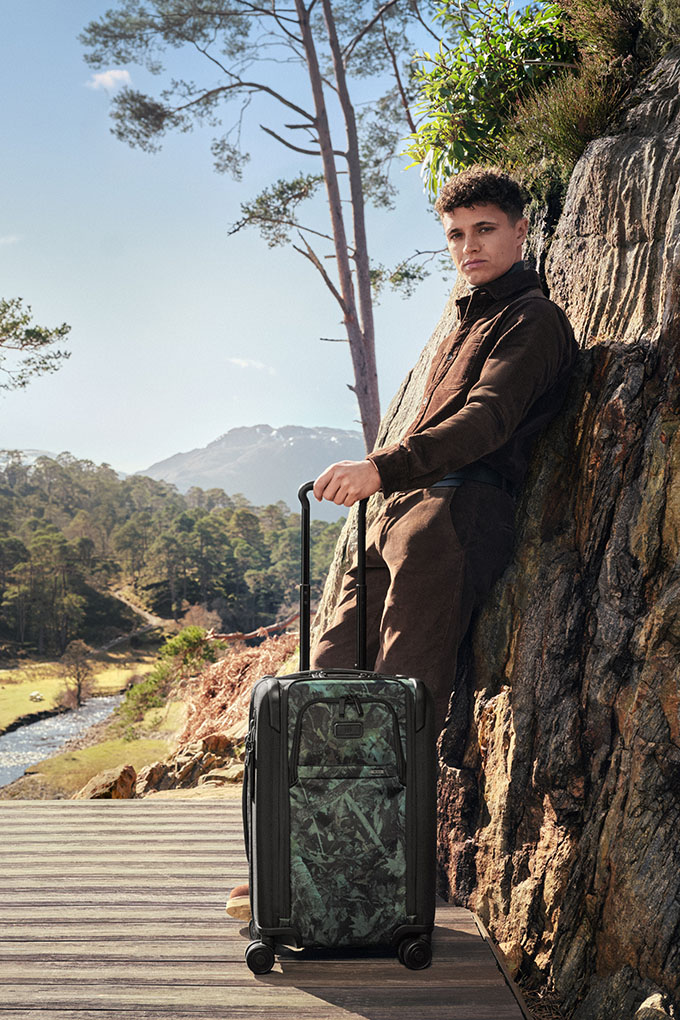
Two luxury brands sped us on our way: luxury adventure brand &Beyond provided us with resplendent accommodations in the heart of the Punakha valley; and luxury travel brand Tumi graciously offered some of the best pieces in their collection to everyone on the team. With their support, we found out why Bhutan is among the most sought-after tourist destinations in the world. Sweeping valleys, pure blue waters and towering mountain ranges make for easy placement on one’s travel bucket list.

However, the country, the first in the world to go carbon negative, is much, much more than the sum of its stunning vistas. Its most vital feature is its heart—its communities and their culture. The people of Bhutan wear this heart proudly on their sleeves, and it beats with a radiant, humble strength, buoyed by centuries of Vajrayāna Buddhist tradition.
It certainly helps that Bhutan’s borders only opened up to foreign travellers in 1974—it remains notoriously difficult to enter, given the government’s ‘low volume, high value’ approach to tourism. In their eyes, the best experiences are pure and unfiltered. Fittingly, common metrics for determining economic viability, like Gross Domestic Product, are considered over-rated. Instead, Gross National Happiness, a term first coined in the ‘70s by the country’s fourth king, reigns supreme.

That being said, things are far from perfect. The outside world has come knocking, modernity’s endless march casting a growing shadow of uncertainty over Bhutan since its borders opened. Once content to mind its own business sequestered deep in the easternmost Himalayas, the country now finds itself standing on the yawning precipice of great change. Bhutan’s future might be uncertain, but luckily for us, its people have remained steadfast in their warmth.
I can think of no better example of this than in the endless hospitality offered by our tour guide, Jamyang, and driver, Karma. Both were representatives of &Beyond, who, for most of our trip, hosted the team at the &Beyond Punakha River Lodge. Every square centimetre of the property, which includes a series of tented suites that are the platonic ideal of natural luxury, is infused with the rarefied air of the valley that surrounds it. The gorgeous architecture and thoughtful amenities besides, their vision of ‘regenerative travel’ puts a steady, truly sustainable twist on the much-vaunted term. In truth, they are quite possibly the concept’s best ambassador in 2026.

Case in point: community is in &Beyond’s blood, to the extent that they purchased 35 acres of surrounding land to support local farming initiatives. The produce grown by these farmers are then supplied back to the Punakha River Lodge and nearby hotels in the efforts to promote more sustainable livelihoods. This focus on bona fide human connection applies equally to the brand’s representatives. It goes without saying—the brand’s staff, from the porters and cleaners to the butlers and chefs, went above and beyond at each hour of every day to ensure our stay was seamlessly, indulgently comfortable.
Similarly, off the premises, Karma’s driving skills and Jamyang’s on-site historical guidance were immensely helpful—but the real winner was their boundless, infectious attitudes. From the smallest of reserved smiles to the grandest of unassuming gestures, they never failed to make us feel like we belonged.

In fact, it was Jamyang who first introduced us to the Divine Madman. The brazen monk led a decidedly unorthodox approach to life, dancing between bottoms of bottles and the bed of women with unnerving ease. This behaviour left an indelible mark on the fabric of Bhutanese culture, painting a very different picture of enlightenment—one where truth can be found outside the confines of age-old institutions.
Tradition has its place, of course. It is undoubtedly a special kind of history, telling us of what came before so that we might not forget who we are in the future. But the madman believed there was more than one path to nirvana. Not all require a mass embrace of tradition-for-tradition’s-sake; not all are paved with the stones of discarded pleasure.

Rather, what matters is your honesty and humanity, your desire to tell the truth in the face of unthinking dogma and willingness to treat others with compassion, regardless of your (or their) circumstances. Life is beautiful precisely because it is messy, full of tragedy, comedy and every shade in-between. If all the devilish details of our existence were offered wholesale to the gods of dispassion, why bother doing anything to begin with?
In this manner, the Divine Madman’s philosophy is ultimately one of hope. So eat, drink and be merry. Do not be afraid of change, for not all change is an evil—especially so for a country still in the process of joining the outside world.
I am, admittedly, burying the lede here to some extent. We would not have been able to make the trip without Tumi’s companions doing the quiet, confident heavy lifting in the background. The proof was in the pudding—and not just in their seemingly bottomless suitcases boasting polycarbonate durability in all its impact-resistant glory. They made sure to sweat the small stuff, too.

Backpacks and I do not normally get along, so it was a pleasant surprise to realise the true workhorse of my trip was the Tumi Alpha. My editor-in-chief and I were scrambling to close an issue back home, so the ability to haul my laptop over hill and dale was a godsend. And you would have thought she had owned it for years before, because it was genuinely impossible to part Tan Kheng Hua with her sunny yellow Teghan Crossbody shoulder bag. Of course, there is also the matter of Vogue Foundation.
The foundation’s whole point is to connect with local communities in other countries, so we were especially blessed to have a travel partner as in tune with the rhythms of Bhutanese culture as &Beyond. Our group was a bevy of creatives as well, so wrapping our heads around Bhutanese craftsmanship was top of mind from the onset. To that end, the days passed by in a blur, but in the best way imaginable.

We printed personal prayer flags and received multiple blessings from many monks at various shrines and sundry temples—all seemingly one-upping each other in some outrageous exercise in exquisite Buddhist architectural sensibilities. We breathed the fresh mountain air trekking on trails winding up and around hills throughout Paro, Punakha and Thimphu; and partook in the exceptionally moreish Bhutanese cuisine, in part courtesy of &Beyond and Amankora, who provided accommodations on the first and last night of our stay. Most importantly, we met the heart of Bhutan—its people.
On the street, around temples and inside their very homes, we bore witness to generations of kind-hearted generosity and deep-rooted craft traditions. An elderly woman opened her home to us to try the local moonshine, ara, which she made the old-school way, using homegrown rice in a hand-hammered, hand-forged still. A small team of thangka painters brought us to their store, full of dozens of meticulously intricate artworks, and gave us the opportunity to paint (read: spoil) their expert renditions of the Buddha’s various symbolised body parts.

The students of Bhutan’s largest nunnery walked us through their institute’s venerated halls to catch a glimpse of the country’s longest-running strain of education. A mother-daughter duo gave us a crash course in traditional dyeing methods using local herbs and plants. And we sat down for dinner with one of Bhutan’s most accomplished fashion designers, Tashi Zangmo, who infuses modern taste with centuries-old weaving methods.

As moments of human connection go, these were extraordinary. In each encounter, the Bhutanese people reminded me of two fundamental truths. First: it is important to slowly, steadily—quietly, lovingly—build up your craft over a lifetime. Sometimes, making art is akin to catching lightning in a bottle; most other times it is simply the by-product of really hard work over a very long time. Second: never forget your humanity. Art is nothing without community to share it with.
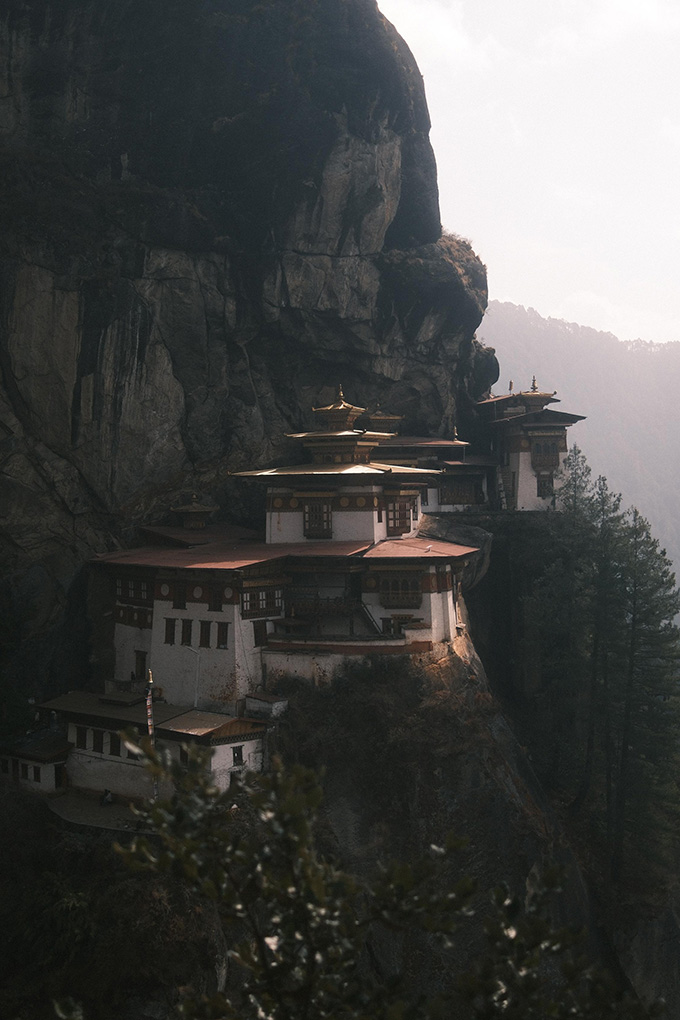
Our last day breathed new life into these truths, when we hiked four kilometres up to Bhutan’s most famous holy site—the Taktsang Monastery, also known as ‘the Tiger’s Nest’. You would be hard-pressed to find a better view in the whole country, to say nothing of the way its construction, built into the side of a 3,000-metre cliff overlooking the Paro Valley, offers a profoundly felt spirituality, transportive in the truest sense of the word.

It was during our tired descent when the magic of all our time in Bhutan seemed to coalesce. At the rest stop halfway down the trail, we were met by a homely meal of lavish proportions. Jamyang originally planned for us to visit a farmstead to experience local cuisine first-hand. Unfortunately, our schedule did not allow for it, so he instead reached out to a friend in town to prepare food for us—and race it halfway up a mountainside for our benefit.
One last meal for the road. One last incredible gesture from a man who has never even left the country. His work as a tour guide means the world comes to him, and in suitably Bhutanese fashion, he welcomes its every shape and form with open arms and an ever-ready smile.

As I sit here in Singapore and think back on my trip, I cannot help but feel a strange blend of sadness and sympathy. While the kingdom of Bhutan is technically old, the country is essentially new. The growing pains of encroaching modernity begun in the ‘70s are still real to this day.
McDonald’s and Starbucks have yet to plant their seeds of corporate progress in Bhutan’s soil, but smartphones are everywhere. Social media has captured the hearts and minds of the younger generations, many of whom are abandoning generations of hard-won craftsmanship. For a country that has for so long resisted change, it is fast becoming all they know.

But hope can be found in unconventional ways. The people of Bhutan are not alone. They have each other, of course, but they also have the teachings of a particular Divine Madman. May his guidance on sidestepping tradition—with a healthy dose of whimsy and irreverence—ferry them safely on their way to this brave new world.