After three decades as a singer, only one thing remains constant in Tanya Chua’s world: an iron-clad determination to march to the beat of her own drum. “As a child, I never quite fit in. I was a loner,” she states with a breezy laugh. It is a Tuesday afternoon and Chua is remarkably energised after her tai chi class. Brimming with verve, the sheer enthusiasm in her voice is palpable throughout our conversation. “I always prided myself on being different. I couldn’t explain it when I was younger, but I held this innate understanding that if someone else had done something, I knew I didn’t want to do the same,” she muses. “I took a lot of comfort in knowing that I didn’t have to follow the masses. You could say thatI’m a rebel at heart.”

Or a rebel with a cause, to be exact. Having debuted in 1997 with an English album, Bored, she quickly rose to prominence among Singaporean households for her resonant vocals and raw, relatable lyrics; an anomaly at a time when formulaic pop was considered the standard. The strength of Chua’s convictions serves as the bedrock of her long-standing career—a strategy that has paid off despite external pressures suggesting otherwise. She remains the first and only person to win the Best Female Mandarin Singer award four times at the Golden Melody Awards, and has sold out sizable stadiums across the world.
Rather than sticking to fan-favourite setlists, however, she pivoted with a new mini tour titled Into the B-Sides. Touted as a love letter to her less recognised tracks, it is a homage to songs she believes deserve a chance to be in the spotlight. The risky endeavour garnered flak but to no effect; Chua was resolute in seeing it through.
“I was attacked online when I first announced Into the B-Sides.In all fairness, it’s not something that is typically done,” Chua remarks.“I mean, who would have thought to do something like this? Imagine attending a concert without a single hit song. But I did it because I firmly believe that I write good songs. It’s just a pity that logistically, the record label can only invest in a few tracks. Some songs go viral purely because of that reason.” Not that Chua is concerned about the reception her work receives. Commercial success is hardly a point of consideration for the singer, who declares that her sound is often determined by what intrigues her at the point of creation.

“I won’t say that my work belongs in a specific genre because I refuse to pigeonhole myself. I like to switch things up whenever people begin to expect something similar from me, though,” she teases. “My music has always reflected every facet of myself. I did a whole album centred on love and ballads, thenI realised I didn’t know much about love yet because there were a lot of unspoken things within me I couldn’t put a name to. Then I pivoted to something really dark. I even did an electronica-based album, and when that was done, worked on a really stripped-down, acoustic-focused one. The way I look at it, if I’m curious about something, I’m going to try it.”

Some might deem Chua’s approach to life as mercurial and perhaps even audacious, but it’s clear to see that her outlook is hard-won; the result of her tumultuous journey within the entertainment industry. At her lowest point which she dubs a “soul-leeching period”, Chua escaped to Taiwan with only three months’ worth of rent in her bank account after receiving little to no support for her musical direction. With no management or record label to back her up, she had to find a way to rebuild—a process that turned out to be instrumental in shaping the way she views failure.
“Back then, all I wanted to do was run away and hide. I couldn’t be in a place where I didn’t feel understood,” she reminisces. “I had just won a Golden Melody Award, but it’s not like that helps pay the bills. So I had to put down my halo and allow myself to collapse. I let myself disintegrate entirely to find myself again. It was a turning point for me because it allowed me to ponder this question of why we are so afraid of failure.” Chua pauses to compose herself before continuing: “I’ve learnt to look at it as a productive force. I told myself that this whole adventure of fearing, of anxiety and of feeling is what makes life so exciting. It’s all about the cacophony and the process. If I had to look at life as just a series of end points and results, it would be a very boring
one indeed.”

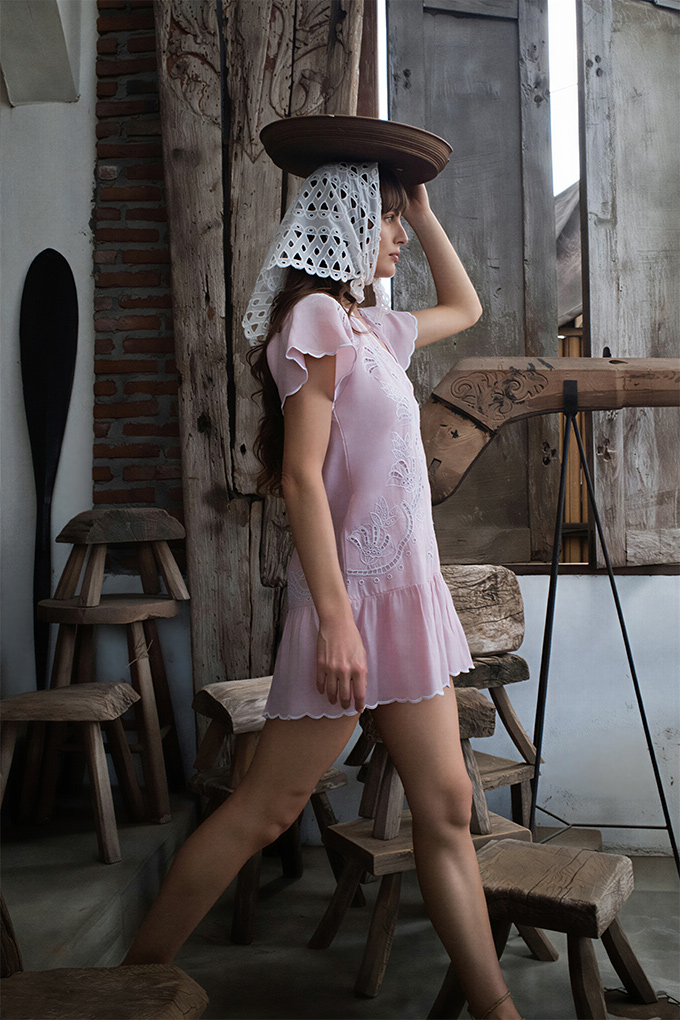
under dress); Shushu/ Tong dress Chou Mo
It’s safe to say that this philosophy extends beyond Chua’s professional life. Tai chi aside, the singer has also made it a point to take on new hobbies that defy “all sense and gravity”.
“The thing about trying new things is that you have to stop self-sabotaging,” she instructs. “I’m still doing hardcore gymnastics at 51 and I get asked all the time if I’m afraid of getting injured. Of course I am, but you have to push through. I’m doing backflips and handstands at an age where most people would be terrified to try. But if you’re constantly fearful of failure, nothing is going to get done. You’ll never do anything interesting or out of the ordinary.”
Another first for Chua this year is her Vogue Singapore cover, which she considers to be kismet. “One of the things I am proud to share with Singapore is this deep-rooted resilience. This notion of coming from humble beginnings and becoming a powerhouse in your own right,” Chua beams. Then, with a twinkling laugh: “How amazing it is, not to be underestimated. To exceed everyone’s expectations of you, and to do it on your own terms and rules. There’s nothing that I resonate with more.”
Photography Chou Mo
Styling Nicholas See
Make-up Kaiting Wu
Hair Mikio Aizawa | Over: Face:
Executive producer David Bay
Producer Ann Chen | Over: Face:
Set supervisor Naoto Tung
Set design Shuo Lin Liang
Floral designers Wayne Dai and Isaac Chang
Set assistant Colin Chiu
Photographer’s assistants Yen Yi and Lu Shao Cheng
Stylist’s assistant Mina
Get your copy of the July/August ‘Audacity’ issue of Vogue Singapore online.