For 300 years, Ruinart has maintained a unique dialogue with nature through art. Champagne is, above all, a natural product of the earth. By taking the time to observe, listen to and understand nature, Ruinart harvests the finest fruit, from which each cuvée takes form.
Inspired by this tangible connection with nature, the Carte Blanche initiative, through which the champagne house raises awareness about sustainability and climate change by supporting leading contemporary artists, was born. “For us, it is about considering nature and all living things as a subject to converse with rather than a subject of conversation,” shares Frédéric Panaïotis, Cellar Master of Ruinart.

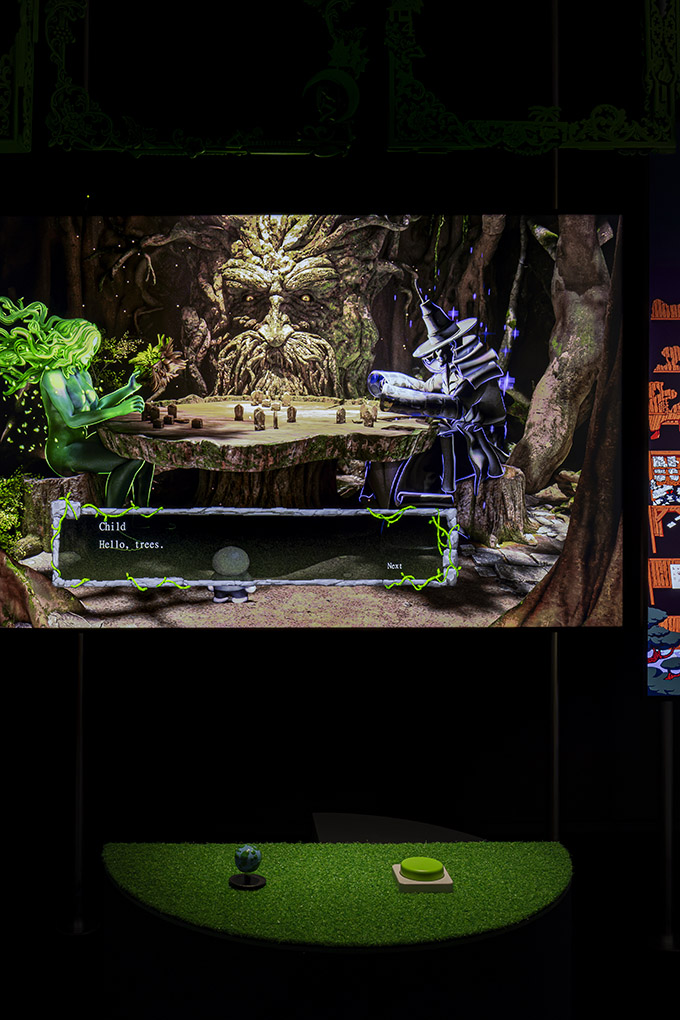
Ruinart returns as the official champagne partner of ART SG this year with the work of Marcus Coates, an acclaimed contemporary artist and ornithologist based in London. One of the six visionaries leading Ruinart’s 2024 Carte Blanche initiative, Coates will present his poignant ‘Nature Calendar’, a recounting of ephemeral moments observed at Ruinart’s historic Taissy vineyard. Through painting, photography, sculpture and sound installations, Coates explores imaginary and symbolic relationships between humankind and nature. Art lovers and enthusiasts alike are invited to immerse themselves in the installation on display at the Ruinart Art Lounge, all while indulging in the Maison’s delectable Blanc de Blancs cuvée at the Ruinart pop-up bar.
With sustainability a core driving force of innovation, Ruinart’s creation of the second skin case, an eco-designed packaging made without the use of any plastic, crystallises their commitment to the environment. For this special season, clients will have the rare opportunity to purchase a first-of-its-kind collaboration: personalised and limited-edition Raffles Hotel Singapore x Ruinart Second Skin bottles, available exclusively online as well as at the Raffles Hotel boutique.
Here, in conversation with Vogue Singapore, Coates opens up on the inspiration behind his creations as well as how he consciously reflects on and communicates with nature through his art.
Tell us a little bit about what drives your art and desire to create.
There’s an excitement in creating mental imagery and manifesting that. There’s a drive to delve into a personal imaginary world and explore its relevance, learning from it and seeing where it touches the reality we all share. There’s also a strong drive when a personal value meets a wider cultural need, like the necessity of changing attitudes to the natural environment. At the core of my work, though, is a need to relate to the natural world, to find ways to overcome the barriers to this.

Your work often engages deeply with the natural world. How do you view the relationship between nature and art?
I see art as a place where values, relationships and paradigms can be tested, challenged and played with. To bring ideas of nature into this realm enables us to see how cultures have created ideas and concepts of nature and how these can be so revealing to us, showing us how we define ourselves in relation to nature, what we are striving to be, what we fear, what we feel we need.
How did you translate the idea of ‘listening’ to the land into your collaboration with Ruinart, especially in the context of their vineyards and terroir?
I use listening as an evocative term for paying attention, for curiosity and care. Nature is always communicating in some way, what I’m trying to do is find ways for myself and others to listen and learn from this. In the vineyards it became clear to me that the people working with the grapes and the soil are so expert at this listening—they understand the smallest changes and intricacies in the relationships between the soil, insects, plants, weather and the grapes.
What was the process of making the installation like?
It was a joy to spend so much time in the vineyards but also in the surrounding habitats, watching, listening and recording the species I saw there over a year. I spoke to local experts in natural history, experts on birds, plants and fungi who helped me to research and create a predicted event in nature for every day of the year in an area of two squared kilometres. Outside the Maison Ruinart in Reims, the staff raise a flag up high on a flagpole every day which carries a sentence describing what is happening in the vineyard that day for the beings that live and survive there. It’s a celebration of the vital role the insects, birds and plants play, not just in cultivating grapes but in all our lives.

Sustainability is an essential part of Ruinart’s philosophy. What role does sustainability play in your overall artistic vision?
For me, the question is how we can shape a new culture that works both for us and the world. Clearly we haven’t managed that. I’m trusting that my artistic vision can play a small part in helping us to pay attention to the needs of the environment and humanity’s long term survival.
Efforts to protect biodiversity in their vineyards have become a significant part of Ruinart’s ethos. Can you speak to how this might have inspired you?
For Ruinart, biodiversity is a necessity: their grapes rely on healthy soils and the insects, invertebrates, bats, birds, wild flowers and plants that create that special ecology. I could see how every aspect of the production has to buy in to this ethos and that inspired me as someone who wants to integrate knowledge and awareness of nature into our everyday lives. So to have the flag flying outside Maison Ruinart, not with Ruinart’s logo on it but a message about what the ladybirds, or earthworms, or a butterfly was doing that day was a collaboration in committing to educating, and inspiring people to consider the importance and roles of other beings.

In terms of ecological responsibility, what do you think both artists like yourselves and companies like Ruinart can do to drive change in the wider community?
Identification with brands is an important aspect of self definition for many people. If this relationship can also be linked to values that celebrate the natural world and highlight its importance I think this can be a powerful tool to shifting how people align themselves in relation to nature. I think this subjective shift of values can be one of the most important triggers for wider change.
What do you hope visitors will take away from your artwork?
I hope the flags will place a seed of curiosity and wonder about the parallel lives in nature to theirs, where the struggle for survival is a daily preoccupation, where the concerns of feeding, sheltering, safety, mating, giving birth and home making are shared but largely invisible to us all. I hope people will consider these other lives and allow them to take hold in their imaginations.
Visit the Ruinart Art Lounge on Basement 2 at ART SG 2025 from January 17 to 19. Tickets are available for purchase here. Personalised Raffles x Ruinart Second Skin bottles are available for purchase online and at the Raffles hotel boutique.