Few American fashion houses have established quite the same following in Japan as Polo Ralph Lauren. Across generations, its distinctive approach to dressing, where collegiate influences meet English tailoring and classic Americana, has found an enthusiastic audience in the country. Beyond its widespread appeal, however, there exists an entire community dedicated to seeking out, preserving and studying the brand’s most significant creations. For these collectors, Polo represents far more than a recognisable aesthetic. Each garment offers a glimpse into a particular moment in fashion history, with its own story to tell.
From 23 to 25 October, this fascination took centre stage at the inaugural PoloFest, held at Jing Harajuku in Tokyo. Marking the first instalment of a new international initiative by Ralph Lauren, the three-day event brought together fashion enthusiasts, vintage specialists and creative practitioners to explore the many dimensions of the Polo universe. Across a specially conceived exhibition, a programme of conversations and an extensive vintage shopping experience, visitors were invited to discover the people, influences and defining pieces that have contributed to the brand’s identity.


That Tokyo was chosen to host the first edition was no coincidence. Ralph Lauren’s relationship with Japan began in 1976, when the house opened its first local retail space at Seibu’s Ikebukuro department store. A fashion presentation at the Tokyo Prince Hotel that same year introduced audiences to the designer’s unconventional sartorial approach, where formal jackets could be paired with hiking boots and established dress codes were reconsidered. Almost 50 years later, that philosophy continues to resonate with Japanese collectors, whose interpretations of Polo have developed into something distinctly their own.
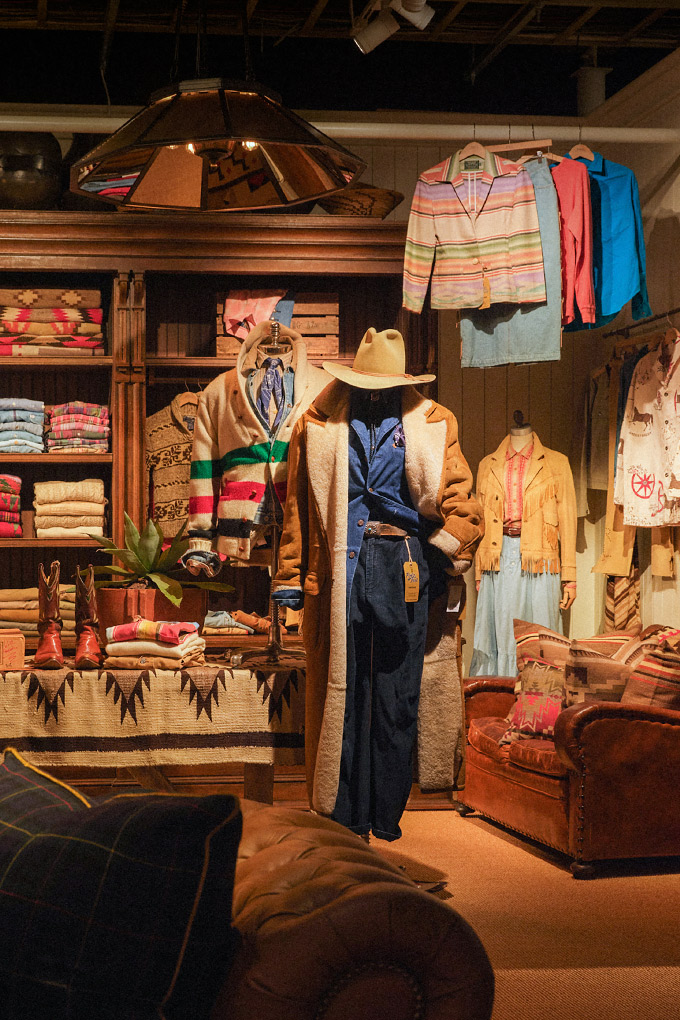
At the heart of PoloFest was an exhibition bringing together noteworthy garments from different chapters of the house’s history. Alongside it, a carefully assembled selection of international vintage dealers presented pieces that reflected the remarkable breadth of Ralph Lauren’s design language, from impeccably cut tailoring to functional outerwear and sportswear. Visitors could explore these collections up close, while a series of discussions offered further insight into the interests and experiences of those who have devoted years to understanding the brand.


Among the participating specialists was Laird Mackintosh of Thoroughbred New York, a former Broadway actor who worked for Ralph Lauren in the 1980s. Today, his Kingston-based boutique houses an exceptional collection of vintage Polo tailoring. Chandler Guttersen, founder of Vintage Grace, brought another perspective shaped by her upbringing on a Colorado cattle ranch. With her business based in Manhattan’s Nolita neighbourhood, Guttersen has developed a discerning eye for designer vintage, particularly pieces that capture the romantic and eclectic sensibilities of Ralph Lauren’s aesthetic.
Japan’s own collectors were equally central to the occasion. Yoshihito Murayama of Safari has spent more than three decades building an extensive assortment of Polo garments, including rare examples from the Polo Country line. His Koenji boutique has become a destination for enthusiasts seeking pieces from the brand’s earlier years. Meanwhile, Tez Saito of Reflex, a former Ralph Lauren employee, has devoted some 40 years to collecting garments and memorabilia. Their dedication demonstrates the importance of independent specialists in documenting fashion’s past, often preserving designs that might otherwise disappear from view.


Elsewhere, Japanese artisans presented one-of-a-kind creations fashioned from existing Polo garments. Through alterations, repairs and imaginative reconstruction, familiar pieces were given renewed purpose. It was a particularly relevant inclusion at a time when conversations surrounding fashion’s longevity have become increasingly important. Rather than treating age as a limitation, these creations demonstrated how clothing can continue to evolve long after its original release.
Yet PoloFest’s significance extended beyond its programme. As Ralph Lauren nears its 60th anniversary in 2027, the event offered an alternative perspective on how a fashion house might reflect upon its history. While archival collections traditionally provide a record of creative achievements, the contributions of collectors and enthusiasts reveal another dimension of a brand’s influence. Their personal interpretations, accumulated knowledge and continued appreciation have helped establish the relevance of designs created decades earlier.

In Japan, where Polo has long occupied a distinctive place within the fashion landscape, that relationship is especially compelling. What began as an American designer’s interpretation of an aspirational lifestyle has developed into a source of personal expression for audiences far beyond its original context. PoloFest acknowledged this evolution, placing the individuals who have shaped the brand’s reception alongside the clothes themselves.
Ultimately, the event offered a reminder that a fashion house’s lasting impact cannot be measured solely through its runway collections or commercial success. It is also found in the garments that people choose to keep, the histories they seek to preserve and the ways in which familiar designs acquire new meanings over time. If PoloFest is any indication, Ralph Lauren’s next chapter will be as much about the communities that continue to embrace its clothes as the legacy it has already established.