The old towns of Morocco, better known as medinas, are late to rise. In the early hours of the morning, it is not unusual to see donkeys pulling rickety carts through Marrakech’s narrow streets, assisting workers in the transport of construction materials to the other side of the medina. It is the most efficient time of day to be doing so—before the rest of the town awakens and the daily rhythm of life sweeps in; each of its inhabitants keenly aware of their part to play.
Brimming with old-world charm, the medina feels evocative, as if the slower, unwavering pace of an era bygone has been preserved like a time capsule, away from the rest of the world. In the late morning, storekeepers begin to open up shop, laying out their goods along the souk’s streets. My local guide tells me that every quarter consists of four spaces: a mosque for prayers; a central bakery or community oven where women bring freshly made dough to bake for their families; a hammam or bathing house; and a public fountain, a common source of water should anyone be in need of it. One could think of them like building blocks of a town that protects and takes care of its community.

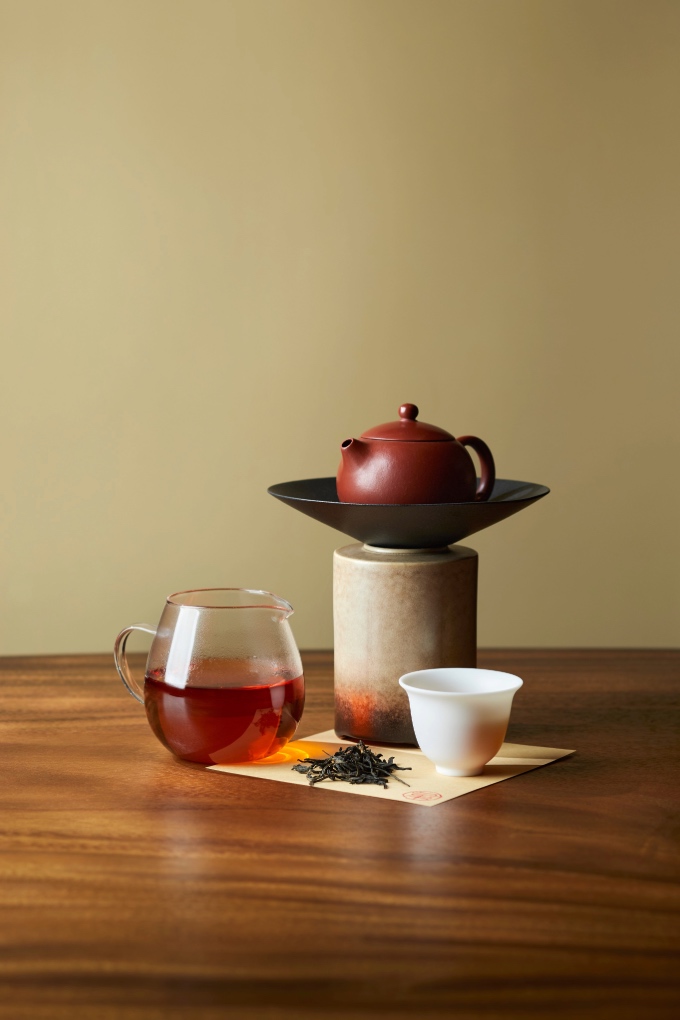
The idea of community is integral to the way of life in Morocco. The riad, for one, is a traditional Moroccan courtyard home that depicts how family time is spent. “So a family can open up their home to neighbours and guests; they can sit down in the courtyard space and talk about anything over mint tea and sweets,” the local guide tells me. Often, a fountain sits in its centre, the gentle murmur of water a stark contrast to the bustle just outside the doors of the riad—yet it operates as a liminal space that builds a sense of camaraderie with neighbours and the like. As we pass the door of one such riad in the medina, I notice there are two door knockers (shaped in the form of a Hand of Fatima, a common motif used in reference to the country’s ties to its Berber culture) on it. As it is a community guesthouse, one knocker is for family and friends, while the other is for unfamiliar guests, the guide tells me.Again: private, yet welcoming.
Royal Mansour Marrakech
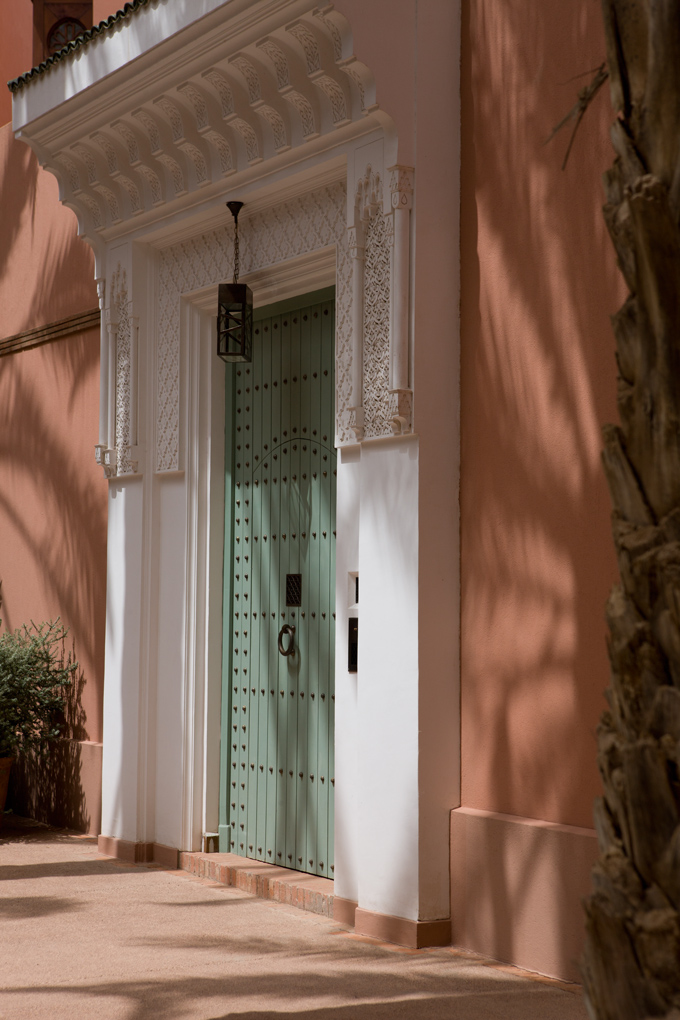
It is the riad, built on this idea of community, which takes centre stage in one of Morocco’s most majestic addresses: Royal Mansour Marrakech. Flanked by the same ochre walls that give the Red City its nickname, the property’s towering doors open unto a charming landscape unlike any other.
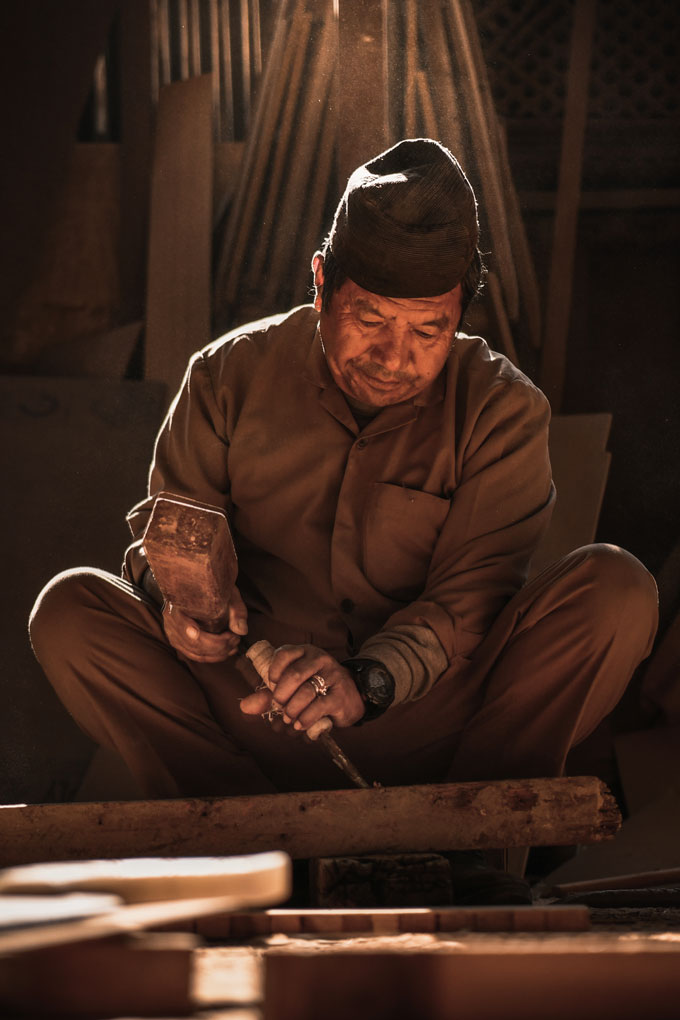
Within its expansive grounds, the way each space has been constructed not only follows the makings of a traditional riad, but also holds a mirror to the incredible Moroccan craftsmanship that adorns the entire property.

This is evident from my first few steps into its main lobby entrance. Anchored by a marble fountain in its centre, the open-air courtyard is dressed in shades of white and cream, accented by carved wood and hanging glass lamps. Its column walkways could pass off as an art gallery; the floors and walls are glazed in Zellige tiles, while wooden glass boxes hold luxurious secrets of traditional Moroccan attire.
A sense of the clandestine permeates through the rest of the property—in softly lit rooms and winding alleyways—like a promise to its guests that their private affairs are their own. It is for this very reason, I suspect, that the property has hosted some very famous residents; my own time there coinciding with a pop star’s off-duty hours.
Through this fairytale labyrinth of ochre, I discover my palace-like home for the duration of my stay. Much like the rest of this unreal paradise, every touchpoint of my three-storey riad is drenched in Moroccan sensibilities, be it the courtyard patio that welcomes me home, the unique artworks tastefully hung on its walls, or the plush and artfully crafted furniture that decorate each room. The rooftop terrace tells a story of its own, with picturesque views of the rest of the Red City and the statuesque Atlas Mountains that surround it.

Yet it is its flawless system of secret galleries within each private riad that fascinates me till my very last moment here. On each floor of the riad, service doors allow its skilled team of butlers and housekeepers to come and go within seconds, as if vanishing into thin air. Shortly after requesting for a set of additional bathroom amenities through one of my riad’s tablets, someone knocks on the door of my main bedroom. Just as I open it, I hear the sound of the service door close; like magic, my items have already been carefully placed on the steps outside. On many occasions, my eyes wandered to the doors. I never opened them—happy to stay in the dark about its inner workings. The mystery could remain intact.

Though exploring the famous Jemaa el-Fna square or the stunning Jardin Majorelle is par for the course when in Marrakech, Royal Mansour is a treasure trove waiting to be discovered. Its lush gardens, designed by Spanish landscape designer Luis Vallejo, made for a serene walk on my first morning. Alongside beautiful paths lined with roses and hibiscus, century-old palm trees, and vast lawns.
If you have an afternoon of utter relaxation in mind instead, then it’s the Royal Mansour Marrakech Spa that you’re looking for. A naturally lit space of mashrabiya white lace greets me in the atrium, the first thing I see before any of its treatments. Here, my first traditional hammam experience ensconces me in warm stone. As my full body is exfoliated in black soap and argan oil, all negativity scrubbed away in a steady stream of floral water.
It is also here at Royal Mansour Marrakech that I have my first taste of Moroccan food. At La Grande Table Marocaine, I open up my palette with a speciality that is signature to the region: medjool dates. Amid the starters, a standout pumpkin dish makes a play on these sweet, sumptuous fruits. Among the appetisers, I discover a first love of mine: fried briouates stuffed with spinach, cream cheese and nutmeg—a dish I later learn to make from scratch during one of the property’s private cooking classes. Beyond a warming spread of delicious meats slow-cooked in tagines, there is also the sublime simplicity of a nutty couscous dish that wins me over, enlivened by a colourful setting of fresh vegetables.

As the knowledgeable team of staff would later reveal to me, Morocco is also where you’ll find splendid Italian fare. And as far as I know, Sesamo, helmed by Michelin-starred chef brothers Massimiliano and Raffaele Alajmo, is the best there is. Of fresh pastas made perfectly al dente, creamy risottos and a walnut tiramisu I have not stopped thinking about.
So when the twilight hour falls, you can imagine that the stroll back is as enchanting as they come. With deep, endless sleep but a few winks away, the epitome of idyllic luxury awaits you the moment you slip past your riad’s wooden doors.
Royal Mansour Casablanca
Days later, my first evening at Royal Mansour Casablanca is met by pure majesty. An unparalleled view of the city skyline awaits at Le Rooftop, the property’s Mediterranean restaurant. Against the sunset, an architectural marvel looms over the financial hub of Morocco; the Hassan II Mosque poised like the protective caretaker of a city with so much more to offer than the film made in its name.

Casablanca, the famous American film set during World War II about war-torn romances and second chances, was released in 1942, but none of it was filmed in the renowned Moroccan state (a Warner Bros backlot in California served as the venue). Even then, there are lesser-told secrets the city adores to keep.
Take the fact that, over a decade later, the architect Emile-Jean Duhon would have built Casa’s first five-star hotel: El Mansour, a monumental palace once considered to be an escape for some of the most famous people in the world. Today, that same historical monument has gone on to take shape as Royal Mansour’s stunning second addition to its growing list of spellbinding addresses in Morocco.
Yet, the Royal Mansour in Casablanca could not be any more different from its elder sister in Marrakech. In keeping with the hospitality group’s standard of luxury, the hotel is as palatial as they come. Its architecture, however, leans away from the traditional sensibilities one might have come to expect from a stay at a Royal Mansour property as it feels deliciously modern and contemporary. Certain time-honoured elements of the old hotel, like its garden patio and the spiral staircase, have been reimagined to preserve its memory.

The lobby alone is a picturesque entity to behold, bathed in swathes of gold and sleek, geometric curves. Set by pristine columns of white marble and a stately aquarium centrepiece, there is much to admire should one choose to idle away on any of its plush sofas scattered around the atrium. A favourite detail of mine is the vintage pointer dial in every lift, playful floor indicators that felt like I was reliving a different time period. The colour palette is striking and instantly reminiscent of the art deco architecture the city has come to be associated with—think soft creams, golds, terracottas, emerald greens and rich reds.

The same palette informs its well-appointed rooms. Mine is a swanky suite decked out in a delicious shade of ruby and rich browns—tastefully seductive, like a scene in The Great Gatsby. The Roaring Twenties, after all, was the defining era of art deco.
One thing I noticed throughout my stay at Royal Mansour is its impeccable service. At every opportunity, housekeeping would arrange my vanity arsenal, and on a particularly late night out in Casa, I felt looked after by a thoughtful team of butlers who were made privy to my every location. Service fit for a king, some might say.The food is splendidly royal as well. To soothe the Asian palette, a sojourn to Le Sushi Bar by chef Keiji Matoba is a must for clean, refined Japanese flavours. Considering the white-collar folk who frequently pass through the doors of Royal Mansour Casablanca, the bento boxes make for a delightful yet swift lunch splurge. Meanwhile, La Brasserie is your go-to for sumptuous French fare by famed chef Éric Frechon, who once helmed the well-known three-star jaunt, Epicure, at Le Bristol in Paris.

Before you escape to the lavish, swallowing comforts of your suite, perhaps visit The Bar. Where divine concoctions await behind a screen of smoke as you revel in the seductive taste of a signature cocktail of your choice. Then whisk yourself to Le Rooftop for a pour of Moroccan mint tea, letting your mind wander as you take in the cityscape. In a historical building that bridges the old and new with flawless ease, time seems to come to a perfect standstill. Hazy romance hangs in the air; we are in Casablanca, after all.
Royal Mansour Tamuda Bay
The air is different here. It takes a while to find my balance again, but eventually I manage to push my feet off the ground and settle into a good rhythm. A cool, damp breeze swishes past me as I take in the sun, sand and sea. There is nothing stopping me from going in endless circles on my chosen mode of transport: an old-school type of bicycle, with a basket locked in the front. These pastoral cobalt bicycles are scattered throughout the resort grounds of Royal Mansour Tamuda Bay, where I am soaking in a part of Morocco that feels dissimilar to the rest of its cacophonous cities:of vibrant medinas and maze-like streets.
This coastal stretch along the Mediterranean peers out over the twinkling blue waters of the Alboran Sea—a heavenly escape for anyone who is looking to mindlessly switch off. It’s no surprise then, that this lush property turns its own people into tourists, offering Moroccans the complete portrait of true beachside luxury.

If riad opulence and stately interiors commandeered the first Royal Mansour and the art deco district struck a chord with the hospitality group’s second property in Casa, then its third and latest outpost in Tamuda Bay is a coastal dreamland brought to life.
Before your toes reach the waters, a wondrous lobby of cream and white greets you; every inch of it is covered by symbols of the sea. Venture farther in and these seashell-lined walls open into a museum of Moroccan art and furniture. Beautiful marble mosaics, statement furniture that are a playful treat for the senses and eclectic carpets one might dream of rolling about on for days.

Then there are the gardens. Completing the pearlesque villas, the beachside sanctuary is a phantasmagoria of botanicals of every kind: where flower gardens of palm, lemon and hackberry trees flourish, artfully arranged in seeming dissonance. Topping even the views of the ocean, they’re my favourite thing to admire when I’m out biking around the resort grounds.
There’s plenty of exploring one can do in the area, especially if it’s to visit the nearby cities and towns. But I’ll highly recommend leaving yourself a full afternoon to spend at Morocco’s first medical-aesthetic spa and all-new wellness sanctuary: the Medi-Spa at Royal Mansour Tamuda Bay. Where transformative wellness treatments, longevity programmes which incorporate advanced holistic therapies into personalised regimens as well as age-old treatments for rejuvenation can be explored for the betterment of your inner well-being. There are also spaces for personal relaxation, like the Quiet Pool: a reflecting pool bathed in green marble, sitting under a moon-like hanging sphere that lights up at night.

For meal times, consider Coccinella for quintessential Italian cuisine. It’s also here that mornings are spent between generous spreads of freshly baked pastries, fresh fruit and traditional Moroccan breakfast dishes. By this point in the trip, I’ve already formed an unhealthy reliance on one particular tagine: eggs with khliî el assil, or dried meat. As it turns out, however, Le Méditerranée, a Mediterranean restaurant inspired by Spanish flavours, steals the show (Spain is, after all, just across the border). The simplest flavours stand out, from fresh tomato starters to the delectable paellas I dive in for a second helping of.
It would be remiss to not have spent an evening by the shimmering sea during my stay, and that is precisely the agenda for my last day here. As the vivid Mediterranean waters gently lap against the coast, all I need are my trusty sunglasses and a book in hand. With the endless blue about me, only one thought replays in my mind constantly: if anyone is ever thinking of getting me a gift, mine would be a week-long expedition back to Morocco’s boundless lands, with Royal Mansour no less.

Book a stay with Royal Mansour here.