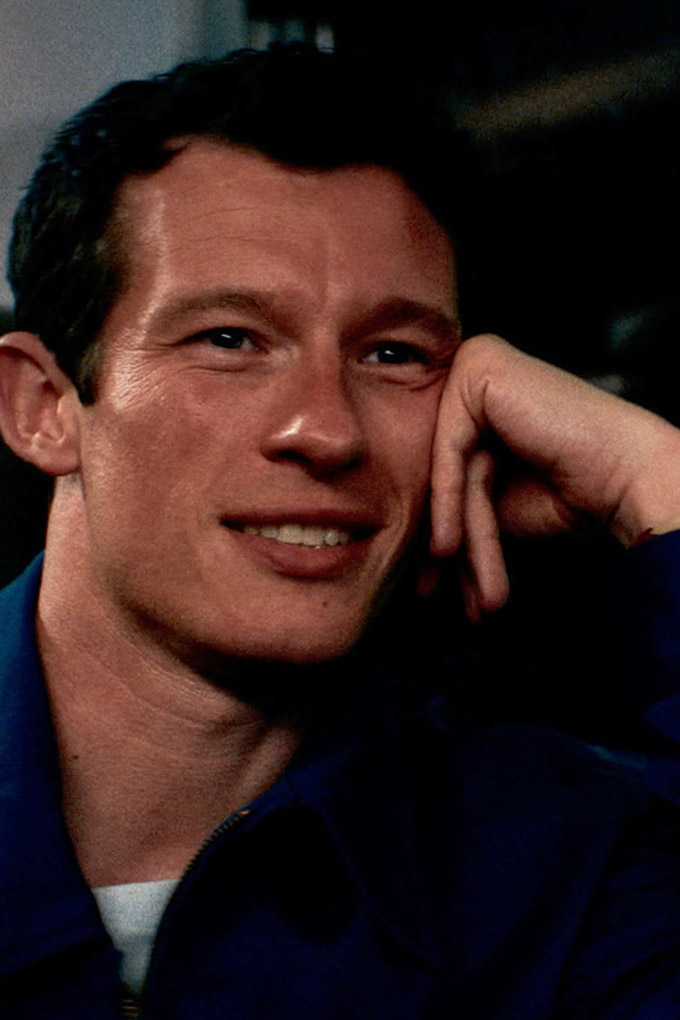
In Eternity, A24’s latest slow-burn romance, Luke, played by Callum Turner, does something that feels both achingly tender and quietly unsettling. He waits. For 67 years, he remains in a liminal holding room in the afterlife—declining every other version of happiness, holding out for his first love, Joan. There is no grand gesture, no dramatic plea. Just patience, stretched across decades.
It is the kind of devotion that cinema loves. The internet does too; what’s not to love about men who yearn? Yet there’s a whole other notion to this achingly beautiful romance: that men never forget their first love. That somewhere, in the back of every man’s mind, there is a woman who came first and might matter most to them.
View this post on Instagram
It is a belief reinforced by pop songs (think of Joji’s Glimpse of Us), rom-coms and stories traded between friends. He loves you, but he loved her first. But according to clinical psychologist Jia Li Lim from Annabelle Psychology, the truth behind men and their first loves is far less mythic and far more human.
“Early romantic experiences tend to occur during a period where the mind and body are especially sensitive to emotional experiences,” Lim tells Vogue Singapore. These experiences also tend to happen when our sense of self and identity are still forming, and our reactive hormones at this time encodes new emotional experiences more deeply into our memory.
The chemistry of firsts
There is a reason first love feels so sharp in hindsight. Early romantic experiences tend to happen when the brain is especially receptive to novelty, with dopamine heightening excitement, oxytocin strengthening emotional bonds and stress hormones intensifying how memories are stored. The result is an experience that lodges itself more vividly than those that follow. As Lim explains: “This is also why it’s usually easier to remember events we experience for the first time rather than repeated experiences. Those memories become more deeply consolidated.”
Beyond chemistry, first love is often the moment when intimacy shifts from theory to practice. It is the first real test of emotional vulnerability—sometimes awkward, sometimes earnest and often overwhelming. For men, this can feel particularly significant because culturally, men may have been socialised to be less emotional, Lim suggests. In Eternity, this neurological imprinting helps explain why Luke’s attachment to Joan feels frozen in intensity. Their relationship, though brief, coincides with moments of heightened emotion—youth and impending separation. These conditions are ideal for deep memory consolidation, making Joan less a partner remembered accurately and more a symbol of what could have been.

Time tells lies
To add to that, timing plays a quiet role in why first love lingers. Psychologists have long observed the “reminiscence bump,” a tendency for people to recall memories from their teens and early twenties more vividly than those from other life stages. This period coincides with identity formation and the building of our personal life narrative. When first love arrives during moments of transition or vulnerability, it can take on disproportionate emotional weight. “It becomes associated with values like hope, resilience and personal growth,” Lim says. When Luke and Joan visit the archive—long, tunnel-like corridors where memories appear as life-sized dioramas—their shared history is strikingly sparse: they meet, they marry, he leaves for war. There is little sense of conflict or growth, a stark contrast to Joan’s expansive archive with Larry. The imbalance suggests that Luke’s first love has been preserved at the moment of departure, untouched by time. Joan builds a full life beyond him, while Luke remains anchored to a version of himself from when love still felt limitless.
Nostalgia alters reality
When people revisit first love, they are rarely revisiting it accurately. “Nostalgia is linked to sentimental recollection of perceived meaningful events or people from the past,” Lim explains. Over time, the mind edits. Awkwardness, incompatibility and emotional confusion fade, while intensity and meaning remain. First love becomes less about the relationship itself and more about what it represented. Luke’s discomfort when faced with Joan’s family underscores this selective remembering. Her children and grandchildren disrupt the romantic continuity he has constructed—forcing reality into a memory he has idealised, revealing how little space his nostalgia leaves for the person Joan actually became. The dock scene sharpens this contrast further: Larry proposes to Joan at the very place Luke once left for war. For Luke, the dock marks a singular, sacred rupture. For Joan, it becomes just one emotional landmark among many.

Why men are more affected
Despite popular belief, there is little evidence to suggest that men experience first love more deeply than women. But, what differs is often how heartbreak is processed. “Men are less likely to talk about and express negative emotions associated with break-ups,” Lim explains. They often have fewer social and emotional outlets, whereas women are more likely to discuss their relationships and emotional experiences.
When emotions are internalised rather than processed, they tend to linger. As Lim notes, this can intensify feelings, prolong emotional attachment and make closure harder to reach. Which means, what appears to be lifelong devotion is often just unfinished emotional work.

When memory becomes a third party
So when does it become a problem for current partners? Well, it isn’t, because sentimentality tends to be occasional. As long as thoughts of his ex’s doesn’t take up too much of his present time, you don’t have to concern yourself too much about his first relationship. As Lim explains, reminiscing involves acknowledging both the positive and negative aspects of the past without strong emotional reactions.
What we are really romanticising
Luke waiting 67 years in Eternity makes for great cinema, but real love rarely thrives in limbo. If you were Joan, would that waiting feel like devotion—or like a love that never learned how to grow? It is also a reminder that some loves aren’t meant to last forever, only long enough to change us—and that letting go is an act of love in itself. Its real gift is revelation: learning how to love someone, and how to be vulnerable for the first time. First love matters not because it endures, but because it shows us how rich life can feel once the heart has been opened. Just because it didn’t last doesn’t mean it didn’t matter.