As one of the most ancient forms of housing to exist in Beijing, only a few hutong neighbourhoods remain in the city. Comprised of traditional courtyard houses, or siheyuan, erected in rows, these architecturally marvellous enclaves are marked by the narrow alleyways, or hutong, formed between them.
Widely considered the blueprint for Beijing’s iconic chessboard-like city grid, these courtyard houses tend to follow a nearly identical layout: four single-storey units surrounding a charming central courtyard, which often has a garden and acts like an open-air living room.
One of the best-preserved hutong neighbourhoods still occupied by residents today is the 600-year-old Caochang Hutong in the Dongcheng district. It sits within the Beijing Central Axis, the city’s main cultural capital—just steps from The Forbidden City, Qianmen and The Temple of Heaven.
It is at the heart of this historic enclave that a remarkable new hospitality destination has taken root. At the Mandarin Oriental Qianmen, Beijing, guests have a chance to experience hutong living firsthand, opening their eyes to the door-to-door culture these close-knit communities have fostered for many centuries.

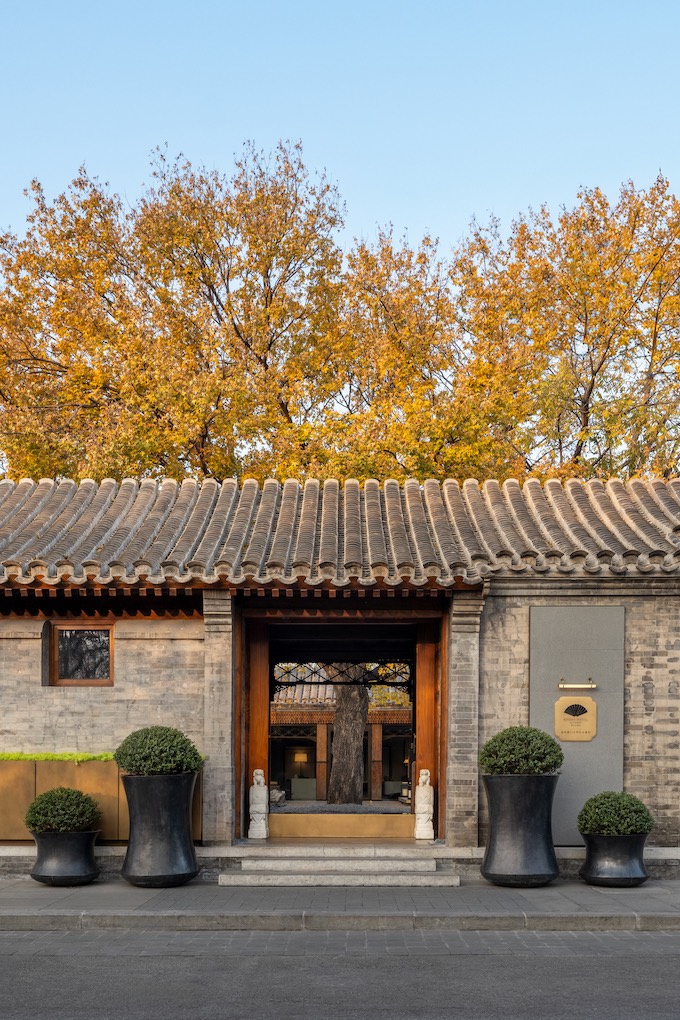
True to the original spirit of hutong communities, guests at the Mandarin Oriental Qianmen, Beijing, live side by side with their local neighbours. Local residential homes stand alongside the hotel’s guest rooms, which take the form of 42 traditional siheyuan courtyard houses, lovingly restored to ensure that the original architecture and design is retained as much as possible.
“We have restored and reused every brick and tile of the original building,” shares Joe Cheng, founder of Cheng Chung Design, the award-winning Chinese architecture firm that transformed Mandarin Oriental Qianmen’s courtyard houses inside and out.
“We carried out restorative construction and protective repairs, keeping the original quadrangle, or siheyuan, courtyard space pattern. The external form of the building that is consistent with that is documented traditionally. Even the height of the courtyard building is based on the original schematics.”
The painstaking attention to detail behind this colossal restoration project is evident from the moment you step through the hotel’s stone drum-adorned entrance into its main lobby.
Anchored by a stunning open-air courtyard and set with a pond, the lobby transports you instantly to the charm of olden-day hutong living. Light wooden decking weaves in between for guests to stroll along, while two majestic, century-old trees sprout from grey gravel.
Bicycles lean against richly patinated wooden beams, framed by the time-worn lattice structure of the eaves overhead. The reflective water mirrors the sky, catching smudges of soft blue and white, with the dark shadows of tree branches painted over.

Follow the walkways inside and the design sets a dramatically different mood. Inspired by a Ming dynasty scholar’s desk, the reception area is dark and cool, dressed in ebony and brass. An art screen stretches out behind, combining lacquer work and cloisonné techniques, depicting the breathtaking landscapes seen in Beijing through its four seasons.
Glance upwards and you might find your attention caught by the intricately overlapping wooden beams forming the steeple of the ceiling, which exude a distinctly historic feel—nothing you would see in modern architecture. “The original roof beams of each courtyard building were retained and reinforced as they once were,” confirms Cheng.
The same rustic roofs top the guest residences, contrasting appealingly with the regal but contemporary furniture placed within. Unlike in traditional courtyard houses, the units in each residence—your bedroom, living area and bathroom—are connected through inner corridors, but still well partitioned to retain the original configuration.
Floor-to-ceiling windows are positioned in front of the bed, bathtub and dining table, offering arresting views of your personal courtyard as you take an indulgent soak, eat a leisurely breakfast or wake to a pink sunrise.

Mandarin Oriental Qianmen’s courtyard houses, along with two dining destinations and one buzzy cocktail bar, scattered across eight Caochang alleys, embedded seamlessly in the neighbourhood. Getting around is easy (and delightful) on foot, but the hotel conveniently offers fully enclosed buggies to whisk you from place to place at a moment’s notice.
These are especially useful during Beijing’s brisk winters, but even in the chillier months, taking a well-bundled walk through the alleys as the tip of your nose turns red is an experience of its own. You’ll get privileged glimpses of the local way of life: young couples on a stroll, clusters of children bickering on their way to school—perhaps even a tail-wagging Chow Chow or two.
While these solo expeditions could easily take you beyond the bounds of the hotel on your own, I highly recommend taking up the guided hutong tours Mandarin Oriental offers, equipping you with knowledgeable guides who will ply you with local history dating back to the Ming dynasty as they take you on a scenic route through the hutongs. This tour will also bring you to Sanlihe (or ‘three-mile river’) Park, a quiet slice of paradise not 10 minutes on foot from the hotel.

With cobblestone pathways winding alongside a flowing river, the park is filled with lush trees, blooming flowers and the constant sound of birdcall. In the winter, you are treated to the sight of ducks, geese and majestic black swans skating over the thin sheets of ice that form over the frozen river. Ducking into one of the quaint cafes dotted along the river for a short coffee break also comes highly recommended, especially if you plan to continue your stroll towards the historic Qianmen area and its bustling pedestrian thoroughfare filled with trendy tourist shops.
You’ll be spoilt for choice when it comes to dinner options along Qianmen Street, but it’s worth making a reservation at Duyichu, a 300-year-old, family-run restaurant serving local delights—known best for their shao mai dumplings boasting impossibly thin skins and intricate, lace-like edges.
One might assume that the best food experiences in the area, like Duyichu, will lie outside the bounds of the hotel. But the truth is that both of Mandarin Oriental Qianmen’s dining concepts—I hesitate to call them in-house restaurants, since each is studded into a different alley and blend into the local environment—are exceptional in their offerings.
The signature Chinese restaurant, Yan Garden by Chef Fei, presents Cantonese and Teochew cuisine of an almost royal league. Led by the Michelin-starred chef and a stellar team, both tasting and à la carte menus star only the most premium ingredients, enhanced by impeccable culinary technique and grand showmanship.

Standout dishes are too many to list, but I felt most blown away by the simple masterpieces: tender slabs of grouper fish maw served in chicken bouillon so rich, a layer of collagen solidifies over it almost instantly; half a pigeon, fried so expertly that the skin crackles loudly while the insides drip with juice; or an unctuous piece of goose liver, dressed simply in a Teochew-style marinade that lingers on your palate long after the bite has gone down. The dim sum menu, perfect for a leisurely brunch, features a plethora of crystal-skinned dumplings and an eclectic mix of provincial delights, such as beef tripe.
Then there is Vicini, a warm and relaxed all-day dining bistro which doles out generous plates of pizza, pasta and delightfully authentic Italian desserts for lunch and dinner. Breakfast is a standout here and takes a local slant, with live stations whipping up specialty treats, such as bird’s nest congee, braised beef noodles and innards stew, alongside a wide selection of continental breakfast items.
Despite being in the heart of the city, guests of the Mandarin Oriental Qianmen will find themselves wanting to carve out some time to enjoy their courtyard rooms in peace and quiet. On days like these, count on your personal butler (each guestroom has its own dedicated concierge team) to draw up an activity schedule—from a Chinese calligraphy workshop taught by a highly decorated master to gong baths hosted by Mandarin Oriental Qianmen’s wellness director—which will keep you entertained while having to put in very little effort into making bookings or managing logistics.

If it’s pure, luxuriant relaxation that you’re looking for, make your way to the spa. Here, holistic treatments draw inspiration from the ancient wisdom of traditional Chinese wellness practices to rejuvenate you inside and out as you lie on lush, heated massage beds inside private treatment suites. Post-massage, make time to sit with your thoughts in the tea room, a historic-feeling, quiet space which looks into a serene open courtyard.
The most meaningful part of the Mandarin Oriental Qianmen’s restoration project lies in its commitment to giving back to its biggest asset: its locale. To that end, the hotel provides an extensive range of municipal facilities and services—from street cleanings to the maintenance of public toilets—which uplifts the living environment for all residents in the hutong.
This investment in the local community is at the core of what makes a stay at the hotel so special. As with most other things at this exceptional property, its presence in the local community goes beyond the surface. Instead, what guests receive is a genuine cultural immersion—and a rare opportunity to experience just how warm and welcoming the Caochang hutong neighbourhood truly is.
Book a stay at the Mandarin Oriental Qianmen, Beijing.