In Steve, a documentary of life at Stanton Wood—an alternative education institution based in the UK—is being filmed. The titular character of the film, played by Cillian Murphy, Steve, believes in its prospects; that there is raw good to be found in the dust; and that people might see the potential of these troubled boys, rather than just their flaws. What it reveals about the boys however, is not nearly as much as what it reveals about the failings of our society. Not only is there an unnerving tension in how there are always people from the outside looking in, but the dysfunction and chaos that seems to burn most is the dire lack of resources and manpower that have been given to this small yet dedicated posse of teachers, of which Steve leads as head teacher.
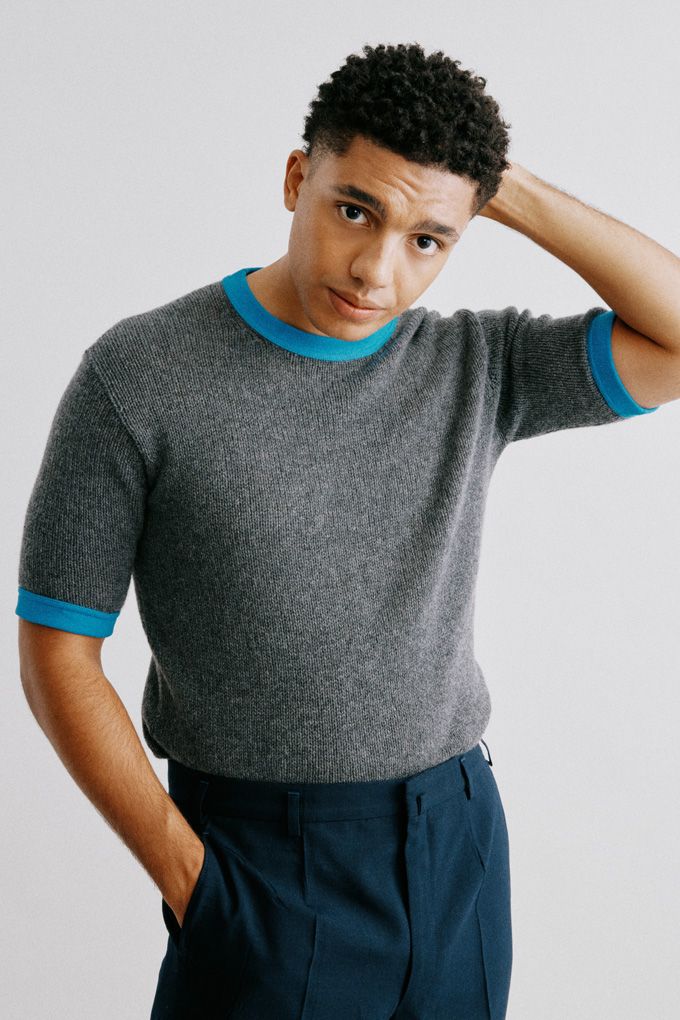
In many ways, Steve is a microcosm for a series of topics essential to the human condition, and it’s not just about our flawed education systems. The topic of mental health, for one, is another integral topic that grounds the film—one that both the adult and the student have to grapple with. It’s a recurring theme that is perhaps best encapsulated by Shy, a lost young boy who is screened by Jay Lycurgo in the film. In contrast to how he first appears in Steve—jovial and invincible with his Walkman in hand—Shy’s source of pain is made apparent later on, and his emotions are tumultuous yet exacting. The latter, in part due to just how inherently relatable Shy’s character is, to anyone who’s had to take a different path at some point in their life. “I think he symbolises every young person that is struggling and just looking for a mentor or role model. He is trying his best, and we all are,” explains Lycurgo.

Hot off a press run at the Toronto International Film Festival, the actor opens up about the heart and soul of the film, which had initially been a bestselling book titled Shy by Max Porter, who also wrote the screenplay for the film. Here, he gets candid about how Steve opens up conversations about mental health and toxic masculinity, the personal love he holds for his character Shy, as well as working opposite Cillian Murphy.
There’s a change in perspectives—from the book titled Shy, to the film being titled Steve. How do you think that switch over was integral to the production of the film?
I know that initially it was because Max was having conversations with Cillian, and they just had been working together for years and years, and they have a very close relationship. Cillian was asking if Max had any ideas he wanted to work on; at that time, Shy had only just come out a year before we started shooting. So I think from their conversations, Max wanted to create the perspective of Steve from the Shy novel. But then in the book, there’s not really a lot of details about Steve, so it did give them a good place to create something brand new, you know?
Which then became a good opportunity to talk about mental health in grown men. I think it’s brilliant, you know, because it shows the layers and the complexities of how we’re nurtured and conditioned. What I’ve been saying is that every man is a lost boy; every man has toxic masculinity—where maybe they weren’t necessarily taught how to communicate, or to love, or to be vulnerable. So I think it was a great opportunity for Max then, to create this world. Because the great reward from this film is having grown men talking to me about how they were Shy, or they had moments where they have been Steve mentally, you know? And then they’ll be very open to me about their mental health. So it’s just such a huge responsibility that I love to have, because it’s just such a universal topic, mental health is. But even more so, I think I would love to shake the toxic masculinity webs, if you will, of any man. So then we can have deeper, more vulnerable conversations with one another.
How did you find yourself landing the role of Shy?
It started as an audition. I hadn’t worked for a few months, and I remember it was the new year, around January or February, and I just had this motivation in me that I really wanted to lose myself and escape in a character. I was just waiting for that role really, and Steve as a project just came at a perfect time. I got the email, and it was a self tape originally, but I had seen that it was about alternative educational units, pupil referral units, or they call them PRUs, and that is actually what my dad does for work—he actually works in these schools.

So when I got the email, I went straight to my dad’s office—which is on the opposite side of my house in London—and we had these conversations at length. The two scenes I had to self-tape were Steve and Shy in the field at the beginning of the film, and the other scene was an improv scene. I wanted to get into my dad’s head, really, to find out what it’s like in schools.
The subject matter of Steve is on the heavier side of things. What sort of extra fieldwork or prep did you personally do to prepare yourself for the role?
There’s an unpredictable nature that’s a little different when you’re a teacher. You’re dealing with teenagers or dealing with kids, and you never really know what they’re dealing with. It was great to talk to my dad about it, and we got into these conversations about what the kids were like as well. I was able to then go to school with him and I worked with the kids for weeks. I got to talk to the other teachers that my dad’s employed, and it was a great experience. The main thing that I’ve realised is that it’s not that these kids have been kicked out and they’re like animals in a cage and they’re locked away; instead they just need an alternative way of learning. That’s all it is.
And then there was the book, which turned into my bible. I was reading it every single day without any issues. It was six or eight weeks of reading the book. There’s so much resource in the book to get to know Shy better. So I was able to read the book, have a lot of conversations with Max, the writer, who wrote a lot about his own experiences when he was growing up. So who better to talk to about that?
How did you emotionally prepare yourself for such a role?
Shy is a very fragile mindset to be in sometimes, and you could get lost in it, but I was able to have my safety blanket in Max Porter and Tim Mielants, our director. You know, with Tim, when we were doing scenes, we would just workshop scenes a lot. There wasn’t one way of doing a scene. I had a director that I felt so safe with that I could just do anything but if I felt it was too heavy, I felt like I had people around me that, if I fell too deep, they would catch me. But all in all it wasn’t ever a terrifying place to be with—playing Shy. If anything, it felt very freeing. Shy was a very freeing character.

What was the most important thing to you when you were bringing Shy to life?
I always love the impulses of a character. Shy gave me this great freedom. From the book, you could see that he had nothing else to give and just wanted to let the world know and to rebel in his environment. So I felt like the one thing that I needed to do was just be present. In Shy’s mind, he really does want to let go mentally and physically, and I think he’s such a calm, complex and incredible boy. There’s this huge responsibility and respect through his instincts. I think he’s a very reserved and still person.
But, you know, we are meeting him on the loneliest day of his life, and I think he’s so desperate to have his mentors look after him, but he’s gone too far into the mental health abyss. It was about not being intimidated by his impulses, and to just really let go. It really helped being with Cillian, because he gave me great advice: to always workshop scenes and to just keep playing with it. It was about being raw, honest and truthful, and lose yourself in it.
Shy sounds like he is very dear to you. What do you adore most about him?
I just think he’s so relatable. That’s what I love. When I first read the book, I found him so relatable. Max Porter’s writing is incredible, but it was the first book that I read that I had felt so seen, and I love that book so much. To the point that me and Max are planning to get Shy tattooed on us. I think he symbolises like every young person that is struggling and just looking for a mentor or a role model.
Shy’s arc is such an important story to tell, and he’s like a beacon of hope, I think. I cherish that character very much. Every time I watch the film, it makes me emotional, because he is trying his best, and we all are. We are all trying our best, but sometimes our mental health–it just gets the better of us, and that’s okay. But then it’s about having the strength and the confidence to check in with yourself and also to communicate with others. In a lot of ways, I think Shy is a hero.
You worked very closely with Cillian Murphy for this. What was that like?
There was this incredible synergy that was unspoken between me and Cillian. He had chosen a role that was going to be very honest and vulnerable, whereas in the past, maybe he had done roles that were far removed from his own instincts. So he was very open to me from the beginning; not so much verbally, but just being in a scene with him. You know, doing those two handers where it’s just Steve and Shy; there is this energy of struggle and loss, and I felt it every time with him in those scenes. That scene at the top of the staircase where Shy really chucks it on Steve about his problems, and his struggles—I didn’t want to leave him as Jay, or as Shy. I didn’t want to leave him at the top of the staircase, because Shy is mature for his age, and knows that Steve also needs help just as much as Shy needs it.

I texted him the other day to say thank you so much for being so vulnerable. I’m just so proud of him and everyone that was a part of this cast, and Tim and Max, because it’s not easy to be so vulnerable and so open. I don’t think we could have created something so truthful if you know, we didn’t have all the conversations that we had in the workshops or on set. So yeah I just think it was a brilliant time with Cillian. I learned so much as an actor, but also as a person too, and he’s now become a very good friend.
What do you hope audiences take away from Steve?
I do like the answer that I think everyone’s going to have their own interpretation of the film. But for me, I’m just so happy that we made a film about mental health, and I do hope that if anyone is struggling out there, that this film can help them. Honestly, I think that’s the main thing, because I can get into the spiel of making sure you communicate with your close friends, and your family, because they do love you and want to look out for you. It’s okay to feel lonely, as long as you can see the light at the end of the tunnel. I understand that sometimes that’s not going to be the case, but I just hope that it can encourage people to find help in themselves and with people around them. I really do.
Stylist: Koulla Sergi
Grooming: Lauraine Bailey
Outfit: Prada
Watch Steve on Netflix now.