Few things evoke the magic of the holiday season quite like donning your festive best and gathering your loved ones for a deliciously cosy night filled with warmth, a gallery full of memories, and, of course, good food. Yet the behemoth task of planning an elaborate sit-down meal is not to be taken lightly. To that end, nothing beats a decadent spread that not only lets guests eat at their own pace, you don’t have to overturn your entire kitchen for it. Enter: Grazing tables. A generously curated spread of bite-sized finger foods artfully laid out for guests to snack on as they please.
In the words of our trusted expert, Wynona Leach, founder at Lush Platters: “A great grazing table feels like a warm welcome before anyone even takes a bite. In the festive season, it should feel generous, abundant, and joyful, creating a real sense of excitement the moment guests lay eyes on it. It is both a centrepiece and an easy way for people to gather, graze and connect.” While cheese, fruits, crackers, and bread are staples, the scope for customisation is endless.
But where do we begin? To lend a helping hand, Vogue Singapore turns to Leach for a full lowdown on how to prepare a grazing table for the festive season.
Set the scene
Before you begin, think about its purpose. Is it light nibbling before a meal, a cocktail-style spread, or the main meal offering itself? The timing, location, and guest mix matter just as much as the aesthetics. Don’t jump right into planning the spread; consider how guests will interact with it as well. “Factor in dietary needs, children, and how people will move around the space. A clear plan for layout and flow makes the table look better and work better,” she offers.
Understanding portions
One of the biggest mistakes beginners make is preparing too much food. Planning quantities helps to avoid waste and stress. For light grazing before a meal, plan about 120 to 180 grams per person, while for cocktail-style grazing that replaces a meal, plan about 200 to 250 grams per person. If this is a full meal grazing table, call closer to 250 to 350 grams per person. Vary through colour and texture; it shouldn’t just be about quantity.
Building the base
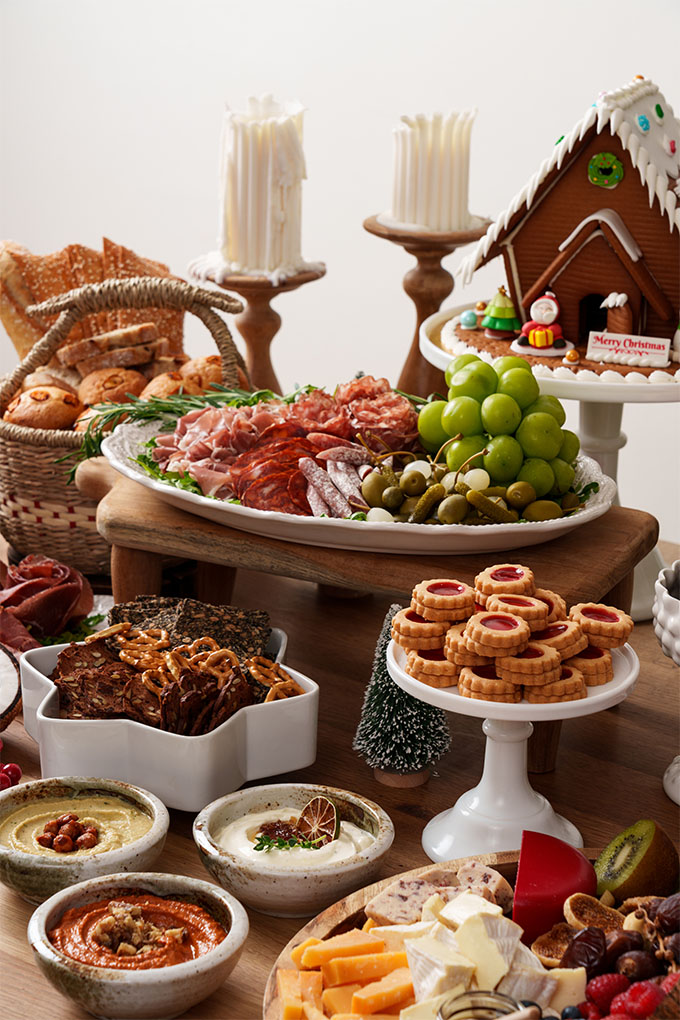
A good grazing table always starts with a strong base. Think a mix of cheeses, a hearty savoury element, and some satisfying protein, such as charcuterie or other substantial vegetarian options like falafels or dolmades. Introduce a carbohydrate base, such as crackers or bread. Use fruits and vegetables for freshness and colour, as well as a sweet finish. Extras—such as nuts, olives, pickles, or honey—can really take things to the next level.
Playing with contrasts
In tandem with keeping things simple, there are easy ways to elevate your spread and make it Christmas-ready. Leach suggests thinking in contrasts: creamy with crunchy, sweet with savoury, fresh with rich. “You only need one or two feature flavour moments, such as spiced nuts, a tangy chutney, a punchy dip, or honeycomb, and the rest can stay simple, ” she says.
Throw in some festive flavour
Simple additions like rosemary sprigs, pomegranate, red grapes, dried citrus, and cranberries, can be considered to welcome a festive touch. For those who want a clear seasonal signal? A single hero item, like a gingerbread house, glazed ham or fruit mince pies, can instantly switch up the vibe.
View this post on Instagram
Arrange for ease not perfection
A grazing table should feel generous and easy to use. Start by placing boards and bowls first, then build around them. Group similar items together so guests can easily find what they need, and leave small gaps to prevent the table from feeling cramped. A few height points help too, such as a raised board or a simple stand.
Keeping it fresh
The genius of a grazing table lies in the fact that majority of the preparations can be done well ahead of time—from washing and cutting vegetables to preparing dips or slicing harder cheeses. Add anything delicate that wilts or releases moisture, such as berries, fresh herbs, and softer cheeses, just before guests arrive to ensure they stay fresh. Meanwhile, crackers and charcuterie should be assembled last, as close to service as possible.
View this post on Instagram
Build inclusivity into the table
Instead of creating a separate spread to accommodate dietary preferences, build inclusivity into the table from the start. Include gluten-free options, keep dips that are naturally vegan, and use separate bowls or sections for nuts, meats, and other allergens. “The key is to confirm dietary needs early, plan for them deliberately, and label items clearly if needed so guests can help themselves with confidence, ” Leach recommends. Happy grazing!