Rapunzel, Rapunzel, let down your hair, so that I may climb thy golden stair. An iconic line, from a beloved fairy tale. A girl trapped in her tower by an evil witch before a prince discovers her; the love story writes itself. Yet at the heart of this classic fairy tale lie Rapunzel’s luscious, golden locks. Her seemingly unending rope of hair, which is touted to have magical healing powers, holds a mirror to the prevailing beauty ideals throughout history—some which continue to be dramatised and reflected in the stories we love today.
“Long hair for women is generally considered as symbolic of femininity, health and fertility, which in turn led to it becoming a standardised beauty ideal in much of the world,” explains Rachael Gibson, the hair expert behind The Hair Historian on Instagram. It was an ideal that was tied to various cultures across the globe, be it Western culture or historical Asian civilisations, and it wasn’t only tied to women. “Men in various Native American and Chinese societies have a history of wearing their hair long, whilst women in many cultures including India and much of Southeast Asia viewed long hair as a beauty ideal. One of the most memorable examples of ultra-long hair would be the Sutherland Sisters; a group of seven siblings with a collective 37 feet of hair,” she adds.

For some of these cultures, it was tied to religious values. Like in Rastafarianism, Korean Confucianism and Sikhism, there was a strong conviction that one’s natural gifts should be left unsullied, and untouched. “The belief was that hair should be left uncut for various reasons, primarily focused around not changing how one was created,” offers Gibson.
But know this: in the past, even if women and men alike were to keep their hair long, it was often worn up in polite society, or mainly for practical reasons. “Very long hair for most folk would generally be braided, covered or worn bound or up in some way in a bid to be more practical for everyday life,” Gibson further explains. Should one decide to keep their hair long then, the societal expectation was that it should be well-groomed and kept healthy.
So what happens when one’s hair is worn loose? The narrative changes, and the bountiful, rich image of long, long hair morphs into something quite different.
“Until the 20th century, women were expected to wear their hair up or covered in many parts of the world, particularly in the West. Hair was not worn down or loose by anyone except children and unmarried young women, and to see it worn in such a way in public was unheard of,” responds Gibson.
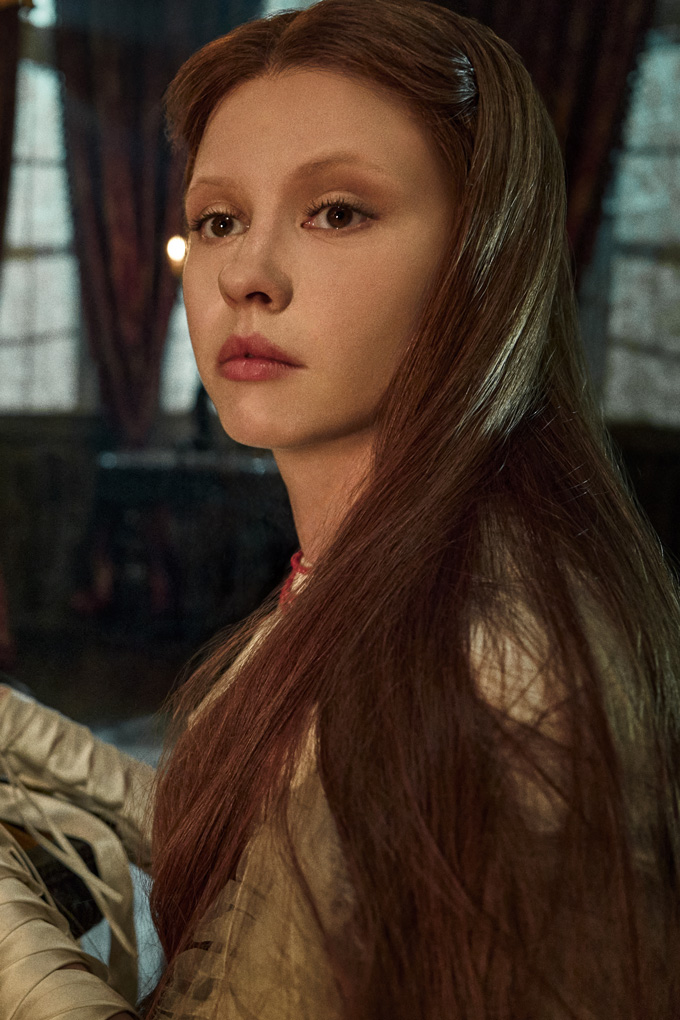
Across the veins of pop culture—be it gothic-tinged films or period flicks—visual excavations of the Other-ed woman are often done through her hair. Most recently, it would be in Mia Goth’s lush, striking locks as Elizabeth Harlander in Guillermo del Toro’s Frankenstein.
Inspired by the hair of Empress Elisabeth of Austria, also known as Princess Sisi, the scenes which capture her walking around in candlelight with her extremely long hair flowing behind her before she meets Jacob Elordi’s creature, hide the subtleties of her role—as an individual who has always felt like she didn’t belong in society. “During that time, walking around with long, loose hair had been associated with women who had something wrong with them and were living outside of polite society. It was commonly associated with those who had mental health issues, sex workers, or those who had somehow chosen to live an alternative lifestyle,” Gibson offers.

But all over the Internet, it was raved about; her vibrant red locks capturing a mood of escape and whimsy—a direct contrast to the white bridal gown (one more shackle of society) towards the end of the film. Whilst Elizabeth comes from a time when such a woman—who loves her insects and feels with her whole being—would have been seen as an outlier, the underlying appeal of her beauty lies in how her locks were emblems of her freedom; left loose and unruly when she felt closest to the creature, and closest to the natural state of the world.
That freedom is something we’ve seized in modern times. Today, there is no longer a prejudice against wearing it loose and long. In fact, it’s become the norm. What’s more important and powerful to Gibson, is that despite the prevailing associations of long hair being beacons of femininity and strength, the woman of today can also wear her hair short, and not be judged or criticised for it.
So let the girls yearn for Mia Goth’s hair. But should they choose to flaunt a fresh, edgy bob the very next day? So be it.
girls don’t want boys, girls want elizabeth harlander’s hair pic.twitter.com/BcsukCt11E
— best of mia goth (@gothfiles) November 17, 2025