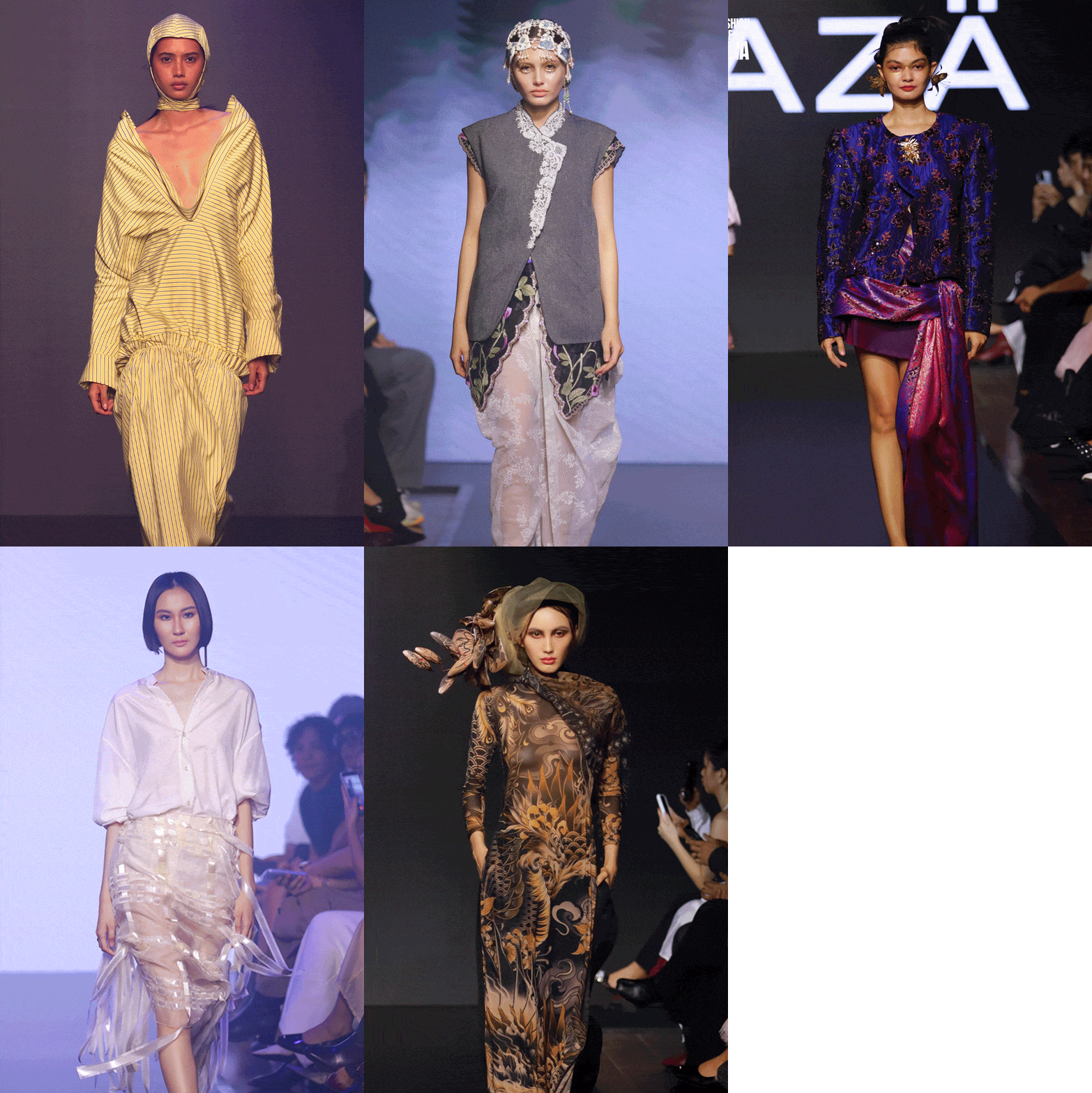
Fashion Week Asia makes its debut in Manila, bringing established names and emerging talents from across the region onto one runway programme. Spearheaded by Archie G. Carrasco, founder and chairman of AGC Power Holdings Corp., and backed by the group’s media and publishing network, the event champions craftsmanship and cultural exchange. Across three days, a question emerges: when designers share related craft traditions, how can those techniques speak to a younger audience?
Vietnam’s Kilomet109 and Taiwan’s Sophie Hong reveal affinities in the patient transformation of cloth, although their processes remain distinct. Vũ Thảo’s hand-dyeing and stone-polishing lend fabrics depth and lustre, with a trench taking on the appearance of leather. Hong’s experimentation with mud-silk dyeing yields her signature Hong Silk. Generous silhouettes and precisely placed piping give intricate surfaces room to breathe.
At Malaysia’s Plazä, Anisah Farid brings Nyonya embroidery created with Penang artisans and Kelantanese songket into unexpected combinations of rich texture, print and colour. Indonesia’s Toton finds emotional resonance in familiar materials, from lace and raffia to ceramics and carved wooden details. Craft becomes a way to reflect on identity and an uncertain future. For Hong Kong’s Ponder.er, smocking traces the body’s curves, while ruched slip dresses layered over sporty tanks carry a playful Y2K attitude. South Korea’s Bajuyo reworks hanbok ties on structured jackets, using fresh proportions and the occasional leopard and camouflage prints to give traditional forms a new attitude.
Manila’s younger labels offer equally compelling propositions. Roko Arceo’s Maligaya makes silk shantung often associated with formal traditional wear feels modern through striped bombers and tiny beach shorts. At Novél, Prince Padilla’s brocade sports jackets, matching coifs and that one custard-yellow shirtdress demonstrate how well-executed silhouettes and considered styling can give familiar fabrics a new audience while Vietnam’s Duc Studio approaches generational appeal through a rebellious attitude. Designer Nguyễn Minh Đức reimagines the áo dài through tattoo-like prints on stretch tulle, bringing familiar garments into a wardrobe that speaks directly to youth culture.
For me, the strongest moments share a sense of clarity. The less convincing ones arrive when too many ideas compete within an outfit or a dated silhouette obscures the workmanship. Technical accomplishment, necessary as it is, still requires carefully studied proportions, a judicious edit and an understanding that more isn’t necessarily the best.
Ultimately, audiences are drawn to clothes they see themselves wearing. A compelling silhouette, an unexpected colour combination or a clever styling choice creates that first connection; discovering the craft behind it deepens the appeal. Across these collections, tradition finds fresh relevance when designers give it a place in the lives of their audience today. That desire to wear a piece allows its story to travel, bringing inherited craft into new wardrobes and new circles of appreciation. And that perhaps, is the most promising step forward at Fashion Week Asia

1 / 14
Nóvel

2 / 14
Duc Studio

3 / 14
Duc Studio

4 / 14
Sophie Hong

5 / 14
Ponder.er

6 / 14
Rosanna Ocampo

7 / 14
Bajuyo

8 / 14
Kilomet109

9 / 14
Toton

10 / 14
Toton

11 / 14
Kelvin Morales

12 / 14
Kelvin Morales

13 / 14
Plazä

14 / 14