Across Asia, some of the most interesting fashion conversations right now are happening outside the usual four-city circuit, and Kuala Lumpur makes a strong case for why. Seven days and more than 50 designers later, there was plenty to unpack from Kuala Lumpur Fashion Week’s 14th edition. Held once again at KLCC, with the Twin Towers towering just beyond the show space, the calendar spanned designers at every stage of their careers, and what made the week so absorbing was how clearly each one seemed to know and exhibit their vision so thoughtfully.

With that many different voices sharing the calendar, you could immediately feel how distinct each point of view was, which made the shows genuinely compelling to watch. You saw it in Uzair Shoid’s whimsical use of oversized beads, strung into full garments in saturated colour and flashes of teal. That same conviction carried through to Behati’s deep dive into the Malay Sultanate era, with Kel Wen translating those references through his characteristically theatrical silhouettes. Rizman Ruzaini delivered one of the week’s most dazzling displays of embellishment, while across the wider line-up, younger names proved just as assured in the universes they wanted to create.

The strongest shows combined a real depth of artistry with personal stories, taking elements of the culture many of us grew up with and spinning them in novel, unexpected ways. Across the week, designers approached familiar elements of Malaysian dress through increasingly individual visual languages, and after several days spent watching it all unravel in person, these were some of the shows that stayed with us.

1 / 6
Uzair Shoid
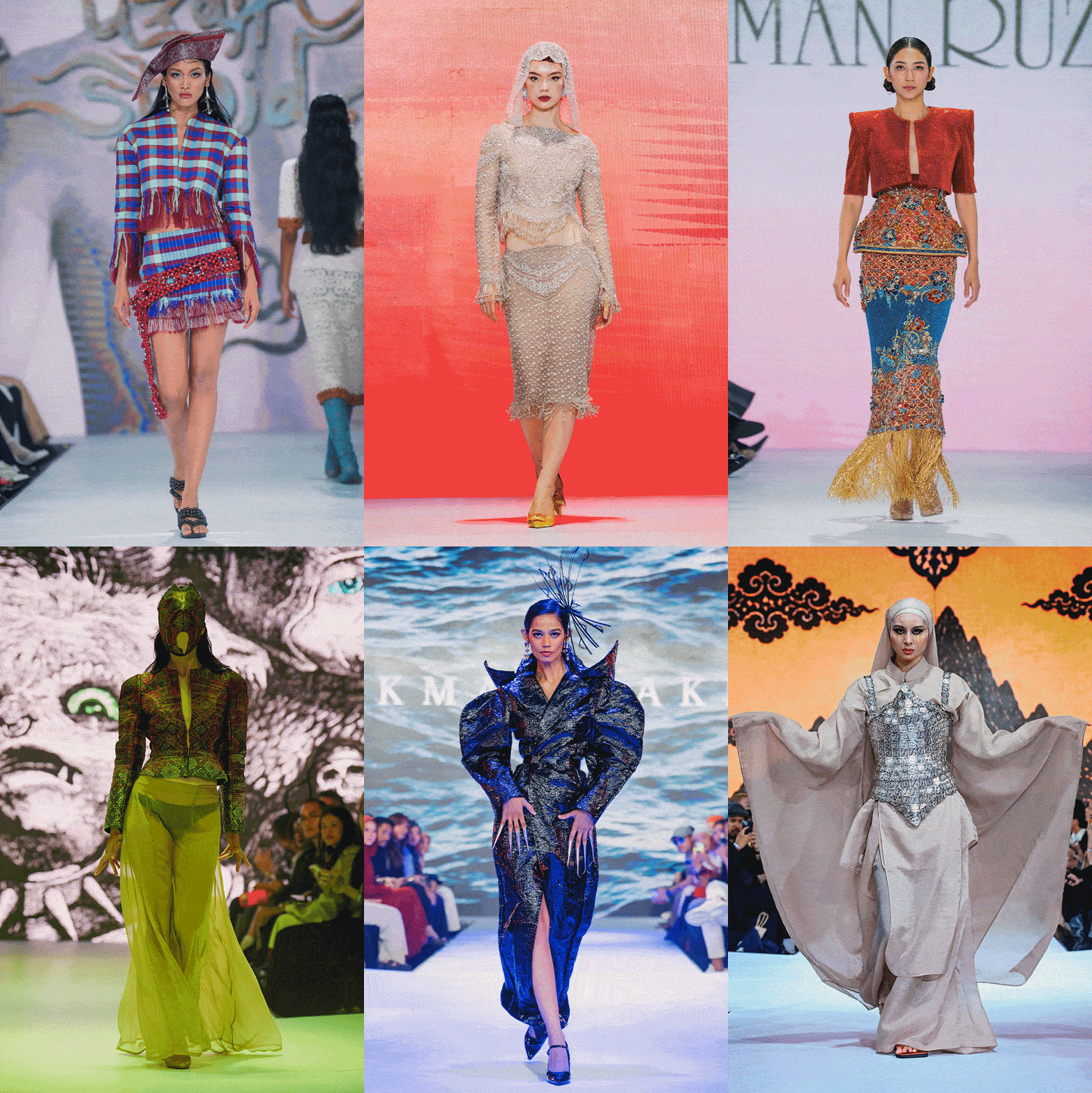
We were completely taken by Uzair Shoid’s Bayu, especially his wonderfully whimsical approach to beading. Taking its name from the Malay word for wind, the collection saw songket and kain pelikat distressed until loose threads spilled from their edges, while Shoid went supersized with beads, stringing large ones together into entire garments. A bralette and checked skirt rendered almost completely in beads was particularly memorable, made even more striking by the vibrant colour palette and flashes of the season’s teal. There was something almost childlike in the scale of the beads and the way they sat against all that fraying textile, giving Bayu a completely different energy from the beadwork we usually see.

2 / 6
Fiziwoo
What really stood out during Fiziwoo’s show was the unmistakable opulence of the collection, much of it carried through the embroidery and dense handwork that made each look feel indelibly rich. The ready-to-wear collection came first, followed by Heirloom under Fiziwoo Artisanal, where metallic embroidery and crystal-beaded tassels were worked with 18K gold and copper, making the level of craftsmanship almost impossible to miss. Another element that caught the eye was the use of limar, a traditional Malay weft-ikat technique in which threads are resist-dyed before weaving to create its distinctive softened motifs. Appearing across the 14-piece collection in a range of hues, the textile was further heightened with long tassels and embroidery that caught the light beautifully as the looks came down the runway.

3 / 6
Rizman Ruzaini
For this year’s collection, Rizman Ruzaini looked towards Peranakan heritage, and the result was an absolute visual feast. Colour blocking immediately cut through the runway, but it was the amount of handwork that really held the attention, with dense beadwork and embellishment covering look after look. Little minaudières appeared alongside several ensembles too, extending that decorative language beyond the clothes themselves. For a house already synonymous with high-octane glamour, Peranakan dress gave Rizman Ruzaini an especially rich vocabulary to run with.

4 / 6
Behati
A Behati show will almost always leave you with chills by the end of it. As much as Kel Wen loves drama, there is usually an equally rich story sitting behind all those exaggerated silhouettes, and this year he looked towards legends from the Malay Sultanate era. Songket was sculpted away from the body through wire framing, while another look paired an armour-like corset with an enormous billowing dress. Kain pelikat appeared across more distorted proportions, and even the footwear got the Behati treatment through eye-catching sampan-shaped clogs. Wen has always had such a clever way of playing with Malaysian folklore and heritage, and this collection once again showed just how far he can stretch those references through his own wonderfully theatrical world.

5 / 6
Huntilanak
For Alpine & Alchemy, Huntilanak’s Ryan Tan looked to a trip to Chin Swee Temple, where the depictions of the Ten Chambers of Hell became the starting point for the collection. He also worked with three other artisans resulting in a show loaded with intricate handwork across beadwork, crochet and chainmail. Laser-cut feathers jutted from the body and kain songket appeared amongst all that, but the devil truly lies in the details—with some of the most mesmerising points only revealing themselves up close. One piece translated a handwritten message entirely through beadwork, with every word worked across the surface. Those sorts of intentional workmanship appeared throughout the lineup, rewarding you the longer you looked and really pulling you in into the overarching message of not just the collection but also Ryan’s universe.

6 / 6
Akmal Hakim
Akmal Hakim had us from the opening of Tides of Identity, when a model came out and pulled off their songkok, immediately setting a dark, charged mood for the collection. From there, pieces of Hakim’s upbringing and Sabah heritage began surfacing through the clothes: the traditional Kadazan-Dusun himpogot coin belt became an entire silver mini dress, while linangkit embroidery inspired laser-cut geometric openwork across jackets. Metallic paillettes flashed like fish scales under the runway lights and frothy white layers picked up the imagery of sea foam. The show closed beautifully too, with exaggerated kebaya proportions and elongated claw-like nails referencing the hand gestures of Igal-Igal dance, bringing Hakim’s Bajau roots right back into focus.