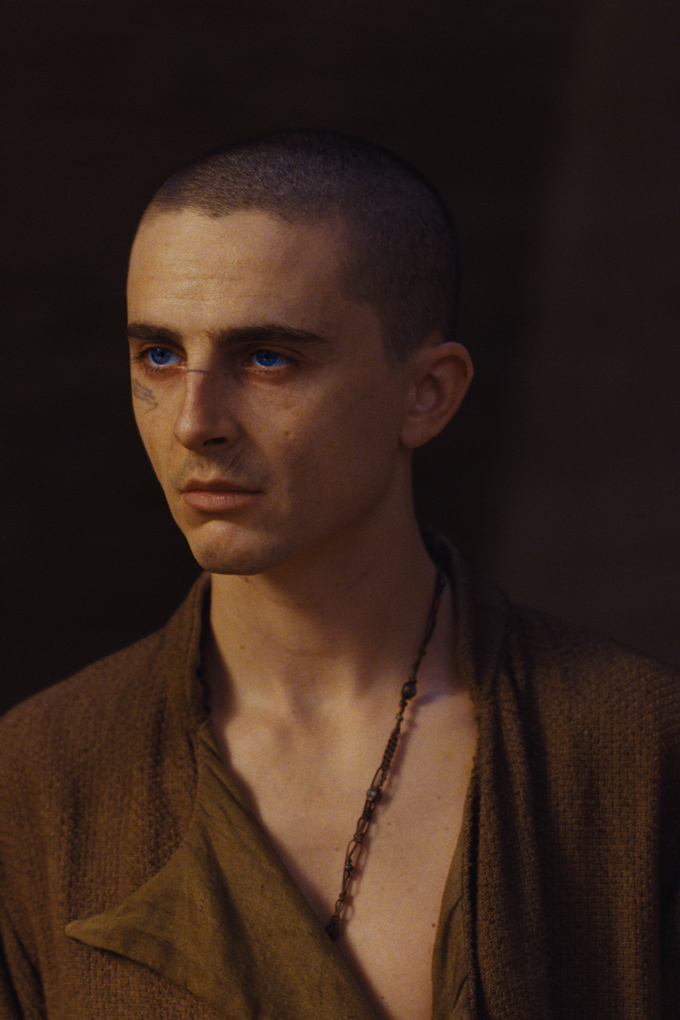
Earlier this year, he, once again, missed out on the Best Actor Oscar—his frenetic performance in Marty Supreme lost to Michael B Jordan’s barnstorming one in Sinners—but Timothée Chalamet isn’t pausing to catch his breath. No, he’s now onto the promotional trail for his next all-encompassing blockbuster: the third and final instalment of Denis Villeneuve’s Dune franchise.
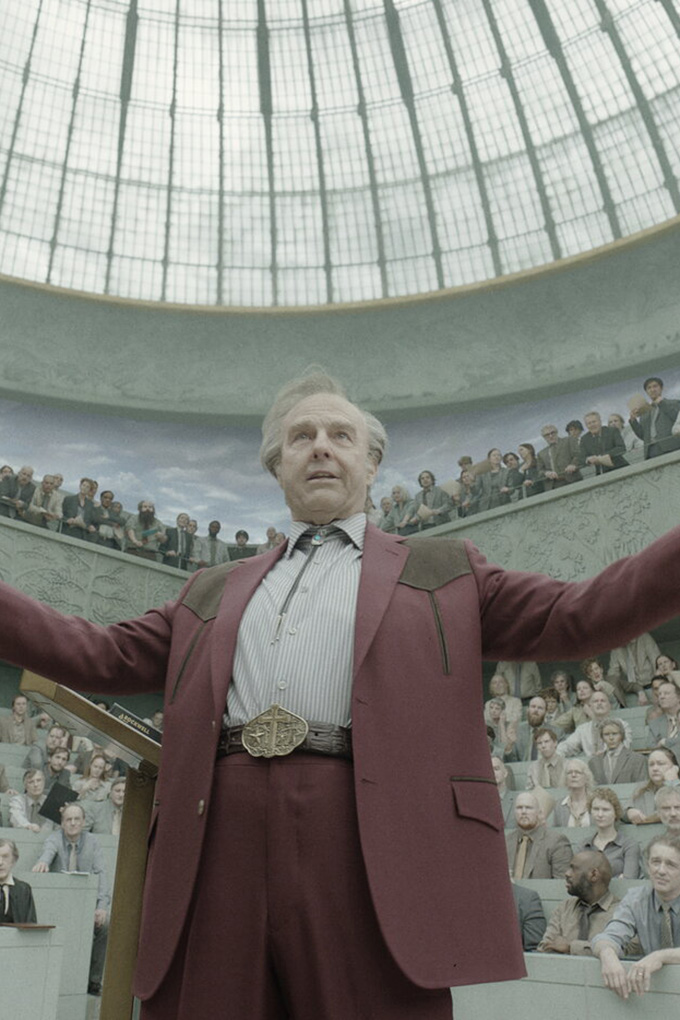
Poised to land in cinemas on 18 December, the first trailer for Dune: Part Three arrived on 17 March, the second on 8 July and the third on 28 October—and they are one hell of a ride. They feature Chalamet’s Paul Atreides preparing for war, alongside Zendaya’s Chani, Rebecca Ferguson’s Lady Jessica, Florence Pugh’s Princess Irulan, Jason Momoa’s Duncan Idaho (back from the dead—more on this later), and two key newcomers to the cast: Robert Pattinson’s pale, white-haired villain, Scytale, and Anya Taylor-Joy’s Alia, Paul’s fearsome little sister.
Also joining them will be Charlotte Rampling’s terrifying Reverend Mother Mohiam; Javier Bardem’s wonderfully camp Fremen leader, Stilgar; Isaach De Bankolé as a dissident Fremen; and both Momoa’s son, Nakoa-Wolf Momoa, and Ida Brooke as Paul and Chani’s children.
And there’s more: per Deadline, further details were revealed at a special event attended by Villeneuve, Zendaya, Bardem, Taylor-Joy and Pattinson. Most crucial? The fact that this third film is set 17 years after the events of Dune: Part Two.

“It will be a very different film,” confirmed Villeneuve. “A Dune movie, but with a different tone, with a different rhythm, with a different pace. It’s a more action-packed and more tense film, more muscular than the two others. And it’s a movie that takes place many years after the two first films, a bit like the book, Dune Messiah, it gives a new insight on what happened to Paul Atreidis. So there’s a time gap, 17 years, where we see Paul dealing with the consequences of having too much power and him trying to figure out how to get out of this cycle of violence. And of course he’s an emperor who can see the future, so he’s kind of invincible. We will follow people trying to overthrow him. And it’s a quite intense story. But at the heart, it’s still a love story. The heartbeat of the film is still the relationship between Paul and Chani.” (Instead of ageing his actors digitally, the director explained that make-up would be used to convey the passage of time.)


The auteur added that this will be his “most personal film, because it tells the story of Paul and Chani, of them struggling with their relationship, having the burden and incredible pressure from the world around them, and Paul having to find a way out of the cycle of violence. And there’s something about the way their love, and the time and the way they are, the way their relationship evolves, that study on the relationship of all characters, that is very personal.”

As for why Momoa is back, despite the fact that Duncan Idaho perished in the first Dune film? “He created that tremendous charismatic character that our heart was broken, seeing him falling in the first one,” said Villeneuve. “And then the desire to see him back. And he comes back just at the right moment in the story. And it’s a very, very important comeback. Paul is struggling with his identity and having that kind of strong Atreides figure coming back from the past will have a tremendous impact. I will say that he’s fully back.”

If the film follows the plot of Dune Messiah, then Momoa won’t be Duncan, exactly—he’ll be Hayt, a “ghola” (an artificially-created human, and replica of someone dead) in the image of Duncan, who is gifted to Paul. His acceptance of this present has disastrous consequences.
However, the extent to which this adaptation—penned by Villeneuve and Brian K Vaughan—will be faithful to Frank Herbert’s novel is not yet clear. Either way, it’s sure to be a rollercoaster. Strap in.