Sebastien Kwok was around 10 or 11 when an emerald Saint Laurent dress caught his eye in his father’s morning newspaper. Designed during Tom Ford’s tenure at the house, it came in glossy satin silk with gloves in the same saturated green, and Kwok remembers wanting to know immediately what he was looking at. He had already been painting since childhood, but that image opened up another avenue for him. Sewing machines soon became a recurring birthday request and, by 12, he was spending enough time making clothes at home that his parents made finishing his homework a prerequisite.

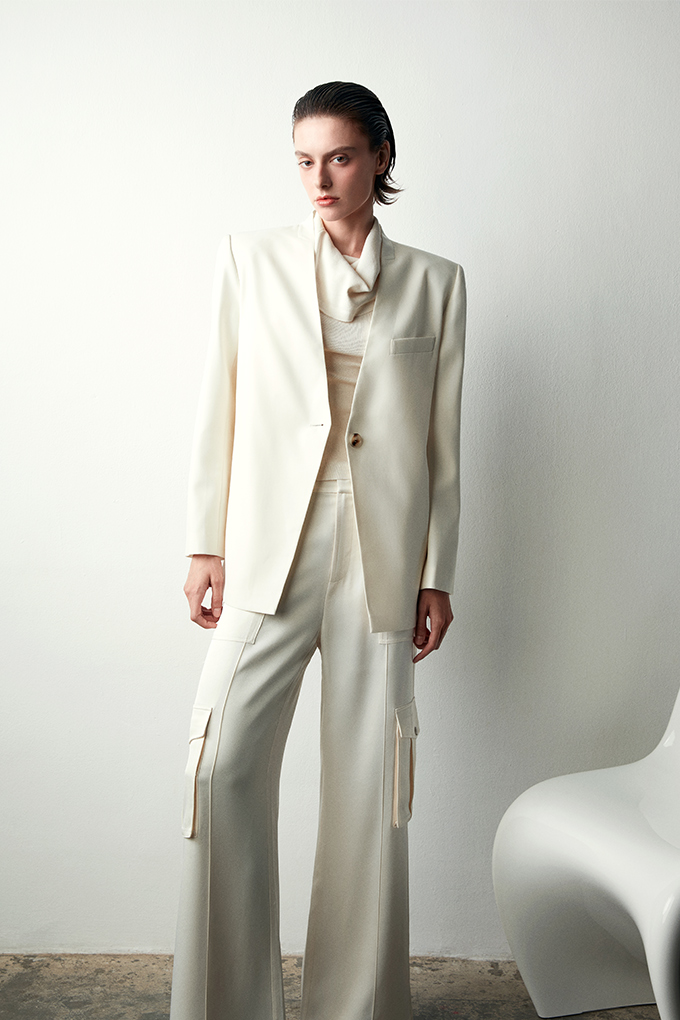
That curiosity carried on and eventually melded into Kwok’s design DNA today, one shaped around the modern woman while still retaining a distinct point of view. It also informs his latest project with Club21. For its new namesake collection, the retailer brought the London-based designer in to create a wardrobe that reflects how busy women dress now, loosening up the usual formality through thoughtfully made pieces that still add that bit of oomph, regardless of the adventure the day brings. There is a certain push and pull throughout the line-up, and the details? Each is carefully designed to serve a function. Comfort is another important part of the collection, with specially developed fabrics and fluid pieces made to envelop the wearer gracefully. Some of its most extensive development went into a treated habotai fabric inspired by a decades-old French coat that Kwok and his team acquired at auction. After studying the original garment, they developed a silk-viscose blend with a papery surface treatment that gradually changes as it is worn, allowing the fabric to take on its own traces of use over time.

Another tangent came from Kwok’s own musings on the European countryside, particularly the lived-in quality he finds in its architecture and natural surroundings. Its earthy palette and robustness bring a slight edge to the range, while the weathered brick and pale sandstone walls he encounters there informed the surfaces of the clothes themselves. These references appear through sand-washed finishes and fabrics with a slightly irregular hand, which Kwok sets against sharper forms influenced by brutalist and modernist architecture.
Below, Kwok speaks to Vogue Singapore about finding inspiration away from a conventional moodboard and how he makes his pieces feel lived-in yet modish.

What first drew you to the world of fashion and design, and was there a particular moment that sparked your interest?
It is a very vivid memory of mine. My dad always read the newspaper in the morning and, as a kid, I would grab it afterwards. I must have been around 10 or 11. I was not going to read the political section, so I would look at the pictures. I remember seeing this beautiful emerald Saint Laurent dress. I think Tom Ford was still there at the time. It came with matching gloves in this satin silk, and I was so drawn to the image. I had been painting my whole life since I was a kid, but I remember asking my mum, “What is that?” I just wanted to know more. After that, every birthday I asked my parents to get me a sewing machine. I was around 12 and just started making things without knowing very much yet. My parents bought me books as something fun for me to do. It was never really, “I love fashion, this is what I want to do.” I was simply very curious about it and wanted to understand it. My parents became a little worried because I was spending so much time making clothes, so I had to make sure I finished all my homework before I could touch the sewing machine.
When you began developing the collection, what did you feel the wardrobe needed to look and feel like today?
A lot of the time when I design a collection, there is no moment where we say, “Okay, now we start.” I always have a notebook with me wherever I go, where I write down ideas or do sketches. I have this library of ideas in my head and in my notebooks. When we first started speaking with Club21, we talked about what we wanted to do and what women need from a wardrobe in the current fashion landscape. Our ideas really aligned in terms of the sensibility we wanted to give the collection, so the beginning was quite philosophical.
When it came to the moodboard, it was initially much more about the ideas and concepts, which we then materialised into images. On my MacBook, for example, we had different pillars and ideas that we wanted to focus on. There is a recurring idea of wardrobe classics that can work wherever someone happens to live. There are also women from different periods who, to me, represent modernity. I was looking back at the past and at nostalgia while keeping the clothes contemporary, then working out how those references could become something new.

You drew heavily from the European countryside. How did you translate that into clothes for someone who might be living in a city like Singapore?
I am one of those designers who does not like looking through tons of images. I get inspired through emotional experiences. I like going to the opera or theatre, and I like experiencing different materials in person. The timing of this interview could not be better because I am in the European countryside right now. If I am away from the city, this is usually where you will find me. What interests me is how different the way of living can feel here because everything slows down and people interact differently. Even the architecture has a completely different character. In England you have red brick or stone walls, while in the south of France you get these pale sandstone surfaces against the landscape. There is so much texture and richness in those colours. I like using that materiality to translate the idea into clothing. You might have a fabric that is more textured , which is then placed against something with a brutalist or modernist approach—I find the collision between those two worlds really interesting.
You also spoke about the contrast between softness and structure. How does that come through in the silhouettes and construction?
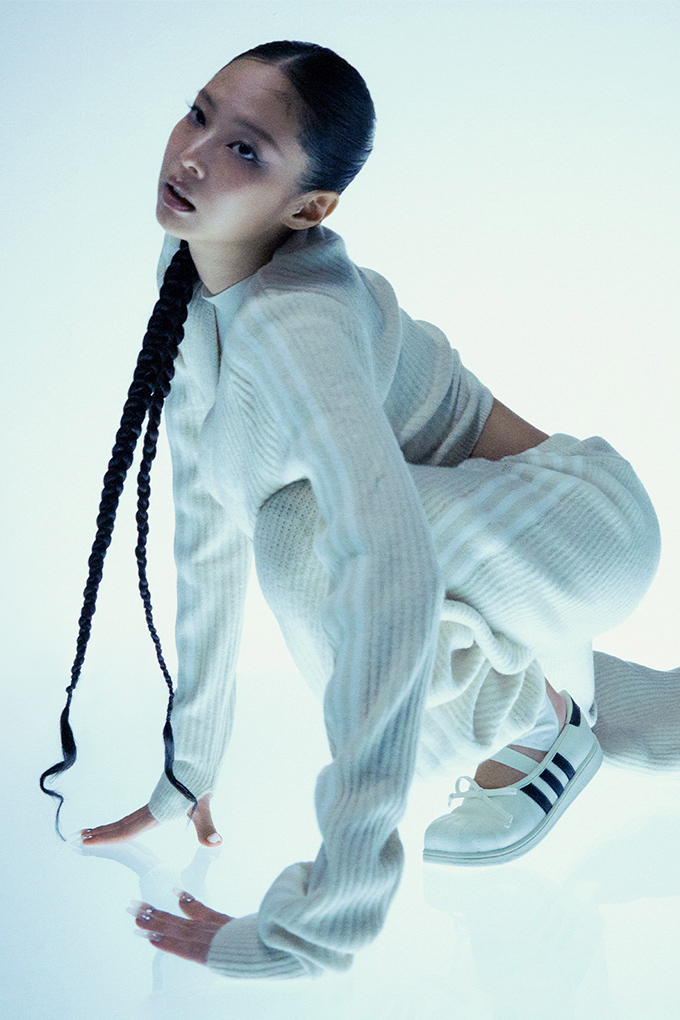
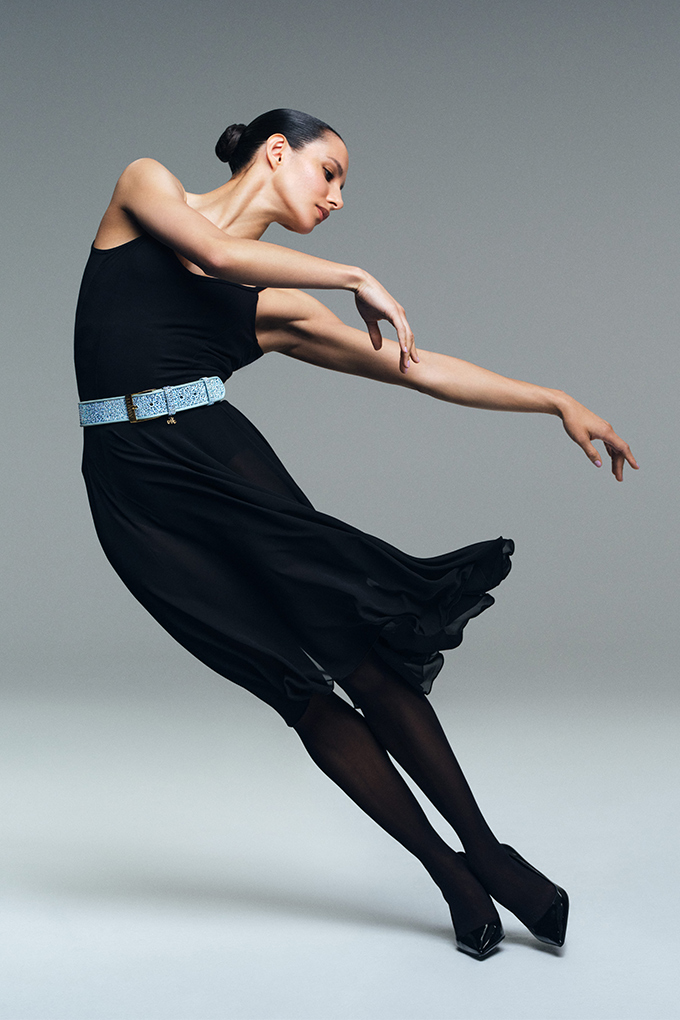
I always like playing with contrast, especially through proportion and the relationship between masculinity and femininity. A lot of it comes through experimentation with how something fits. Across the collection, nothing sits very tightly on the body. The pieces drape, but they still retain structure. Even with a simple T-shirt, for example, we might add a reinforcing seam through the centre or along the back. It gives form to a very soft piece of material, so that structural seam becomes part of the construction. We also spend a lot of time working on proportion. When we make something oversized, I still want it to have a great form. It should feel relaxed on the body without simply becoming a baggy piece of clothing.
“You might have a fabric that is more textured, which is then placed against something with a brutalist or modernist approach—I find the collision between those two worlds really interesting.”
Were there any particular techniques or fabrics that you wanted to focus on for this collection?
There are quite a few. We worked very hard to develop a silk and cotton blend that looks quite structured but still feels soft and works across different climates. We created several pieces with that material. Jersey is something we like experimenting with as well because I am interested in what can happen to something as familiar as a T-shirt. There is also a silk and Tencel blend that behaves almost like jersey but drapes beautifully on the body. I think that is a good example of the soft sculpture we were talking about. We have an asymmetric T-shirt where the upper section is symmetrical, but once it sits on the body, the fabric drapes almost like a Roman sculpture of a goddess. I still want it to feel cool because we do not make things that feel overly feminine. I am interested in a woman who feels strong and elegant in what she is wearing.
There is another material I am especially excited about, which is habotai silk. We acquired this French coat at auction that was probably around 30 or 40 years old, and it was made from habotai silk. We carefully studied the garment and then worked on modernising the fabric. For this collection, we developed a silk-viscose blend instead of using 100 per cent silk because we wanted it to be sturdier and more durable. You can fold it into a suitcase and take it back out again quite easily. We also apply a treatment over the surface that gives it this papery quality. As you wear it, greyish-white marks appear and gradually wear away, while scratches and other signs of use start to become part of the surface. I think that goes back to the European architecture we were talking about because those buildings age beautifully. I want the clothing to have that same humanity and to look different in five or 10 years because somebody has actually lived in it. That aligns with our belief that people can buy fewer pieces and invest in something they will keep.
Was there any particular piece that was especially challenging to make, or were there challenges you encountered while developing the collection?
Trust me, everything is challenging because I am very particular. I love that challenge because that is how great things come along. There are already so many clothes everywhere, so I do not see the point in creating something boring. Even a single T-shirt can look simple when the construction behind it is far from simple. We work very carefully on the fabrication and cut so that there is a reason for the piece to exist. Most of our designs go through several stages of development and we usually make at least five to seven toiles. We want to make sure that by the time something reaches the shop floor, it is as good as it can possibly be. The same thinking goes into details such as a fastening or a button. Everything has a reason for being there. On some of the dresses, for example, there is a gentle pleat running from one side to the other. It is there because we are thinking about the anatomy of the body and how the fabric will sit once the garment is worn. I would say every design is challenging, but we want it to be challenging because that process is how we communicate the language of the collection.

Beyond what someone can immediately see, what do you hope the wearer notices or feels once they actually wear the clothes?
Feeling is definitely the most important part for me. I want someone to feel confident in herself and to feel as though she is wearing something without having to try too hard. I want the clothes to become part of daily life. You can throw something on to travel or wear it through an ordinary day. Women have so many different roles now, and I hope the collection can work through those different parts of somebody’s life. Some pieces can carry through from day into evening very naturally. We use the word “effortless” a lot, but for me it really means looking elegant without feeling as though you have worked too hard to achieve it. There is a certain je ne sais quoi to that, where the quality of the clothes speaks for itself.
Lastly, what’s next?
There are plenty of things I still want to explore. In my calmer moments, I like painting, and for me a painting is similar to fashion because it never really feels finished. I have a painting here that I told my dad I would give him about three years ago. Every time I come back to it, I think the cloud could be a little better or the mountain could be a little better. I see the Club21 Collection in a similar way. It is a continuous conversation about understanding the current zeitgeist and what women need from their clothes, and then continuing to explore what that wardrobe could become.
The Club21 Collection is now available exclusively at Club21 boutiques and online at Club21.com.