“Whatever every celeb has gotten done these past three months, I need to know because it’s something elseeeee,” reads a much-liked TikTok comment, addressing a video of the always beautiful, but decidedly refreshed–looking, Cara Delevingne at the recent Annual Academy Museum Gala.
Similar sentiments of admiration and disbelief had emerged a month earlier when Christina Aguilera attracted attention for her youthful appearance in Osaka, and more recently as much-beloved actress Lindsay Lohan has been stepping out to promote her holiday film Our Little Secret—looking as if she’s aged a decade backwards. And of course, there’s the implicit parallels with The Substance, one of this year’s most acclaimed films which explores the pressure on women to essentially press pause—and rewind—on the ageing process.
View this post on Instagram
But while such ‘transformations’ are currently rare and unattainable enough to incite frenzied discussion, the reach of their effects on wider beauty ideals are likely closer than you think.
The ‘trickle down’ effect of tweakments
“What people are doing to their face in the next year is going to blow you away,” says facial plastic surgeon Dr Prem Tripathi in an analysis shared on TikTok. “Because we are entering ‘the undetectable era’. The time and aesthetics that we’ve all hoped for and waited for, where the procedures that people are having done to their face are not detectable.”
“This is a huge change from just five years ago, when we saw lots of filler being done [and] everyone could sort of tell what you had done. And if they couldn’t tell what you had done, they knew that something was different.”
Indeed, back in 2015, a then-teenaged Kylie Jenner was able to build a still-enduring cosmetics empire off of the back of her mysteriously plumped pout—such was the speculation surrounding her unknown ‘lip secret’. It’s hard to imagine in today’s context, given how widespread lip and facial fillers have become in the decade since.
“It is a fact that a lot of these celebrity trends tend to spill over into mainstream society,” says Dr Tripathi. In fact, visible fillers are now dwindling in popular appeal, with talk of dissolving fillers abounding. However, while we’re hearing plenty of a movement towards more natural beauty ideals, it’s clear that celebrities are starting to achieve this effect in a very different way.
View this post on Instagram
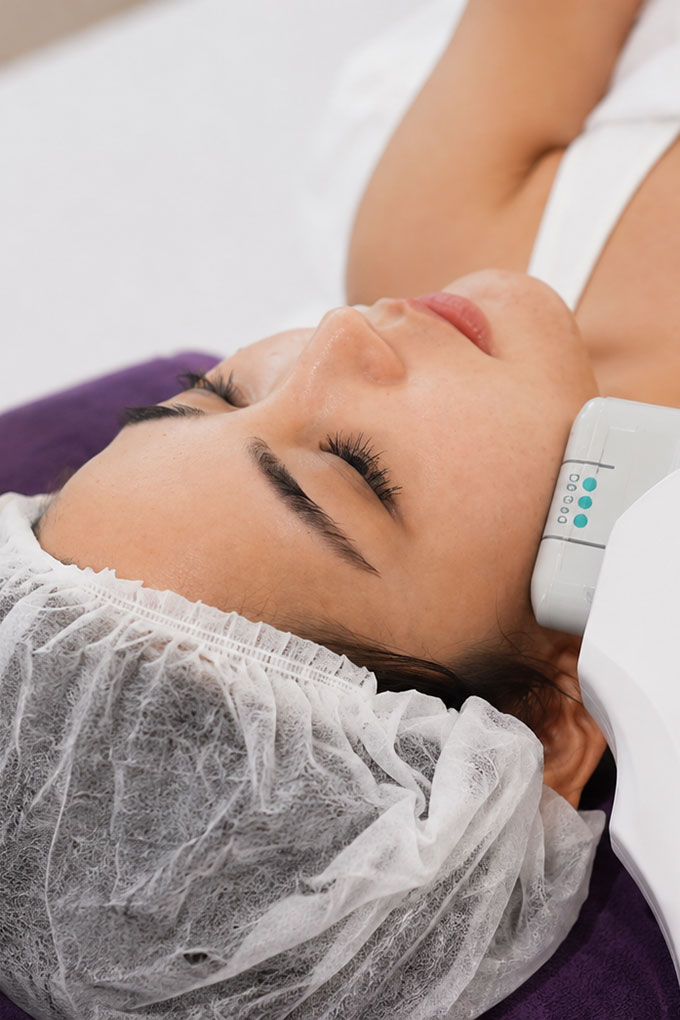
The exact procedures and treatments allowing them to virtually ‘age backwards’ remains largely shrouded. However, speculation is rife. According to Dr Tripathi, it is a likely combination of various factors including surgery for the face and neck, advanced skincare, and other non-surgical—injectable or topical—treatments. Most are yet to appear in the wider mainstream of skincare and ‘tweakments’.
“A huge push right now is growth factors, whether that be topical or injected,” says Dr Tripathi. “They’re being used literally everywhere. Fillers are not gone but people are using biostimulators like Sculptra to build a little bit of collagen in conjunction with things like lasers, peels and microneedling to improve skin texture.”
What can we expect to see in 2025?
According to Dr Tripathi, we can expect to see an explosion in subtle-looking ‘tweakments’. “Coming back and looking refreshed but very natural is going to become much more common,” he says.
While surgical procedures are likely involved in many of the celebrity transformations we’re observing, Tripathi predicts that advancements in skincare and at-home devices are going to become much more widespread. “Skincare is getting more advanced,” he says. “People are using actives a lot more and being smart with what they use on their skin.”
But what exactly does this burgeoning ‘tweakments’ phenomenon mean for all of us?

On one hand, wider access to subtle aesthetic treatments that result in a more ‘youthful’ appearance may be empowering in women for particular. “Our desire to look younger might seem focused around lines or wrinkles, but that hides a bigger truth: it’s about how we are more visible and admired when we are young, how youth is celebrated in all areas of society,” writes the beauty journalist Anita Bhagwandas in her book Ugly.
But on the other hand, these very pressures and divides may compound. “There is pressure on women to look young and halt ageing at every turn. Men in the public eye so rarely face the same scrutiny,” continues Bhagwandas. If access to ‘anti-ageing’ treatments becomes more common than ever, pressure will likely increase upon those that ‘dare’ to age gracefully. Why look ‘good for your age’ when we’re seeing more and more influential figures not looking their age at all?
“Even the word ‘tweak’ suggests it is little more than buying a lipstick or a new way to do a smoky eye,” Bhagwandas cautions. “It might be that to get the very best, barely detectable cosmetic treatments, you do just have to be very wealthy.”
Positive or negative, the exact outcomes of this new ‘tweakments’ era are yet to be seen. But one thing’s for sure—now is the time to pay attention.