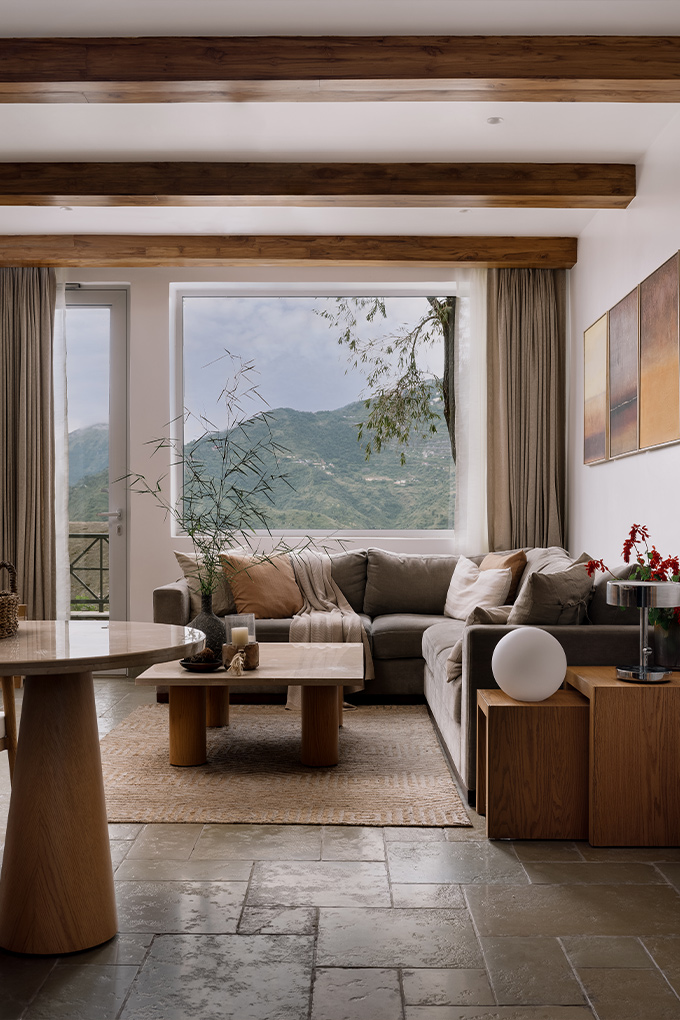
According to Omar Khan, there are two ways to approach the incorporation of rugs in a living space. “The rug is either the starting point in the design process, or the finishing touch,” he explains.
Khan is the regional director of Jaipur Rugs, a brand that aims to not just look at rugs as products, but to put the focus on the weavers as artists—giving them autonomy over their work and approaching the craft from both a creative and ethical standpoint.
Whether it’s a bold rug to make a statement or a subtle piece to tie the room together, a rug can make or break a space. Khan notes, “Rugs reinforce the design language and the theme of the room. In many ways, the rug also anchors the furniture and demarcates the different thresholds, for example, from living to dining, from bedroom to corridor.”
While neutral textured pieces are evergreen—Khan refers to them as the ‘little black dress’ of rugs; a staple that matches with everything and will never go out of style—bold patterns with vibrant colours are growing increasingly popular. This is no surprise, given our shift towards maximalism in recent years. While these might be slightly more tricky to style, Khan shares his best tips and tricks for choosing and incorporating rugs into the home—whether you’re going for something elegant and understated, or something eclectic and colourful.

1 / 4
Consider the room's function when choosing material and colour
Different colours and materials will certainly influence the vibe of a room, but it’s not just the aesthetics that one has to consider when choosing a rug for the home. “Opt for durable, low-pile rugs in high-traffic areas like entryways and living rooms. Meanwhile, plush, high-pile rugs like hand-tufted and handloom pieces work better in cosy spaces like the lounge and bedroom,” notes Khan. As for areas such as the dining room, he suggests going for a more forgiving colour palette—one with colours and patterns that can help disguise any stains or crumbs.

2 / 4
Pay attention to the shapes
It’s subtle, but the shape of the rug has the ability to transform the structure of a space. As a rule of thumb, Khan shares, “Rectangular rugs define, round rugs soften, squares work to balance out a room, and irregular forms add intrigue to a layout.” You can also consider using long, narrow runners in hallways and entryways to further define these transitional spaces and add warmth underfoot.

3 / 4
Be mindful of size
One of the biggest challenges when it comes to choosing and styling rugs, Khan notes, is finding the correct size. There’s often a concern that a big rug might make a space feel tight, when it’s often the opposite. Khan illustrates this with an example, “When I’m styling a living room, for example, I like the rug to be slightly oversized so that the entire seating area feels quite generous. Trying to go too small under a seating pattern tends to make the room feel more cluttered. It’s the same in a bedroom. If I have a king-size bed, and I pair it with a small rug, the proportions in the space will feel off.”

4 / 4
Layer your textures
Not only does layering rugs of different textures add a subtle sophistication to a room, it also works particularly well to distinguish different spaces in open concept homes. “Especially in homes where the balcony, living and dining room read as one space, I really try to encourage my clients to mix textures so we can create the design narrative that way—transitioning seamlessly from a flatweave to a hand-loomed rug, then a beautiful hand-knotted rug, and even a dhurrie runner.” In particular, mixing different textures and patterns within the same colour scheme can help to create visual interest while still maintaining a cohesive look.