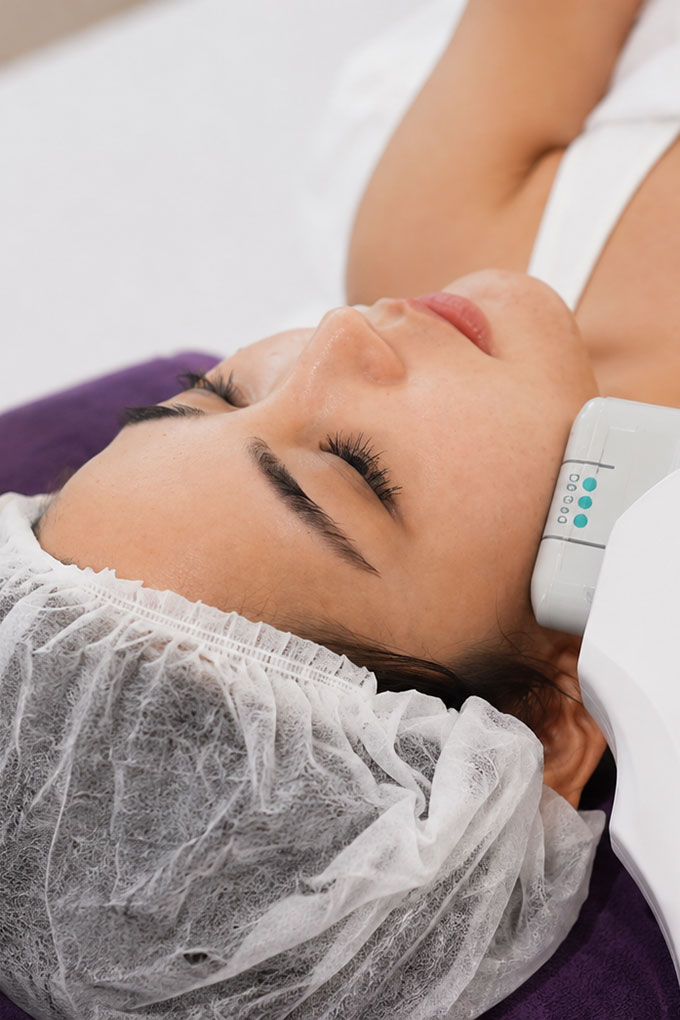
It’s not everyday that the beauty cognoscenti chances upon a new skincare ingredient to rave about. Especially one that sounds like it might be here to stay. Meet PDRN (polydeoxyribonucleotide): a gamechanging ingredient derived from salmon DNA. Commonly associated with anti-aging and skin rejuvenation, the ingredient is increasingly being incorporated into a variation of aesthetic treatments and skincare products, mostly originating from extensive K-beauty landscape.
In the aesthetics space alone, there’s Rejuran, which first gained traction all throughout South Korea’s high-grade medical clinics as a skinboosting treatment that promotes cell growth, skin elasticity and improving texture. Meanwhile, on the skincare front, a number of products have opted to combine the ingredient with a range of peptides or hydrating ingredients, to better harness its power. Case in point? Anua’s PDRN Hyaluronic Acid Serum or the newest addition to its ever-growing list: a retinol-combined ampoule by K-beauty stalwart Innisfree.
View this post on Instagram
There’s no question then, that the promising ingredient is amassing its hold on the beauty market. Yet considering its recent induction into our consciousness, can we trust that PDRN is everything it sets out to be (and more)? From its efficacy in skincare to any contraindications that may be related to the fairly new ingredient, we asked for the full lowdown from Dr Stephanie Ho, consultant dermatologist and founder of Stephanie Ho Dermatology.
What are the main benefits of PDRN for the skin?
PDRN is most commonly derived from salmon DNA fragments and is widely known for its regenerative and healing properties. Its main benefits include:
- Skin repair and regeneration: Stimulates cell turnover and tissue repair, making it great for post-procedure recovery.
- Anti-aging: Promotes collagen synthesis, improving skin elasticity and reducing fine lines.
- Hydration & barrier strengthening: Enhances moisture retention and strengthens the skin barrier.
- Anti-inflammatory: Reduces redness and soothes irritated or sensitive skin.
- Wound healing: Speeds up recovery of acne scars, burns, or aesthetic treatments like lasers and microneedling.
- Rejuvenation: Gives an overall healthier, more radiant complexion.
It’s increasingly being used in skincare recently, on top of already prevalent aesthetic treatments. From your point of view, would PDRN skincare be actually efficacious in the long run?
The science behind PDRN is promising, especially in aesthetic treatments where it is injected directly into the skin. But when incorporated into topical skincare, its efficacy depends on the formulation and molecular delivery system. While PDRN itself has strong regenerative properties, how well it penetrates into deeper layers is key. Advanced formulations using encapsulation technology or microneedling-assisted application can enhance its effectiveness. In the long run, consistent use may improve rejuvenation, hydration, and repair—but results are generally more gradual than with injectables.
When it comes to efficacy, PDRN has a relatively large molecular size, which means it may not penetrate deeply when applied topically unless nano-encapsulated, so absorption may be an issue. To this end, PDRN products are often paired with peptides, growth factors, or hyaluronic acid to improve absorption and efficacy. At the end of the day, whilst aesthetic procedures with injectable PDRN (like Rejuran) show strong results, more independent clinical studies are needed to confirm the long-term benefits of topical PDRN. Overall, PDRN in skincare probably works best when combined with other synergistic products.
Is it an ingredient that is better suited for more mature skin?
While PDRN is often associated with anti-aging, it’s not exclusively for mature skin. Anyone experiencing skin damage, sensitivity, or dehydration can benefit. It’s particularly effective for individuals with fine lines, dullness, or sagging skin; people with weakened skin barriers due to environmental stressors; acne-prone individuals dealing with post-inflammatory redness and scarring; and those recovering from aesthetic treatments like lasers, peels, or microneedling.
Personally, I use it most for patients between the ages of 25 to 50, when natural collagen production starts to decline. Younger patients are able to achieve a glassy appearance with a radiant glow and is therefore very popular amid brides-to-be. Meanwhile, it can help with skin repair, regeneration and collagen banking for older patients.
@songofskin Why Koreans love salmon skincare so much? 🍣✨ #salmondna #pdrn #pdrnskincare #rejuran #koreanskincare #glowyskin #pores ♬ original sound – 4ngeldust
Are there any contraindications related to PDRN skincare or treatments?
- Seafood allergies: Since PDRN is extracted from salmon DNA, individuals with severe fish allergies should avoid it.
- Pregnancy & breastfeeding: There’s not enough research to confirm its safety for pregnant and breastfeeding women.
- Active acne or infections: While PDRN helps with healing of acne scar and marks, it is not suitable for patients with active acne or skin infections.
- Autoimmune conditions: Those with autoimmune diseases should consult a doctor before using PDRN.
If it’s something you are optimistic about, how would you recommend the introduction of any PDRN-based skincare into one’s routine?
I would recommend a gradual introduction of topical PDRN into a routine. Start with a PDRN-infused serum or cream, and apply it after cleansing and before moisturiser. Pair it with any hydrating ingredients, such as hyaluronic acid and ceramides to enhance its regenerative effects. You can also try to use home-based micro-needling devices to deliver the active ingredients to the deeper skin layers, in order to optimise results. You can also think about using PDRN post-treatment, for faster recovery after laser, chemical peels, or microneedling. With any skincare, consistency is crucial; daily use is recommended for optimal results over time.
Have there been any specific PDRN-based skincare or treatments that have stood out to you in the current market?
The two PDRN-based brands that have stood out for me would be Rejuran and Plinest. Rejuran is derived from salmon whereas Plinest is derived from trout. Both are in-clinic procedures that are delivered by a dermatologist or doctor by injecting small amounts of the product into the superficial layer of the skin, leading to repair and regenerative effects. Both Rejuran and Plinest also have a whole range of topical products—of which we tend to use a lot of Rejuran’s tone-up booster after microneedling procedures.