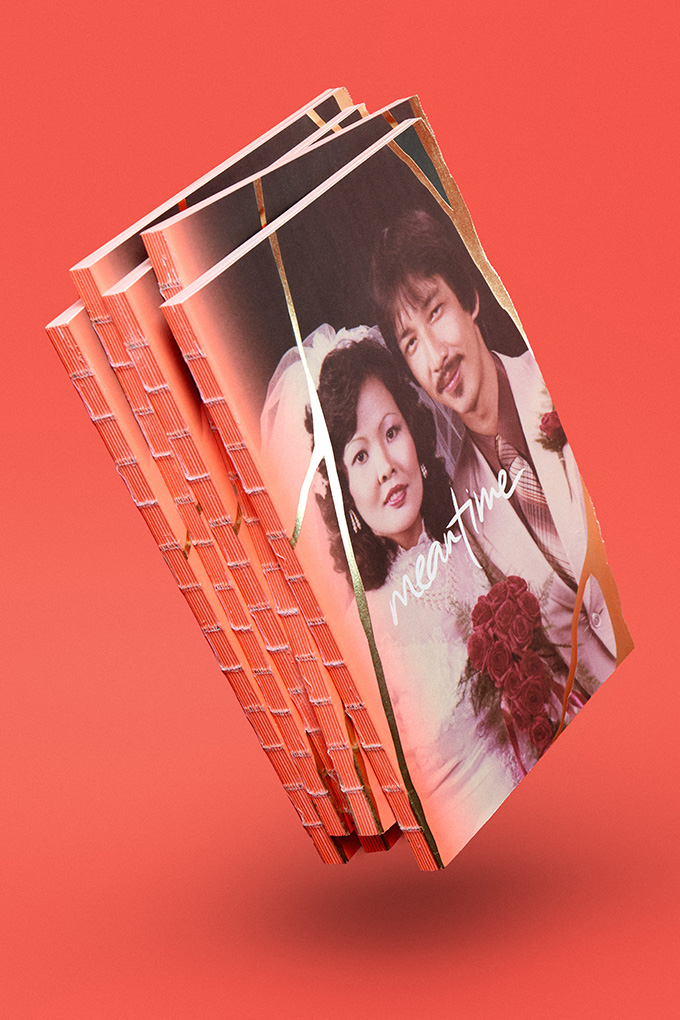
The narrative threads of our national history are so delicate that you could imagine them fading into a fog, like lost pockets of time. Yet the stories that span them are vast, from the personal to the political. It’s pieces of personal history that Meantime, an independent Singaporean zine, is most interested in, as a means of revisiting the country’s past. A larger-than-life diary of Singapore from its people to its history, as coined by editor-in-chief Pang Xue Qiang. Meantime turns personal stories into lasting cultural artefacts that invite people to hold, feel, and remember.
Born as a passion project by Pang before graduating from university, this indie publication brings forth intriguing chapters of Singapore’s past; all of which have contributed to the very fabric of the little red dot we know today, even if few are actually aware of them. Another thing one would notice about Meantime would be its physical form. From a kintsugi-style cover for its latest edition, called Breakup Stories, to an issue with a chunk drilled out to resemble an actual bite mark, the zine shapeshifts with every issue—evolving with the stories encased within them. A living archive of stories that might have been otherwise forgotten. For Vogue Singapore’s October ‘Kinship’ issue, Pang shares what inspires him most in the art of zine-making and the community that Meantime speaks to.

1 / 4
Is there a specific community your zine speaks to most?
Right now, our community of readers spans the gamut from young to old, Singaporeans to foreigners. It is an eclectic mix. Honestly, when we started, we just wanted to create something for ourselves—something we wished existed. Looking back, it was a simple desire for self-expression. When the work we create resonates with one more person, it feels like an extra bonus.

2 / 4
What inspires you most in the art of zine-making?
What inspires me most about zine-making is the joy of creating something with your hands. It is the ability to turn an idea from a seed in your mind into a physical thing to hold in your palm. There’s also the joy of sharing. The idea that a stranger may pick it up, resonate with it and own it.Till today, we are in awe of the footprint of Meantime. Last year, a friend was on holiday in Copenhagen and was surprised to see Meantime displayed on a bookshelf in a cafe there. Last month, we received an order from a reader who lives in French Polynesia. When we created Meantime, the stories were so private and specific to Singapore, we thought only a Singaporean could understand and appreciate them. But in sharing the work, we discovered that the stories in Meantime are universal.

3 / 4
What is something you won’t compromise on in a zine?
A zine is something tangible, so to me, the physicality of it matters. This means thinking about its materiality: the paper, the binding, the fold, the cut, the shape. I think the form it takes is important. We are inundated with enough information from our screens. So for the words, photos and illustrations that take form in a zine, the material experience of the zine matters.

4 / 4
What are you most drawn to when looking at other zines?
I look at perspective. A zine is a portal into the minds of its creators. Does it make me look at something in a new way? I also look for playfulness. Zine-making is experimental and it should be fun. One of my favourites is a photo zine by the Beijing Silvermine project. French artist Thomas Sauvin had salvaged over a million negatives in the past decade from are cycling plant in Beijing. So playfulness can be expressed inits concept or its treatment.
The October issue of Vogue Singapore—themed ‘Kinship’—is available online and on newsstands.