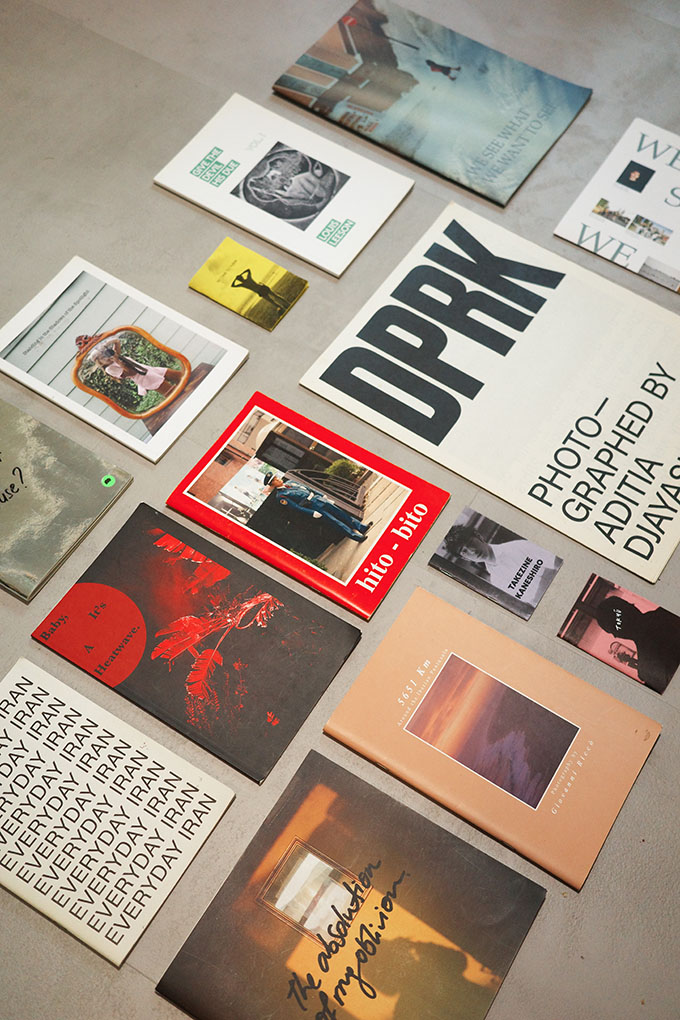
When Huda Azzis first discovered Hamburger Eyes in the early 2010s, she was struck by its honesty. “I was instantly intrigued by their simplicity and rawness. From there, I started collecting more, buying zines off Etsy and photographers on Instagram,” she recalls. As a zine collector, she found herself drawn not just to the stories within those pages but to the very act of creation itself. It wasn’t long before she decided to craft her own zine, creating First of the Gang to Die, a subtle tribute to the former The Smiths leader, Steve Morrissey. This debut was a vibrant patchwork of screen grabs from her favourite films and evocative images scraped from Tumblr, a personal and creative collage that reflected the eclectic influences shaping her artistic vision.
Over the years, Azzis has honed her craft with dedication and care, evolving from an avid collector to the founder of Your Local Newsstand, an independent publication house with a focus on developing zines dedicated to photography. Her work champions the tactile and intimate experience of engaging with images on a page, insisting on the importance of physicality in storytelling. Every publication is a carefully curated space where moments captured in frames come alive, inviting readers to pause, reflect, and connect. For Vogue Singapore’s October ‘Kinship’ issue, Azzis shares what draws her to zine-making, embracing it as an unrestrained medium where images come alive and stories that are often overlooked can finally find their voice.

1 / 4
What inspires you most in the art of zine-making?
I’m inspired by the possibilities: how a zine might look and feel in someone’s hands. The process of sequencing images, choosing papers, deciding on the binding—all of this comes together to create a material experience. Photography and print are visual mediums and when you combine them together into a tactile object, the way it behaves and is consumed changes.

2 / 4
What are you most drawn to when looking at other zines?
I have always been drawn towards photozines, such as documentaries or personal photo projects. These days, however, I tend to lean towards works that are more personal. As I grow older, I am getting more introspective and I like works that feel like everyday life: a bit vulnerable, a bit reflective.

3 / 4
Zines are largely viewed as a form of counterculture. Why do you think more people are gravitating towards zines?
The only rule to zine-making is that there are no rules. You can make anything you want. That has always been the starting point for zines anyway—and its allure. You just need paper, some ideas and the will to put them together. And I think more people are drawn to zines now because they crave that raw, unpolished voice in a world that is oversaturated with glossy advertisements and sponsored content. Zines give people a way to do things on their own terms, in their own voice.

4 / 4
As a zinemaker, what does kinship mean to you?
Support. It’s about people showing up for each other, trading zines, sharing resources, spreading the word. Zine culture thrives on exchange and generosity. That sense of kinship is what keeps the whole ecosystem alive.
The October issue of Vogue Singapore—themed ‘Kinship’—is available online and on newsstands.