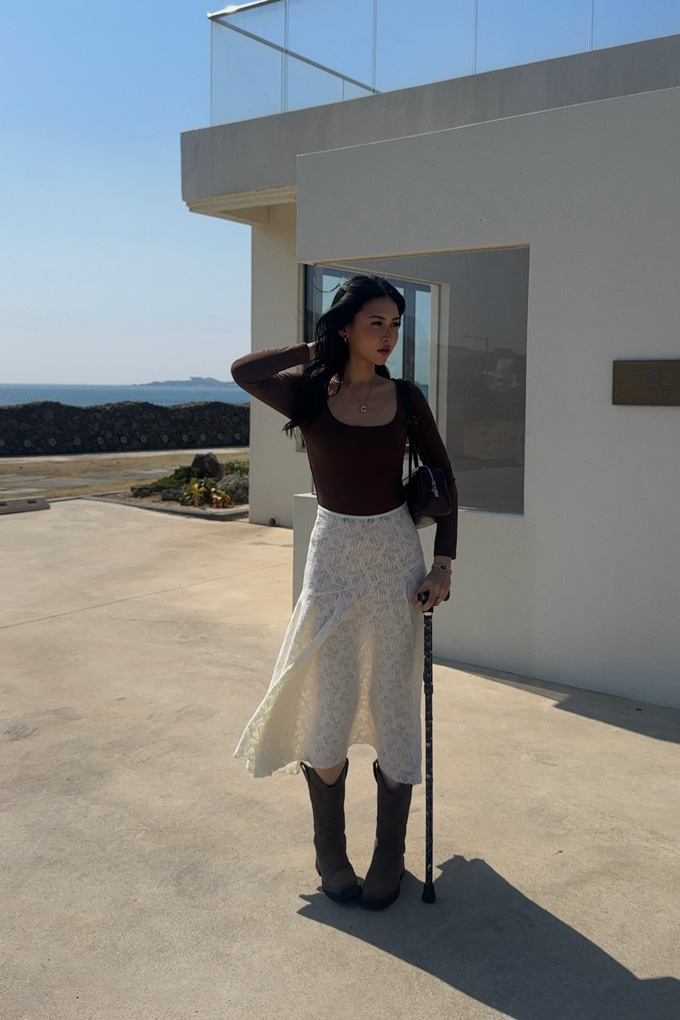
So I have a tumour in my spinal cord—it’s called astrocytoma. It spans from the T5 (thoracic) to L2 (lumbar) vertebrae, so it’s considered pretty big, and I was diagnosed with it when I was 22. That was in 2016 when I did my first surgery. I had a relapse in 2020, and did another surgery then, but when it relapsed again last year, surgery was no longer viable, because it might increase the risk of paralysis. So I did radiation therapy for that instead, to make sure it wouldn’t continue growing or risk mutating into cancer.
Prior to being diagnosed, I had been suffering from back aches and back pains. At that time, I thought I might have scoliosis or just back pain from not getting enough sleep—one of the doctors even implied I wasn’t exercising enough and sent me home with exercises to do. But I had to go back to the doctor a month later because I could barely move. I couldn’t do any of those exercises. So we finally did the MRI and found out that I had a tumour in my spinal cord. I was in disbelief, mostly. Scared. It ended up being an emergency surgery, because I went from being able to walk to being bedridden in a short period of time. The tumour felt like it was pressing down on the nerves in my legs and I was immobile.
The whole time I was thinking, “There’s no way. Like what’s this, you know? I’m only 22, don’t these sorts of things only happen on TV?” It was not like how it is now, when you have social media and people sharing their stories so openly. It was lonely, not knowing how to navigate it all, but the good thing was that I had a good support system with me, my family. After the surgery, I recovered pretty quickly and within a month I felt better again but had to do physio to relearn how to walk. I could not feel regular sensations in my lower body. Nothing, from my hips to my toes. Hence, I had to recalibrate my balance and figure out how to walk again.
But I was determined to return to normal life. I challenged myself and joined The New Paper New Face the following year, and even walked the runway in six-inch heels. It was a big little hurdle in life, but at that age, all I wanted was to dive back into the groove of things, like all my peers back then.
The next time I was hit was 2020, it was during Covid-19 in October. It was hard because I didn’t expect it to come back. But I knew something wasn’t right, because every time I tried walking, I would fall. I just thought I was being clumsy, but when I went for an MRI, the scan showed that it grew back again. So I had to do a neuroendocrine tumour (NET) surgery.
View this post on Instagram
After that surgery, I lost even more sensation in my body and my balance got worse. I was losing my proprioception, which is like the body’s natural, in-built spatial awareness. Like when you step on rocks or an uneven surface and your ankle naturally knows how to balance you out. But I lost that ability, so no heels for me. I was stumbling everywhere and Grab drivers would just assume I was drunk.
I tried delaying the use of my walking stick initially—it wasn’t the best mindset, I admit. Thinking things like ‘It’s going to ruin my outfit’ or looking at the available designs and feeling uninspired. Carrying a walking stick also would just attract a lot of attention that I didn’t want at the time, if I were to go to events with it. I couldn’t accept being different then.
But I’ve since grown out of that mindset, because I started thinking to myself: “Who cares if I go to places that I want to go to, and do things that I want to do?”
It’s part of the reason why I started sharing it on my social media. It was for people to know about my condition, because there was too much to explain if I met strangers at events. They’ll ask “Oh, what happened?” and at the time, I would lie and say “Oh, I sprained my ankle.” Six months later, they would see me again and I would still be the same.
But from me sharing my journey on my platform, people from across the world with the same condition started reaching out. We started talking about what we’ve been through, and our treatments. Over time, I felt like I was beginning to share more on social media for myself—so I could feel more connected to people going through the same thing as me. I was able to talk to people who understood the pain, the internal turmoil, the loss of independence, and the feeling of being a burden to my caregivers. Don’t get me wrong, I have the best support system and friends and family who are always understanding and supportive but it’s different when you can relate to someone who really knows what it feels like.
View this post on Instagram
Because there are good days and bad ones. On good days, I feel like I have energy and my mind is clear. It actually takes up a lot of my mental energy to concentrate on walking because I don’t balance like a normal person. So I tire that much more easily. So if I wake up and feel like my body and mind are in sync, that’s already a good thing.
Some days however, I might have a to-do list of everything I want to do, but my body just doesn’t cooperate with me. But I don’t try to fight it—I just let it happen. I have a very loving and supportive husband though, who knows when it gets bad for me. He just lets me be me, and messy, and takes the pressure of having to be a certain way all the time. I appreciate him a lot for that.
View this post on Instagram
When it relapsed again last year, it wasn’t because I was in pain or anything; we had actually gone in for a medical check-up because we wanted to try for a baby. I found out that the tumour had grown bigger so those plans had to take a backseat whilst I did treatment. I decided to begin my IVF journey too, since the radiation might affect my ovaries. Since after my radiotherapy treatment, the pain has been manageable. I think of course as someone with a chronic illness, my pain tolerance is quite different from normal people. There was definitely a time when it was really painful, but I had just pushed through.
Throughout these past ten years, it’s felt like one big, expensive lesson. But I think one of the biggest lessons for myself has been to really live my best life at any given time. Life is so fleeting—it’s cliché, but it’s true. Like if I didn’t do The New Paper New Face competition, I’ll never be able to recall that and go like “Wow, I did that.” I might never be able to recover to a point where I can do that again, after all. Looking back, I really haven’t stopped fighting, yeah? But I really wouldn’t be where I am or as ‘strong’ as I am without my support system and caregivers in my life. That’s something I want everyone to know, because they deserve so much more of the limelight.
If there’s one thing I’d want to tell any healthy, able-bodied person though, it’s that everyone goes through their own struggles—and you should just appreciate what you have, the body you have, and the life that you have. And just do the best you can.