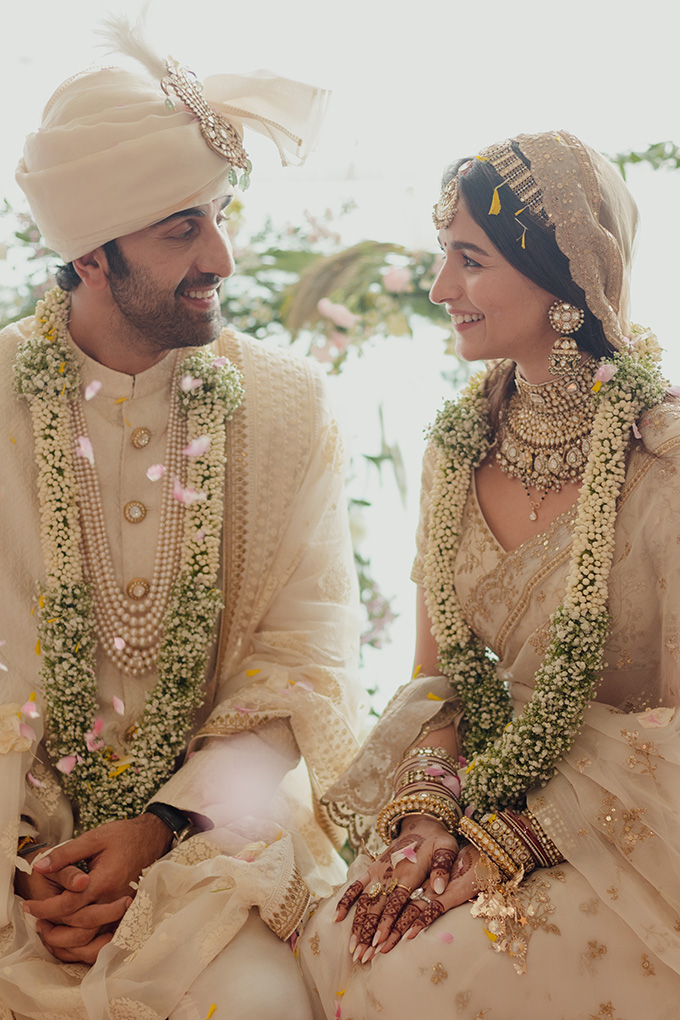
South Asian weddings are no simple affair. While no two look the same, each reflects a different facet of a vast, far-reaching culture, coming together as something to remember. Celebrations unfold over days, from the mehendi to the haldi and, of course, the afterparty, each moment holding its own meaning as family and friends gather from across the world.
The brief is instinctive: dress the part. The bride and groom set the tone in richly embellished pieces and everyone else rises to meet it. So what does one wear? Traditional silhouettes, dialled up—the more dazzling, the better—adorned with jewellery that catches the light at every turn. Even at its most extravagant, there is little fear of overdoing it.
While womenswear often takes centre stage—lehenga cholis, silk sarees, anarkalis—menswear is just as considered. From the sherwani to the bandhgala, the veshti and angavastram, there is a rich vocabulary to draw from. Yet the codes can feel less clearly defined for menswear. So who is shaping how to show up and stand out? Enter Faiyaz.

For over a decade, the Singapore-based photographer, creative director and stylist has built richly layered visual worlds, drawing on the historical, cultural, nostalgic and surreal. Having worked with industry stalwarts Aisyah Aziz, Fiona Xie and Tabitha Nauser, Faiyaz has become a fixture within the fashion landscape, operating at the intersection of culture and image-making and having amassed a following of lovers of his work.
“My practice sits at an intersection of photography, creative direction and styling,” he shares. “I’m a photographer first, but also someone who enjoys building worlds, whether that’s through fashion editorial work, portraiture or conceptual imagery. I’m driven by atmosphere. I love crafting images that feel nostalgic and emotional, sometimes slightly surreal, but still very much grounded in the subject’s truth. Everything I do centres around storytelling and a sensitivity to how people want to be seen.”
Your work is cinematic yet instinctive. What has shaped your visual language over the years?
A mix of intuition and obsession…or should I say fixation? I’ve always gravitated towards highly stylised imagery, photographs that feel dramatic but intimate at the same time. I think this visual language comes from early exposure to Bollywood movies, MTV and fashion magazines. I’m also shaped by my own emotional landscape. I try to create from feeling once I’m on set. Doing so over the years has helped to refine my taste and helped me understand what feels authentically me.

South Asian weddings are immersive, especially in how we dress. What does being a well-dressed guest mean to you today?
Being well-dressed is all about intention. South Asian weddings are incredibly visual, so you want to pay tribute to that richness without losing yourself. I think a well-dressed guest today finds balance between embracing tradition but styling it in a way that feels personal. It’s less about being the loudest in the room and more about creating harmony between colour, texture, silhouette and who you are. You also want to show regard to the couple getting married and their families. Everyone has gone to great lengths to put these celebrations together. Dressing well can be a form of respect, an acknowledgment of the time and thought they’ve invested. If you’ve been given a dress code, colour palette or style guide, it’s important to follow it. Think of it as a way of contributing to the overall mood that they’ve envisioned. When everyone shows up with that level of consideration, it elevates the entire experience for everyone. Please don’t be that guest that shows up to the wedding in a polo T-shirt and jeans.

For a friend’s recent wedding, you wore six distinct looks across the celebrations. Take us through them.
For the mehendi, I wanted the look to feel light and airy, so I opted for a sage green kameez with chikankari-style embroidery—a traditional hand-embroidery technique from Lucknow known for its intricate floral and geometric motifs. I tied the look together with a white linen bag and Mary Janes, which kept the palette soft and fresh.
“South Asian weddings are incredibly visual, so you want to pay tribute to that richness without losing yourself. I think a well-dressed guest today finds balance between embracing tradition but styling it in a way that feels personal.”

And of course, there was the afterparty!
By the time the afterparty came around, it felt right to loosen things up a little. After several looks rooted in tradition, I wanted the final outfit to feel more relaxed and contemporary. I chose a black jacquard blazer for a sharper silhouette, and to keep it connected to the rest of the wardrobe, I draped a piece of black tulle from the hip to the shoulder. Paired with black Mary Janes and a Comme des Garçons clasp bag, it felt like a natural closing note for the celebrations.
When building those six looks, did you begin with hero pieces or with an overall mood in mind?
Usually the mood comes first. I try to understand the energy of the event, whether it’s daytime or evening, formal or festive. Once that becomes clear, the hero pieces tend to reveal themselves naturally. Sometimes it’s a blazer, sometimes jewellery, and sometimes it’s simply a colour tone I want to explore. Emotional direction always guides my choices.
How did you think about texture, palette and proportion across the wardrobe to ensure each look felt cohesive?
I approached it like an editorial. I wanted the looks to feel connected, so right away I knew there needed to be a common thread running through them. That thread ended up being embroidery. South Asia has such a rich history of artisan craftsmanship, especially in textiles. Sometimes when we wear these garments we forget that we’re carrying centuries of tradition, knowledge and skill. I wanted to acknowledge and honour that legacy by exploring different embroidery techniques and motifs.

Accessories can completely transform an outfit. What role did shoes, jewellery or scarves play in refining each look?
South Asian clothing is inherently modular, so accessories play an essential role in shaping the final look. I think of them as punctuation marks in a sentence: subtle, yet completing the thought. Clothing forms the foundation, while the smaller elements give it character. Shoes set the tone for each outfit, alternating between sleek Mary Janes and embroidered khussas. Scarves and fabric elements introduced movement and softness, sometimes elevating a look, other times grounding it. Jewellery was the final touch, either delicate pieces that caught the light or a statement element that became the focal point.
As someone who understands how clothing translates on camera, how did that influence the way you styled each outfit?
It really comes down to light. As someone who works behind the camera, I’m always thinking about how fabrics and colours behave in the light when they’re photographed. Certain materials create depth through texture, tone and subtle sheen, which translates beautifully on camera. I also gravitated towards pieces that held their shape well. Weddings are full of movement and candid moments, so I wanted outfits that would remain composed in photographs, whether I would be standing still or caught mid-dance.

What’s one styling detail people often overlook when dressing for a wedding?
Cohesion. People often focus on individual pieces rather than how everything works together. Colours, fabrics and accessories should feel like part of the same conversation. When those elements are in dialogue with each other, the outfit immediately feels more thoughtful and refined.
What advice would you give to someone looking to elevate their wedding guest style?
I think elevating your style always starts with intention. Choose colours and pieces that genuinely feel like an extension of your personal style rather than trying to follow something trendy. Once you’ve got that foundation, you can focus on refinement with beautiful fabrics, thoughtful tailoring and a couple of details that give the outfit character. Oftentimes the most elegant looks come from restraint. When everything feels balanced and natural on you, the result is effortless. And please, please, please take the time to iron or steam your clothes! It makes a world of difference.

And finally, is there a project you’re currently working on that we can look forward to?
I’m currently in the process of developing a creative studio, which will bring all my creative pursuits under one umbrella. It’s something I’ve been building slowly and intentionally, allowing the vision to evolve organically. Other than that, I’m just enjoying the meaningful shoots that I get to be a part of. I’m looking forward to collaborating with other passionate people in the community, like designers, artists or brands, who are on the same frequency and share a similar hunger for beauty.