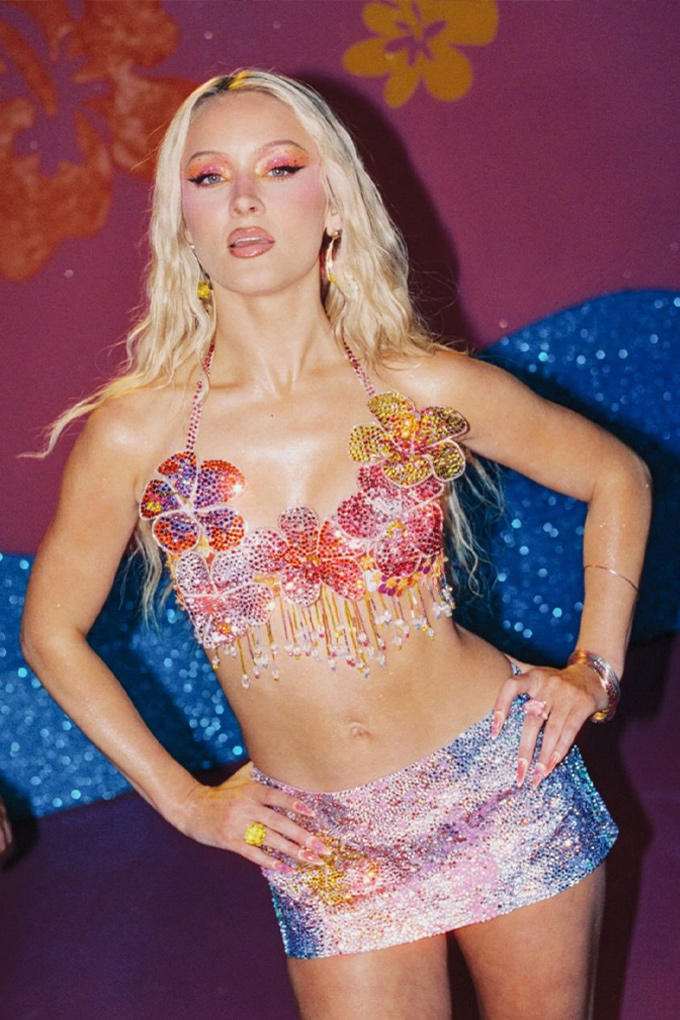
Agro Studio might just be one of London’s best-kept secrets.
Perhaps you may know Agro already for their pop girl dressing. The designer duo are behind just about every tour wardrobe: Raye’s dramatic NFL halftime gown, and the striking crimson dress seen running through her ‘Where is my Husband!’ music video; Madonna’s pink bridal veil for her surprise YSL afterparty rave; one of the 40 lycra playsuits for Lady Gaga’s Coachella performance; support on two sections of Beyoncé’s ‘Cowboy Carter’ tour; or Zara Larsson’s saturated, sunset-hued tour looks leading the charge for a maximalist summer.


Founded by Angus Cockram and George Oxby, the Agro DNA is, at its core, defined by an instinctive approach to texture and materiality; a touch of irreverence and punk; and perhaps most importantly, the art of the perfect fit, no matter what fabric, silhouette, or body type they are working with—which feeds into what makes the label so loved by celebrities across different aesthetics.
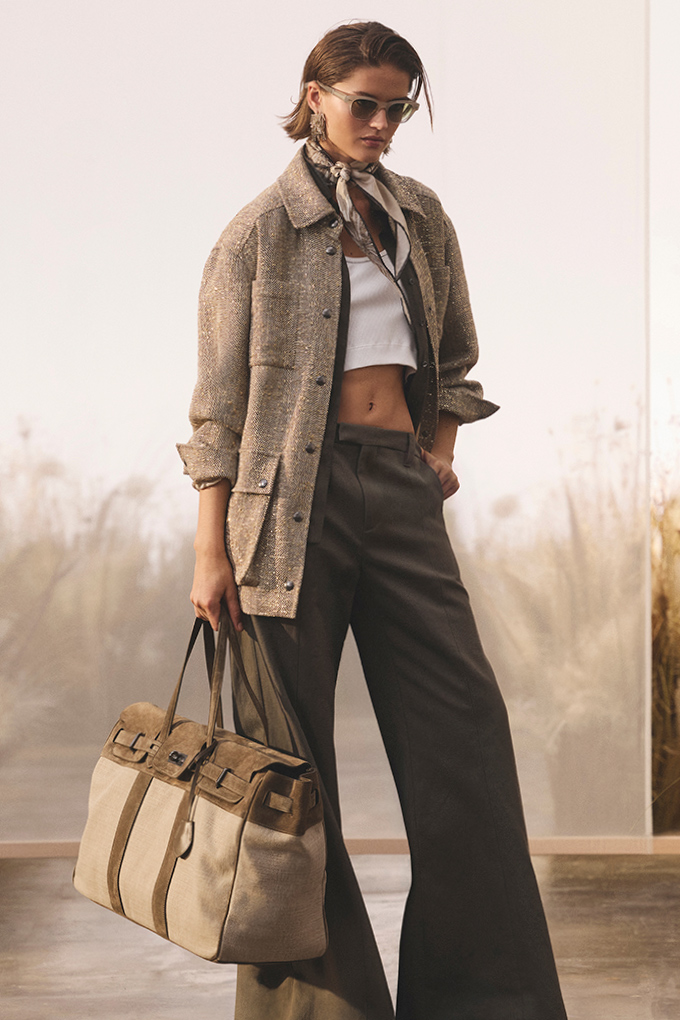
Their technical breadth has enabled the duo an unusual degree of creative freedom—artfully handling fabrics from Chantilly lace, Mongolian fur, to crystal corsetry; sometimes in the same collection. This has been rooted in Agro’s practice from the beginning, for even the Icelandic sheepskins featured in their most recent fall/winter 2026 collection ‘The Wanderer’ can be traced back to their breakthrough NFL campaign, which ultimately landed them in British Vogue.
View this post on Instagram
Beginning in bespoke and custom work has allowed Agro to build a business that is less dependent on traditional wholesale and retail models; but rather, focusing on custom work and commercial projects to sustain their ready-to-wear. The designer duo have embraced a broad portfolio of clients: reality dating show Love Island, established restaurant chain Pizza Express, e-commerce platforms like eBay, and even bespoke leather jackets for a boxing match hosted by Sky Sports. But to call it simply “commercial” would miss the point. Across every aesthetic, perhaps what is most fascinating about Agro is how they have found a way to filter each aesthetic and collaboration through their lens; using every project as an opportunity to define and refine the brand’s visual language.


Alongside an exclusive video for Vogue Singapore, Cockram and Oxby share about the journey they took to build Agro Studio, the impact of commercial work on their personal aesthetic, and taking their egos out of the process.
@voguesingapore From @madonna’s pink bridal veil for her surprise @SAINT LAURENT afterparty rave to @KATSEYE’s #Coachella performance and @Beyoncé’s ‘Cowboy Carter’ tour, Agro Studio have become the designer duo behind some of pop’s most memorable wardrobes. Founded by Angus Cockram and George Oxby, at the heart of Agro Studio lies an instinctive understanding of the body—creating pieces that transcend aesthetics, identities and silhouettes. Whether working with Chantilly lace, Mongolian fur or crystal corsetry, the duo’s technical fluency allows them to craft a distinct visual language for every wearer. Alongside an exclusive behind-the-scenes video from their fall/winter 2026 collection ‘The Wanderer,’ the designer duo speaks with #VogueSingapore‘s digital writer Agnes Shu about building Agro Studio, the influence of commercial work on their creative language, and taking ego out of the process. Read the full interview in the link in bio. #VogueSingapore ♬ original sound – Vogue Singapore
You guys met on Hinge, which is so fun. I was curious as to how the story behind your creative partnership developed, and realising you were creatively compatible.
George Oxby: There was a whole year between meeting on Hinge and us actually meeting, because it was during Covid. We had been doing ad-hoc tailoring jobs for high-profile clients, and would come on set for a Ralph Lauren shoot, or golfing weekends in Scotland with VIP clients—and that’s how we met stylists. We then got approached to start working together. Back then, we were working in my living room—one industrial machine, one domestic overlocker, and a dream.
Angus Cockram: We had our own jobs. I was working part-time at JW Anderson, and part-time at Christopher Rayburn. We never wanted to work together. It wasn’t the plan. You see all these other designers who are in a relationship while working together, we were like, no, no, no. But then it just clicked.
What was the turning point?
GO: We made a Mongolian coat for an NFL advert, and we posted it on our Instagram—and got an email from British Vogue asking if they could loan it for a shoot. We were like, oh my god, maybe there is something we have going on here. People want it.
May of 2022 is when we incorporated as Agro. It’s taken a few different shapes to where it is now. We tried to do so many different things.
AC: We said yes to everything, just to pay rent. We took our egos out of it. We’re at this point now where we can shape it where we want to now. Before we took a lot of commercial jobs, or did other styles that weren’t particularly us.
View this post on Instagram
I’m curious about your commercial jobs, especially with such a range of clients—from Pizza Express to Love Island. How did this influence your personal aesthetic?
GO: It taught us how to build an aesthetic into a commercial project. How do you have a brief that is very commercial and fixed, and actually weave in something that is cool, fun and wearable to a young audience? It’s a dichotomy that was interesting to work towards.
AC: It’s made us more open and not to be so stuck in an aesthetic, to be a bit more loose and have appreciation for different arts. Once you get pigeonholed into being something it can sometimes limit you. It’s really nice to be able to know the techniques, to know how to say something.
GO: We’re super grateful for all of those jobs, and we’ve created amazing things that we love from those eras. It’s not separating ourselves from those things, because that’s what started us. Saying yes to everything and putting our spin on it was probably what got us here: being easy to work with, being dependable, and being hardworking. Now, we can also shape our direction more even with the artists we work a lot with—like Jade [Thirlwall], or Zara [Larsson]. They’re more receptive because they just get us.


How has designing bespoke shaped your approach to ready-to-wear?
AC: When we do customs, we’ve worked with so many different body types, and so it’s allowed our brain and sculpting skills to be more refined in that way, especially with different fabrics. It’s allowed us to get the fit and the finished garment exactly how we want it.
GO: One day, we’re making a well-made men’s suit; the next day, we’re bringing show girl vibes with a crystal corset. If you have honed your skill in one particular area, you might not have such a diverse knowledge until later down the line of different construction methods. We have a very diverse range of things to do, and we’re honing in now. I think we’ve learned a lot to do the opposite way, learning to refine, cut, and edit.


What have you learnt through editing?
AC: With editing, it was really about taking a breath and listening to each other. Saying, “I know you designed this, but, girl…”—
GO: Not as bitchy as that! [Laughs.]
AC: [Laughs.] We have amazing stylists. Douglas Miller helped us edit, and we went through two castings, having models come in to see what works well on them.
That’s quite a similar process to how you do bespoke looks, as in, finding models to match the look—and editing through that rather than the other way around.
GO: We saw Rue Charlotte and immediately were like, she has to be in the bridal look. She had this flaming red hair and it was just perfection. We told her, go off to the seamstresses—it just had to be her.
View this post on Instagram
I’m curious as to how your dynamic as a creative partnership has adapted, from when you were making customs to ready-to-wear.
GO: With any living and working relationship, there are highs and lows. It’s part of the texture of any creative dynamic. What we have done is have both a combined vision and a separate vision. Both of us would creatively direct from the top, and individually will take on capsules within that. We’re trying so hard as a duo to have our own experience as designers, and also have a team experience, so that we’re not ending up feeling unsatisfied at the end of the process.
We now have a team of three seamstresses and two pattern-cutters. We started working with a lot of an amazing embroidery team, which is managed by Rosie [Brain Embroidery]. Bringing together these incredible people and skill sets with years of experience in their fields has really elevated our output. We’ve been super lucky to move into a new space—a really lovely, beautiful, big space in Clapton, East London. Windows, we have windows!
So, how do you ensure you express yourself individually as well as a duo?
GO: To really go into the process, we have our little capsule moment—for example, the reflective metallic section in ‘The Wanderer’—and then we will develop what we call our bridging looks, to move into the next capsule. Our shows are really about conveying what we want to say for the next six months within our customs and within the energy of the brand. It should feel, to some degree, a narrative.


How do you feel looking back on your first show?
GO: With our first show, we lovingly call it our graduate one, because it doesn’t feel like a proper show to us. That’s okay, because that’s what it was, and it’s cool to see growth. One of the things about the modern fashion industry is how everything seems to have to be perfect the first time it’s on the runway, everything has to be high budget. We started off in a very London way—a bit rough around the edges, it was a little bit incoherent—and that’s kind of punky and fun.
And what about your next one—any sneak peeks for September?
GO: Should we just say the name? Well, … we always did characters, like ‘The Wanderer’, ‘The Prophet’, ‘The Jester’. This is the first time we’re moving away from that, and it’s going to be to do with material. And we’re looking at transparency. It’s going to be, I think, quite different in a cool way.
Shout out to Ace and Will, who are our creative producers, because it really couldn’t happen without them. They are going to be heavily involved in the next show, and they’re very embedded in the music industry. It’s a really nice development of our relationship with them with this show.