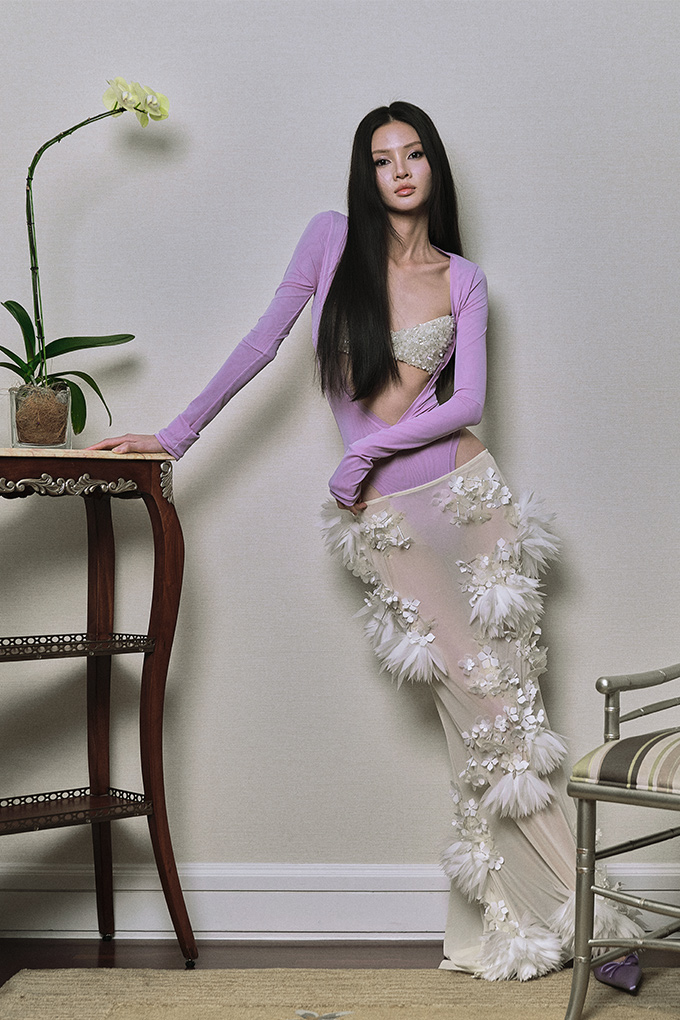
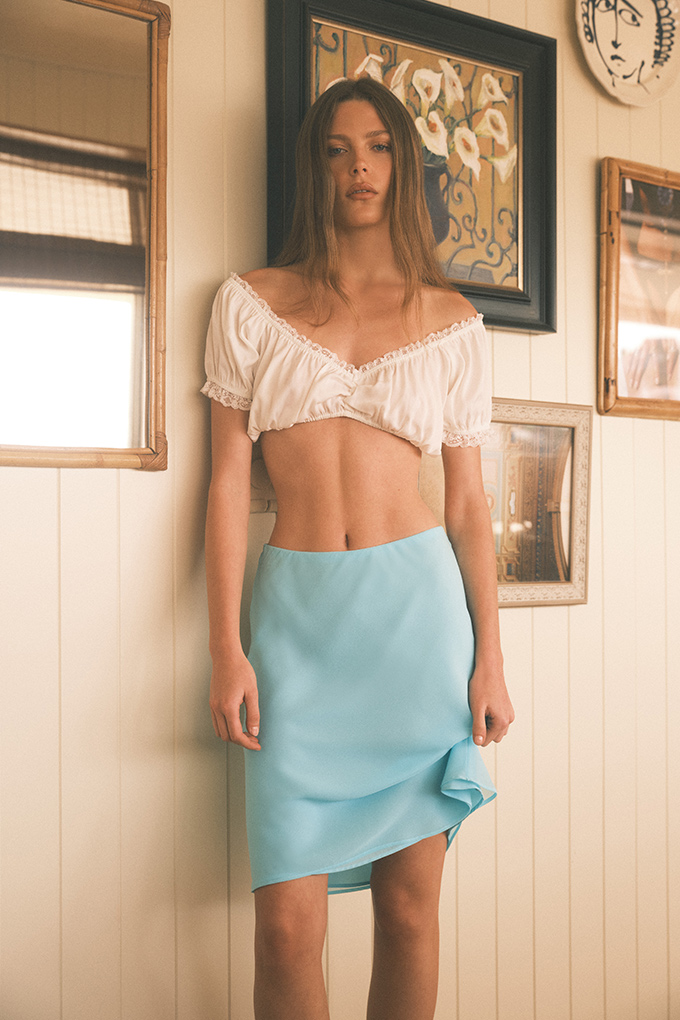
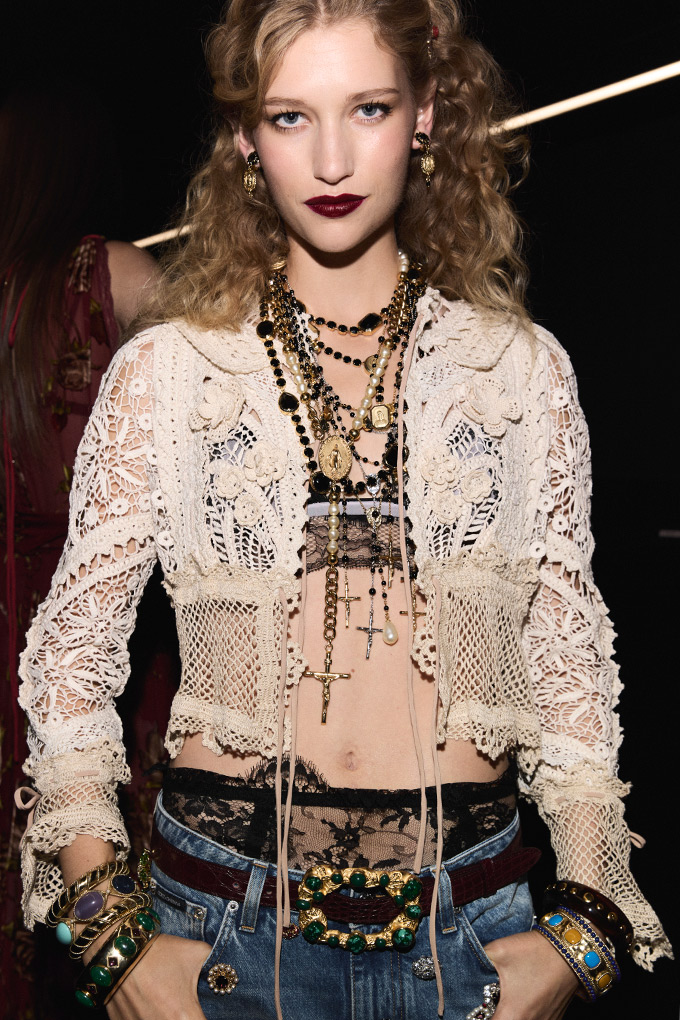
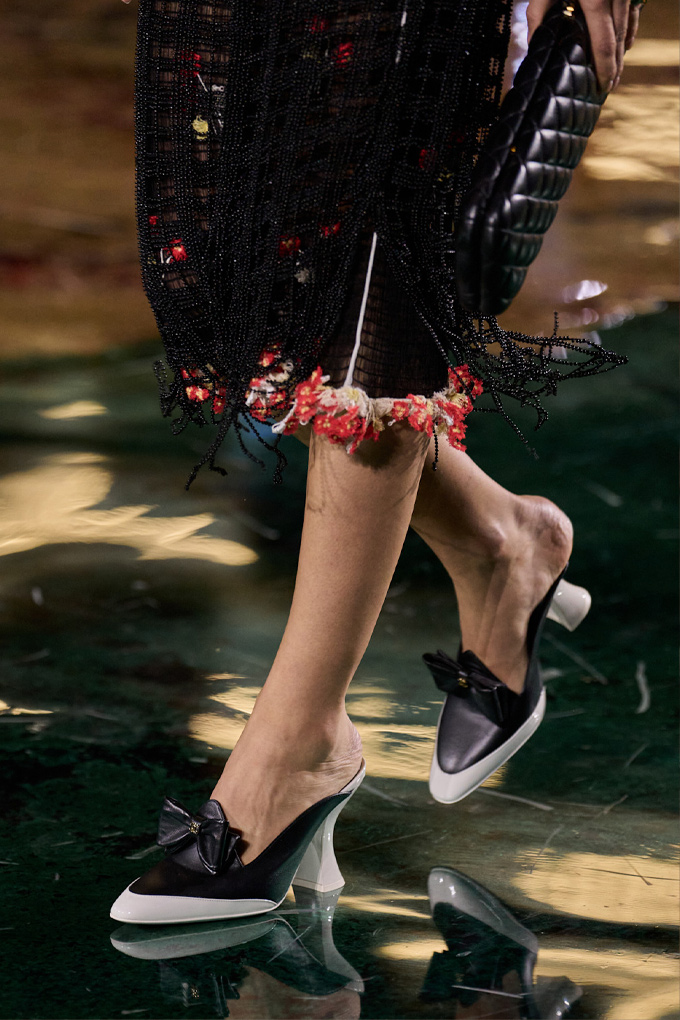
“I want to work hard to be one of the best designers, not one of the best Chinese designers,” shares Robert Wun, the visionary renowned for his surreal, ethereal collections that strike a delicate chord between haunting and beautiful. While he is the first designer from Hong Kong to be featured on the Paris Haute Couture calendar, Wun has never let the title define him. His artful work speaks louder: esoteric symbolism, and meticulous craft—all rooted in a deeply personal lens.
Wun’s collections are known for their cinematic edge and intricate artistry, from razor-edged gowns adorned with tears and blood motifs to 3D constructions, his designs feel almost mythic. He’s dressed everyone from Lady Gaga to Cardi B, yet never loses the sense of storytelling that makes each piece feel like a relic from a larger universe.
In a panel conversation held at this year’s Next In Vogue, Wun reflects on the moments that shaped his path—from thrift shops in Kowloon and a shared bedroom with his grandmother, to the sting of being excluded from his university’s graduate press show. Each chapter sharpened his instinct to protect and pursue his creative voice. He doesn’t romanticise the climb. Instead, he speaks candidly about the frustration of the risk of being reduced to an “Asian designer,” the pressure to package art into commercial language, and the realities of steering an independent label into its next chapter.
But through it all, one thing remains constant: the belief that the work must speak for itself. Speaking to associate deputy editor Maya Menon, the designer unpacks the nuances of identity, the making of a signature and what it truly takes to build a lasting voice in fashion.

You mentioned that you were inspired by a friend at church to start designing. Can you tell us what your early days were like and what that first spark of fashion was like for you?
It was pretty much like a lot of teenagers—figuring out how you want to be dressed and how you want to represent yourself. It started from thrift shopping after school, during lunchtime, around the Kowloon City area in Hong Kong where there were secondhand shops. I noticed I really liked clothing and the idea of what clothing gives you as an identity—how you see yourself or find yourself through it—getting a pair of jeans or a shirt or a denim jacket.
What drew you to London and how did that shape your creative footing?
It was out of my comfort zone. It wasn’t my first choice to leave Hong Kong—I was too comfortable there. My family felt Hong Kong wouldn’t be right if I wanted to pursue design or anything creative, and because we had family in London, they felt it would be the right decision. When I got there, even in the first week, I felt the difference. I could pursue it; even the conversations I had with classmates from around the world made it real. It’s less about how you pursue design and more about the language you build. I’m stubborn. I don’t think my tutors thoroughly enjoyed me—they couldn’t escape me.
Who are the key figures that inspired you—especially those who were all about spectacle and storytelling?
Alexander McQueen, definitely. Before thrift shopping and all that, my mother took me to the salon when I was about eight. I picked up a fashion magazine and there was a look that stopped me. I tried to read the English name—back then I didn’t know if it was the model’s name or the brand’s—but it was McQueen. Out of the other looks—from Gucci, from Tom Ford—that one stuck. People outside fashion respect him because he proved fashion can be more than selling clothes and expensive bags—that it doesn’t exist in a vacuum. He showed what imagination can lead to.
When you launched your brand in 2014, what were the biggest successes and challenges?
My successes were the little lucky breaks in the beginning. In 2014, Gaga approached us—she bought two shoes from our graduate collection. We were also invited to do something for The Hunger Games. That made me feel maybe it’s worth trying my own brand. The challenges were like anyone else’s—more so for me because I was clueless. I had no contacts and no idea how to run a brand, what wholesale is, what manufacturing is—all the boring stuff. I just wanted to make collections and create clothes I love. I had to meet people who taught me how things are supposed to be done—what a line sheet looks like, how to open a business account. There were many people who helped along the way. It took a long time, but for good reason.
“If I’m sacrificing so much to pursue my dream, I need to make sure everything I do from now on is honest—something I can look back on and say that collection genuinely stamped a time in my life. That gave me even more purpose.”
In 2022 you paused ready-to-wear and shifted to on-demand. What changed?
The pandemic gave a reset mentality—to me and to the industry. We couldn’t go to Paris; showrooms didn’t exist. Suddenly I had the opportunity to think: I don’t need to go meet all these people or listen to how many shirts they need. Maybe I can just do what I love. We did the first collection during the pandemic. The team was extremely small—just me and Paola (then my assistant, now head of design). We shot it on my iPhone, in my kitchen. We got a lot more attention. Clients wanted something for special occasions. That’s when we realised maybe that’s for us. A year and a half later my grandmother passed away and I couldn’t go back because of Hong Kong’s strict regulations. If I’m sacrificing so much to pursue my dream, I need to make sure everything I do from now on is honest—something I can look back on and say that collection genuinely stamped a time in my life. That gave me even more purpose.
Your collections often start from esoteric, everyday moments—perfume, the last look in the mirror, dyeing your hair. What usually marks the beginning of a collection for you?
I like to start with something that has emotional responsibility and an honest storyline. It needs a purpose to communicate, to inspire, to carry significant meaning—worthy of all the hard work from my team and everyone who believes in the brand. That’s why it can sound daily and ordinary, but transform into something extraordinary. Not everything needs to be about a certain history or knowledge. I might not have what people perceive you “need” to be successful, but if you’re passionate, genuine, and honest, through hard work you can achieve it. Even a simple story like rainfall or a wine stain, or changing your hair, can turn into something beautiful, that’s how I find the emotion and start.
What’s been the reality of being an Asian designer—have you felt pressure to fit a mold, and how have you maintained your voice?
Big time. Especially in London, there’s a huge idea of identity politics. I’ve been put in rooms where it’s all about where I’m from and whether I need a visa. The rack is behind me, but it’s never really about my work. After a lot of political movements and diversity ideas, it can feel like people want to include you only if you tick boxes.That’s why I never ever surrender to that system. I love to talk about my heritage and put it into my work when I want to—not because I’m told to in order to be seen. I want to work hard to be one of the best designers, not one of the best Chinese designers.
How do you hope your trajectory can influence the next generation?
I never really thought about what impression I’ll leave. I feel lucky if I can keep doing this for the rest of my life. Making money is important, but I want to keep creating as long as I can. Hopefully that’s inspiring—when you let your passion keep going, new issues and challenges won’t stop, but passion will guide you through and lead you back to the right path and fulfilling purpose.
What structural changes would help Asian creatives push through—and what do you hope will change?
Education. Talents are everywhere—great seeds that can grow into huge trees—but the soil and surrounding (environment and education) dictate how far they go. I hope governments and city cultures believe that creative industries can become giant industries; it’s important for the growth of a city and civilisation. In Hong Kong, creative work wasn’t celebrated—it’s hard to be that kid people look down on for choosing a different path. I wish for cultural, educational, and governmental support. Also, don’t let your surroundings restrain you. We’re in an interconnected era—things can be shared and seen. You don’t need the old approval channels to be noticed. I shot on my iPhone and put it on Instagram. As long as you believe and do the hard work, your time will come.
“Even a simple story like rainfall or a wine stain, or changing your hair, can turn into something beautiful, that’s how I find the emotion and start.”
One aspect of beauty or “ugliness” you want to explore but haven’t yet—and the Innocent design?
For the second couture show, For Love, we made The Innocent. Most couture shows close with a big white wedding gown—that’s tradition. I found an Irving Penn bridal photo with a dancer painted red like a demon next to it, showing contrast with the “innocent” bride. It made me question why wedding gowns are white and how that puts women in a place—clean and innocent to be worthy of marriage. I made a wedding gown called The Innocent that’s not white but red—the older self coming out. You are both good and bad; maybe it doesn’t matter, as long as you are yourself. There’s a Miyazaki quote in there: see the evil in the good and the good in the evil—preserve the existence between the two.
Have you created a piece that challenged your own boundaries and pushed you in unexpected ways?
I sketched it and looked at my team: how are we going to do this? We worked with a 3D-printing artist, Abu. We figured out logistics—movement, taking it on and off, hair dye, all the details. It’s a bit less than 10 kilograms—like a primary school backpack. Execution is everything. If you do something so unorthodox, it has to be executed perfectly to make sense.
What’s one risk or experiment you want to take that you haven’t yet?
I have many ideas I can’t share. The January show is brave—it’s a new chapter. Next year we want to do something people might not expect from us—pushing something quite new but still unapologetically us. We’re lucky to have a huge support system in Paris; hopefully we can do a show even more cinematic than before.
Barbican’s Dirty Looks exhibition placed your work in an artistic dialogue. How do you see your designs functioning beyond clothing?
The Barbican is special to me. The first fashion exhibition I went to at 17 was Viktor & Rolf at the Barbican—every room was a collection, there was a huge dollhouse—it was incredible. When Barbara invited us and gave us the honour to be on the cover and include many pieces, it was very special. Museums that work with fashion have an important job—preserving history, substance, importance. It’s a designer’s dream. That’s what separates us from the clothing industry—when it’s beyond making you look good or putting a price tag on it, it becomes legacy, something important for culture and humanity.
What would you like your legacy to be?
Someone stubborn enough to carry on. I’d like my work to speak louder. What gives me great pleasure is when people pinpoint a collection or look that connects to their personal story. Hopefully I can keep doing what I do and inspire people to believe in something that might not be easy but is worth it—and to let passion guide them for whatever they want to do.