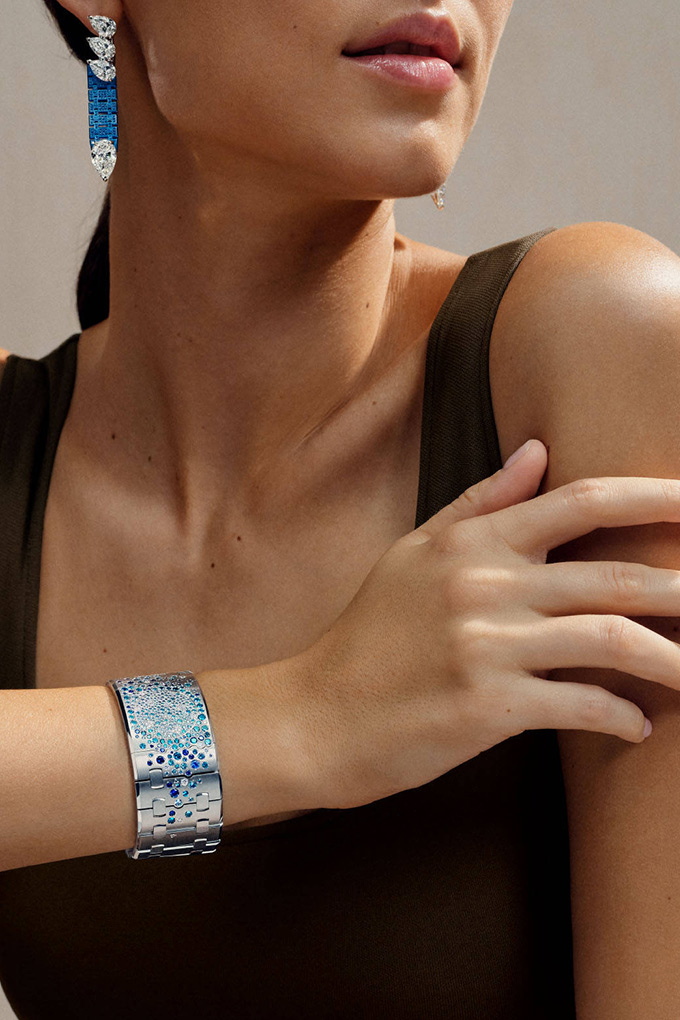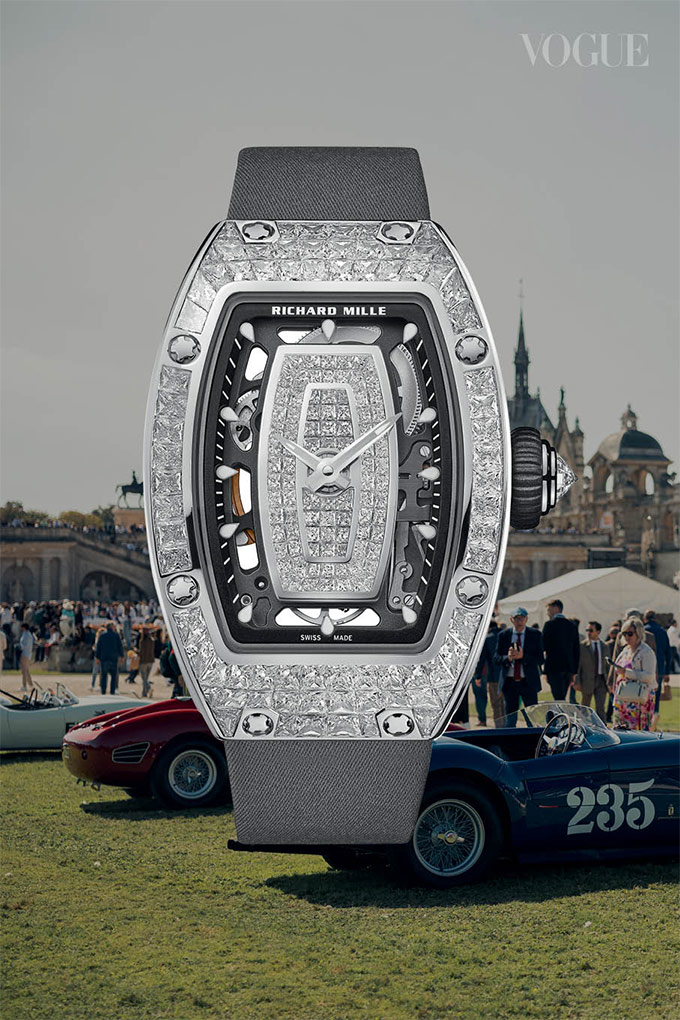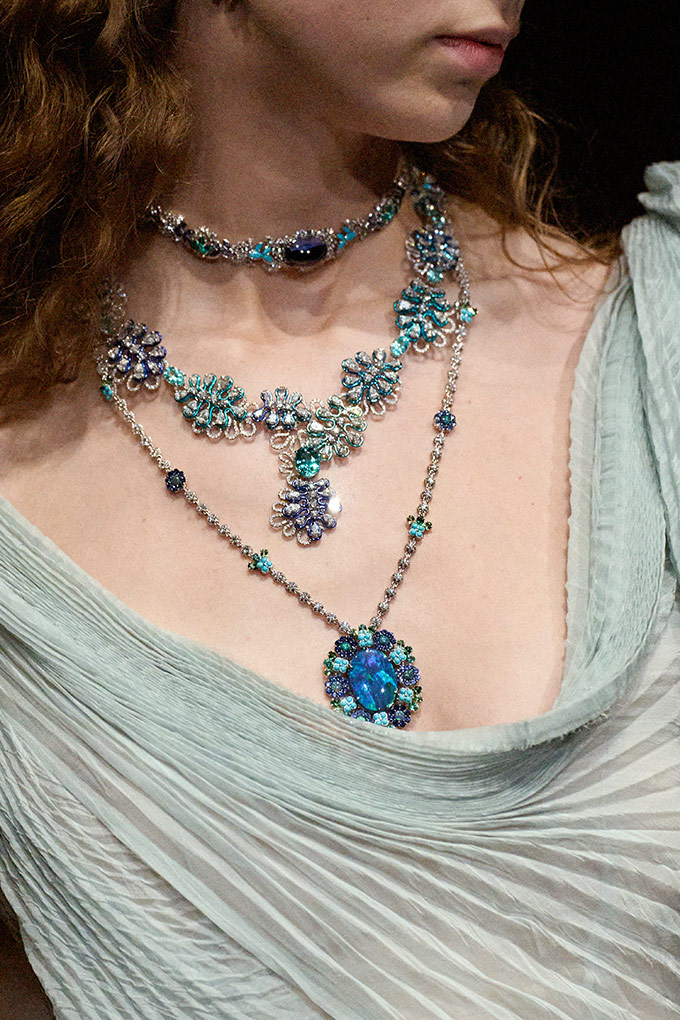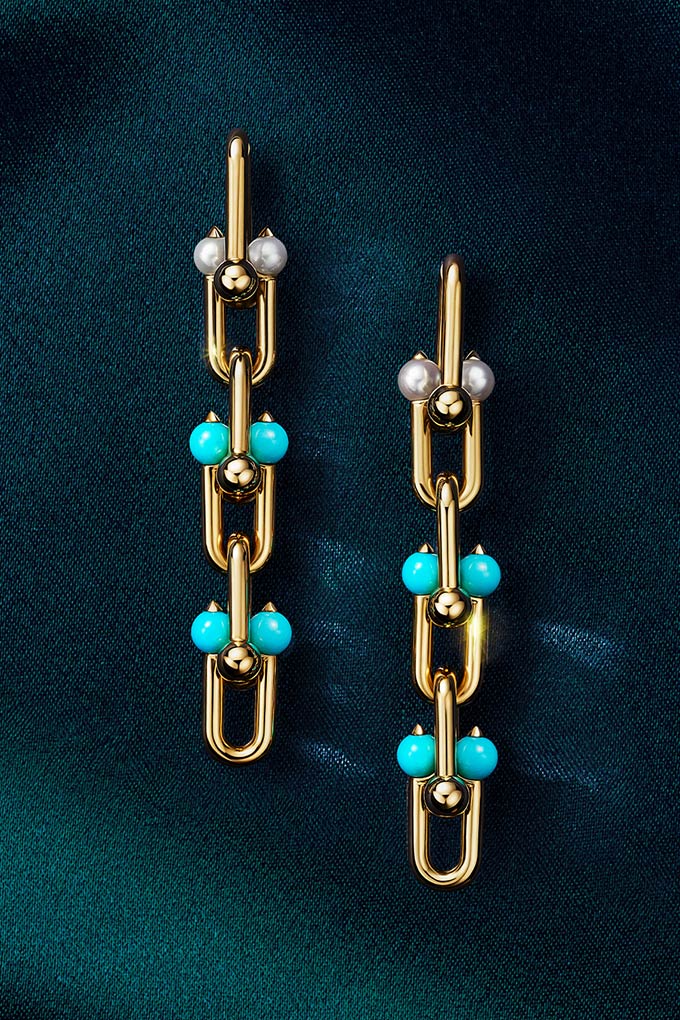
As the saying goes, diamonds are a girl’s best friend. But here’s the thing: no one really tells you how overwhelming it feels to buy your first one. I turned 21 a few months ago, and this particular birthday felt special as I stepped into the cusp of adulthood. To mark the milestone with a gift, I had my eyes set—like many a fashion-obsessed girl—on the iconic Dior Saddle bag. My mother was not convinced. She argued, as many Indian parents might, that handbags are a fleeting indulgence, not a worthwhile investment. Diamonds, she insisted, are forever—a reliable asset that can be passed down for generations.
What followed was a long battle of words, both of us justifying our decisions. I gave in ultimately because, honestly, arguing with my mom is basically a losing sport. Besides, who could say no to a sparkling diamond? So instead of walking into a designer fashion boutique, I plunged headfirst into the fascinating world of precious stones. After deep dives and endless scrolling on Pinterest in the pursuit of the ‘perfect diamond’, I was overwhelmed. The options seemed limitless, and the advice often contradictory. What are the four Cs? Where could I compromise on or balance those qualities? What shapes and styles did I like? Mined or lab-grown?

My first stop was to visit our family jeweller, Phayal Vakharia, founder of Heiraa Jewellers. She’s the expert my family has turned to for years for anything jewellery related. There is a level of comfort, after all, that comes with working with someone who understands not just your tastes but your family’s history and values around jewellery.
In our first consultation, Vakharia advised me to focus on my own priorities and something classic instead of chasing trends or perfection. “You don’t need the highest grades across every category to own a truly beautiful piece,” she shared. “It’s not necessarily about the size of the diamond; it’s more about finding something that’s an extension of your personality.”
It was a push in the right direction, and with that in mind I sought out experts in the jewellery world to share their own advice for first-time buyers.

1 / 9
Set the budget
Before you begin, it’s imperative to set a realistic budget. There’s no need to break the bank for the sake of a shiny rock. This piece of jewellery is meant to be special, but not unreasonable. “Your first diamond purchase should feel exciting, not financially stressful,” advises Jessline Tan, founder of jewellery consultancy Gemelle and a GIA-certified gem expert who works with family offices and collectors across Asia.
From my own experience, setting a clear figure helped narrow down the choices and ensured I didn’t get overwhelmed. In Singapore, you can expect a starting range from $800 to $1,200 for a minimalist design with a 0.30-carat stone. Though, in essence, there’s no such thing as a ‘right budget’. It’s very individual, and based on multiple factors like financial parameters, preferences, and the purpose behind the purchase. Don’t be afraid to set a budget and be clear about it when speaking with jewellers.

2 / 9
Identify your personal style and taste
Once your budget is set, it’s time to figure out your diamond style. Are you leaning more towards a flexible tennis bracelet or a pair of stud earrings? It sounds simple, but this is where many first-time buyers struggle. “Finding your diamond style is similar to curating your personal fashion style,” says Tan. Ask yourself whether you’re drawn to classic elegance and timeless designs that like single-stone pendants; or if you prefer more contemporary designs with unique settings, fancy cuts, and details like clusters or halos.
Before committing to a piece that you might wear daily, it’s important to factor in your lifestyle habits. “How you work with your hands, or if you lead an active lifestyle, should be a consideration when deciding on the setting,” Tan advises.
Nothing, however, beats trying jewellery on in person. I discovered quickly that designs I admired online didn’t always translate the same way once worn. Initially, I was drawn to a marquise-cut diamond ring. But trying it on in a store made me realise it did not complement my short fingers like I’d imagined.

3 / 9
Understanding the 4Cs
Every prospective diamond buyer must be well acquainted with the four Cs: colour, cut, clarity, and carat. Treat them as a universal language that details a diamond’s characteristics. Understanding them will empower you to make an informed purchase.
Carat is simply the weight and therefore size of the diamond, though bigger isn’t always better.
Colour is graded on a scale from D to Z, with D being the most ideal and colourless; and Z being the most tinged with colour, often yellow. This applies to the vast majority of diamonds out there, but when coloured strongly enough a diamond can tip into the rare and pricier realm of fancy-coloured diamonds.
Clarity measures the presence of internal or external imperfections, commonly referred to as inclusions and blemishes. The grading scale is based on acronyms and easy to remember. IF, or Internally Flawless, at the top; VVS1 and 2 for Very Very Slightly included; VS1 and 2 for Very Slightly included; SI for Slightly Included, and I1, 2 and 3 for Included. From Vs2 and up, most inclusions are hardly visible to the naked eye.
Cut is arguably the most important factor for shaping a diamond’s visual beauty. It measures how finely a diamond’s facets are cut to allow light to bounce and reflect, producing mesmerising sparkle and scintillation. A poorly cut diamond with fantastic colour, clarity and carat might appear dull even in bright light; while a masterfully cut one will sparkle even in dim light.

4 / 9
Getting the balance right
Now that you’re familiar with the 4Cs, it’s time to understand how to balance them instead of obsessing over a single factor. Achieving perfection across all 4Cs requires an astronomical budget, which most first-time buyers do not have, so it’s important to compromise and strike a balance.
To begin with, cut quality is non-negotiable. This determines the sparkle and shine of your diamond, which is the most noticeable. If there was one C worth stretching the budget for, it would be cut. “A brilliantly cut stone will always outperform a larger, poorly cut one,” says Tan of the difference.
Colour and clarity offer room for strategic flexibility. The differences between top colour grades, advises Tan, “are very subtle and most people can not distinguish between D to J with the naked eye”. Once set, differences in colour are rarely noticeable, and even clarity differences above VS2 are virtually invisible without a closer look. “You’re essentially paying thousands more for something no one will ever see,” says Tan.
As important as these grades and numbers are, it’s vital to see a diamond in person before making a decision. Two stones with identical grades on paper can look completely different in person, Tan warns.

5 / 9
Shape and cut
Diamonds come in a large variety of shapes. The most common is the round brilliant, a 58-facet round silhouette developed in 1919 and popularised for its bright sparkle. Generally, diamonds that are not round are called fancy shapes: ovals, rectangles, pears, and more.
There are two main ways that diamonds are cut and faceted. Brilliant cuts feature a variety of angled facets that reflect light to create a brilliant sparkle. Round, oval, pear and marquise shapes tend to be brilliant-cut. Step cuts are faceted with parallel lines to produce a gentler, radiant glow—think emerald, baguette and Asscher cuts.

6 / 9
Settings and styles
How a diamond is set can play a key role in the appearance of a jewel. The design and fineness of the prongs that grip and secure a diamond can raise and accentuate a gemstone, making it appear bigger. A bezel setting, in which metal wraps around a diamond to secure it, can have a similar effect.
There are also diamond jewels without a large centre stone, and which feature a range of common setting styles. Pavé refers to stones set closely together in lines; a halo refers to circles of smaller diamonds surrounding a centre stone; while a cluster tends to involve diamonds set at different angles to create visual texture.
The colour of precious metal can also influence the appearance of gemstones. “White gold or platinum settings make even a J colour diamond look beautifully white,” Tan shares. Yellow or rose gold, meanwhile, can complement and even mask the warmer tones of K to M colour diamonds, making them appear a little more colourless. This optical illusion of contrasts can work in your favour, says Tan, to save you potentially thousands while achieving the look you want.

7 / 9
Mined or lab-grown?
The allure of diamonds has mesmerised humanity for centuries. The earliest came from India, but it wasn’t until deposits were discovered around the world that the availability of diamonds grew. Now, the industry is going through a drastic change thanks to the growing popularity of lab-grown diamonds.
“Both are real diamonds,” says Siddhartha Arya, the executive director of Singaporean luxury lab-grown diamond brand Diamond2. “They share the same chemical composition, crystal structure, brilliance, and durability. The distinction lies in origin, not in beauty or integrity. One is born of geology and time, the other of science and precision.”
A natural diamond is formed deep within the Earth over billions of years, while a lab-grown diamond is created using technology that mimics those same conditions in a controlled environment. Though to the naked eye, and without specialised tools, it is basically impossible to tell the difference between the two. A lot of the prestige and pricing around natural diamonds stems from rarity. With lab-grown diamonds, these constraints are reduced and allow buyers access to larger carat sizes, finer clarities, and more precise cuts at a more affordable price point.

8 / 9
A question of price
For those who value design and style over investment or sentimental value, lab-grown diamonds can open an entirely new world of creativity. “Clients can explore bespoke creations without compromise,” Arya adds, “even pairing multiple stones in ways that would have been prohibitively expensive with mined diamonds.”
The price gap is significant. We asked independent and legacy jewellery brands in Singapore for their prices on diamonds of a similar spec to get a clearer picture: a one-carat round brilliant, VVS2 clarity, D colour, and Excellent cut. A lab-grown diamond with these qualities retails on average at around $2,000, while a mined diamond is closer to $10,000.
Prices, however, can vary even among lab-grown diamonds. Many local jewellers offer premium lines that cost more, and even the prestige of the certification can affect how much a stone costs. Using the same specifications, a lab diamond with an IGI certification averages around $1,300, while a certificate from the famous GIA commands prices around $2,000.

9 / 9
Cert, cert, cert!
When acquiring high-value jewellery, certification is essential. A reliable certificate verifies quality, protects resale and insurance value, and tells you exactly what you’ve paid for. Tan insists on certificates from laboratories of international repute. The most famous is the GIA, or Gemological Institute of America, which created the 4Cs to begin with. Beyond the basic grading information, a certificate can reveal details like proportion, symmetry, fluorescence, and a mapping of the inclusions—the details that give your diamond its individual character.
One detail that’s often overlooked is laser inscription. The certificate number identifying your diamond should be inscribed on the diamond’s girdle (the part that bridges the top and bottom of a gemstone), and verifiable through the gem laboratory’s website or database. Not all diamonds, however, are laser-inscribed—it is more common for higher-value stones.
If you are opting for a lab-grown diamond, its certificate should clearly disclose that it is lab-grown. The GIA recently introduced new rules for the evaluation of lab-grown diamonds. They are simply graded as Premium or Standard based on their overall clarity, colour and cut qualities. Any lab-grown diamonds that do not meet the minimum criteria for Standard will simply not receive an approved assessment. Practices may differ from one laboratory to another, but what matters most is reliable information that strengthens trust in your purchase.
Finally, after going back and forth with my jeweller, I settled on two pieces that feel elegant, versatile and easy to wear daily: a dainty pendant with a pear-shape and round brilliant diamond, and a pair of round brilliant stud earrings to match. Armed with expert knowledge and research, I chose natural stones with VVS2 clarity and E colour—virtually indistinguishable from the highest grade D colour to the naked eye. The process of discovery might have been long, but the result is worth all the trouble.