Fashion has spent much of the past few seasons grappling with the question of generational change. As younger consumers develop their own ideas of luxury, the industry’s most established houses face an interesting challenge: how to remain relevant without losing the identities they have spent decades building. Heritage, after all, is both a great strength and a potential limitation. The very signatures that make a brand instantly recognisable can also leave little room for surprise. Yet there is something to be said for the enduring appeal of a strong identity, particularly at a time when fashion is moving faster than ever and trends seem to come and go almost overnight. Perhaps the more interesting question is not how these houses can reinvent themselves, but how they can find new ways to express what they already do so well. It is a conversation that feels especially relevant when considering Dolce & Gabbana, a house whose unmistakable vision of Italian glamour has remained remarkably consistent over the years.


For spring/summer 2027, presented in Milan in September, that familiar visual language took on a noticeably different energy. There was a newfound ease to the collection, with Domenico Dolce and Stefano Gabbana offering a younger, more spontaneous interpretation of the codes that have long defined their house. Rather than looking to nostalgia or attempting some dramatic reinvention, the designers seemed content to have a little more fun with what they already knew. The result was a collection that felt fresh, colourful and wonderfully suited to summer.
Titled Stravaganza Siciliana, the collection found its starting point in the opulent homes of Sicily, where family history is often reflected in the things passed down from one generation to the next. For Dolce and Gabbana, this offered an opportunity to revisit the house’s longstanding fascination with Italian tradition through a more contemporary lens. There was something rather charming about the idea of taking pieces associated with an older generation and giving them an entirely different attitude. Instead of presenting heritage as something precious and untouchable, the designers suggested a wardrobe that could evolve with the women wearing it.


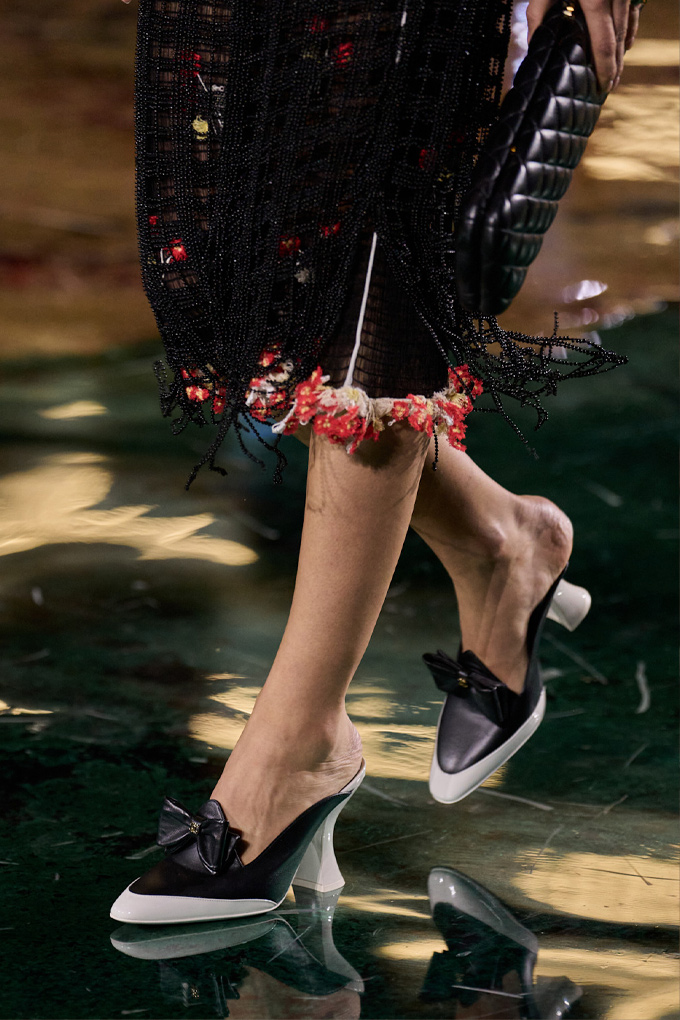
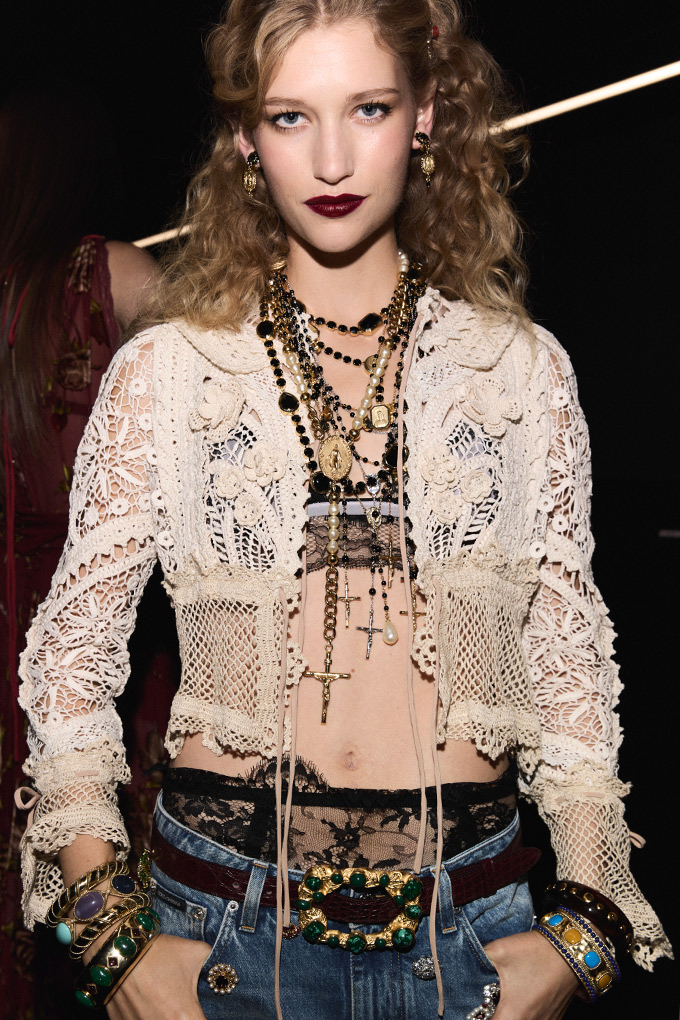
That spirit was especially apparent in the clothes. Denim and uncomplicated white T-shirts brought an immediate sense of casualness, while lace tops layered over bralettes introduced a softer, sexier mood. Jackets were covered in almost candy-like floral embellishments, and bangles climbed up the arms alongside an assortment of jewellery. The styling was deliberately exuberant, but there was also something wonderfully approachable about it. These were pieces that invited the wearer to experiment, mixing familiar wardrobe staples with the kind of decorative flourishes Dolce & Gabbana does so well.


Leopard remained central to the collection, although it appeared with a welcome sense of humour. Rather than relying on its reputation as one of the house’s defining signatures, the designers gave the print a more playful character. It was an important distinction. The collection was certainly glamorous, but it never felt weighed down by its own history. Instead, there was a lightness to the way everything was put together, making even the more extravagant looks feel surprisingly effortless.

What made the collection particularly appealing was its refusal to treat youthfulness as an exercise in reinvention. The confidence and sensuality that have always defined Dolce & Gabbana were still very much present, but translated into something less formal and far easier to imagine in everyday life. Old-world glamour had not disappeared; it had simply been given a sunnier, more relaxed attitude. It felt like Dolce for a new generation without ever needing to announce itself as such.