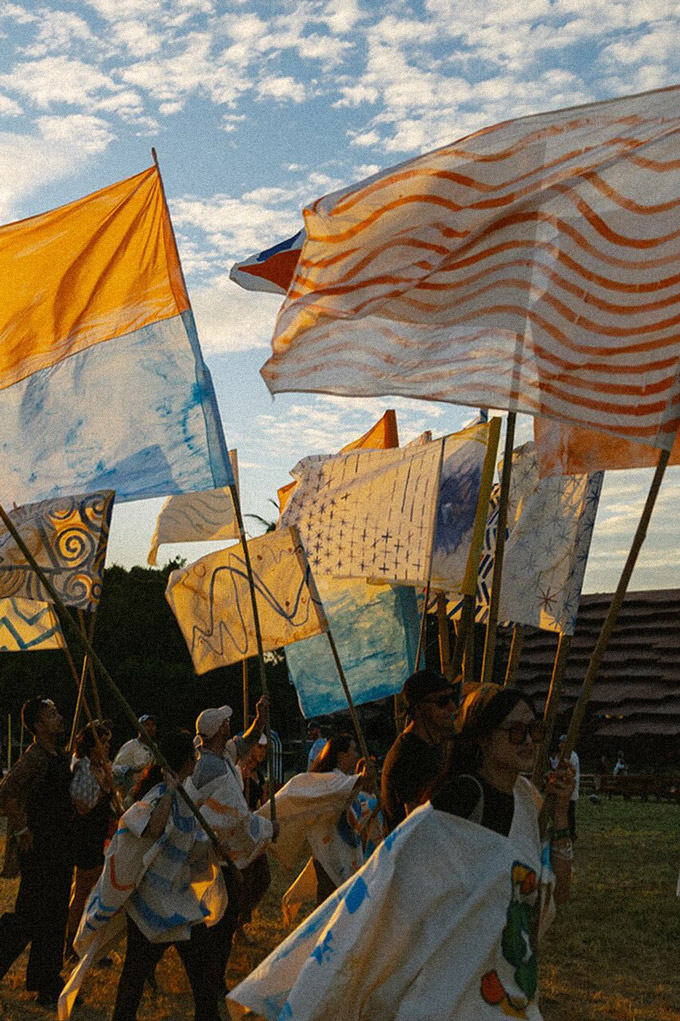
One moment you could be taste-testing some moreish snacks that speak to the Southeast Asian palette, the next you’re learning the movements of zapin, a traditional dance form in Malaysia. In a few, you might saunter over to the main stage, catch a feel or two, and groove out to a slew of artists bringing the soul and funk to these festival grounds. It’s a possible series of occurrences that any one individual could have experienced at the recent Ombak Festival 2025 in Desaru Coast.

“A festival like Ombak resonates because it’s not one-dimensional. It blends music with food, art, design, and family-friendly programming, making it a place where everyone finds something that speaks to them. For our second year especially, we are going bolder in vision, broader in scope and bursting with Southeast Asian soul,” shares Karina Ridzuan, festival director of the returning Ombak Festival. The above is a portrait of what could have played out at Ombak for any of its participants, but it’s also a familiar scene for anyone who’s been frequenting any of the emerging festivals in Southeast Asia lately.
From the stalwart Wonderfruit in Pattaya to Ombak and Singapore’s very own Sunda Festival, the scenography of such festivals has moved far beyond the typical rave. Where associations of hedonism and escape once permeated the fabric of most music festivals, now lives a different approach entirely. Instead, more holistic experiences are being curated to put the spotlight on culture and community, be it through programming that uplifts local art or creative forms, gives breath to the region’s unrivalled gastronomy, or carves out space and understanding for various approaches to wellness. “The move away from purely hedonistic spaces isn’t a passing trend, it’s a reflection of a deeper need for belonging. People are searching for more than just escape. They want to feel part of something, to connect, to be nourished. That’s why festivals are shifting towards community, culture and care,” weighs in Kelsang Dolma, the director of public relations and special art projects at Nuanu Creative City, the place where Suara Fest—yet another community-driven festival—happens year on year.

As our day to day lives grow more complex, it seems there’s a growing desire for places and experiences to simply be free—and just be. What these festivals are offering on top of just good music, is the chance to explore and get in touch with other forms of self-care and expression for themselves. This could mean movement meditation, vibrant encounters with local artisans, multi-sensorial soundscapes, breathwork classes, live painting, or tasting sessions that highlight the diversity of the forest. And when they say it’s for everyone—they really mean it, even if you’ve got two kids to take care of, because plenty of these festivals are also creating safe, kid-friendly spaces for the youngest guests in the crowd.


How Southeast Asia serves as the backdrop for most of these festivals has also been integral to this movement. Both Dolma and Ridzuan cite the natural, breathtaking landscapes of the region as a factor, but it’s really the generous, hospitality-forward culture of community—and how collective rituals or communal ways of gathering are a daily part of life in Southeast Asia—that gives the region such an unparalleled edge when it comes to curating such festivals. “Community, culture and heritage have always been deeply ingrained in how we come together,” reflects Ridzuan. These festivals should simply be seen as natural extensions of how people in Southeast Asia live.
“At the same time, there’s a young, open energy experimenting with how tradition and contemporary culture can meet here,” adds Dolma. There’s a strong propensity to change how the world views the traditions and cultures of our region—this is something embodied by many of our region’s creatives, be it our fashion designers, artists, chefs or musicians. Inflected by such energy, all that’s left is to collaborate with one another, and a festival like Ombak, Suara or Wonderfruit would be the logical next step.

Yet, there’s no shortage of fun in these festivals. If you want to dance, let your hair down and go a little wild, many of these festivals also welcome you with open arms to the dancing grounds, inviting you to bask in the sounds of the different artists that they bring in. What’s important is the balance—and the choice. As Dolma aptly puts: “The variety opens it up to people beyond the usual festival crowd; think families, artists, cultural workers, locals, travelers. It becomes less about fitting into a single subculture and more about being part of something that holds many layers at once.” It’s about being present, creating dialogue, and exploring new, curious ways of being. It creates belonging and community—without the pressure of doing something that doesn’t feel like you. It’s true kinship.