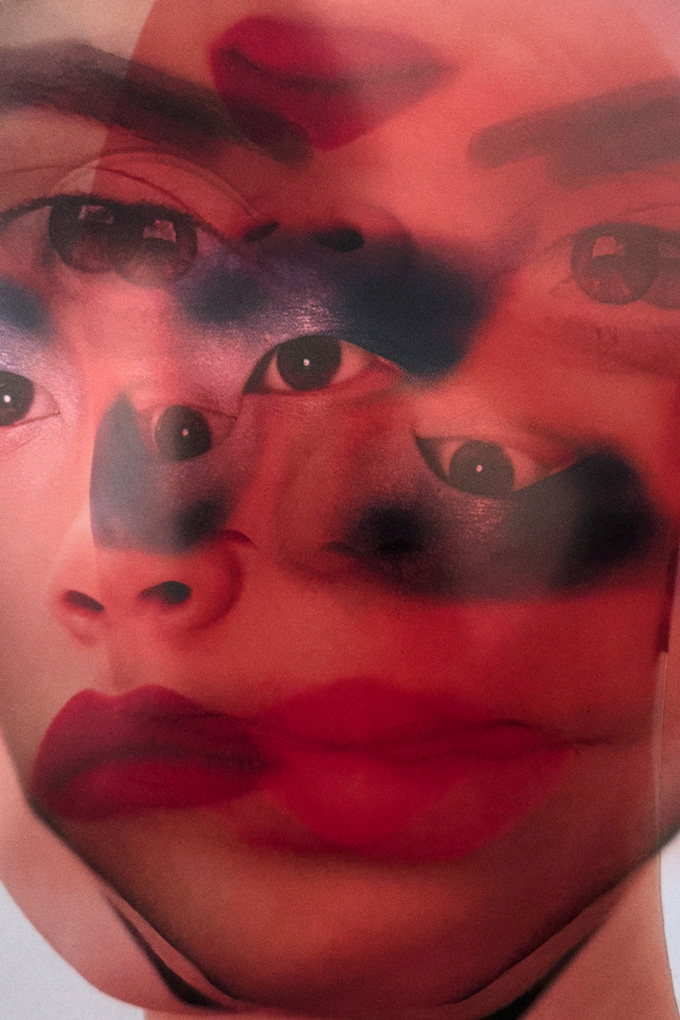
The first thing to catch my eye on my mother’s vanity was a clam-shell-shaped eye palette. It opened up to a tiny, rectangular mirror, and a 10-pan spread of coastal hues. Naturally, I picked up the sponge-tip applicator and dipped directly into the aquamarine blue before swiping it onto my lids. The results were shocking, but it also made me feel like the models in the magazines. Twenty years later, the impulse to own a blue palette has returned to haunt me again. Uncannily, it bears near-identical, shell-like ridges on its cover.
And nostalgia is hanging in the air for everybody. Dior lip gloss bracelets are getting pulled from the backs of drawers and into the hands of clamouring fans. We await every M.A.C Bringback with bated breath and continue to beg for the return of the iconic Frost line. But beyond the ’90s and 2016 throwbacks, something is happening amid economic uncertainty and the constant barrage of new launches and trends to try. And no, it isn’t the lipstick index.
For Jien Goh, senior consultant at WGSN, it’s not just about revisiting aesthetics. “It’s a response to the uncertainty, digital fatigue and rapid change that define the current era,” she explains. “As trend cycles accelerate and digital life becomes overwhelming, consumers—especially Gen Zs and young Alphas—are seeking meaning, community and emotional connection through familiar visual languages and rituals.” And it shows in the evidence: a growing appetite for retro packaging and references to niche subcultures, as noted by WGSN.
@thingsthatmakemehapppy So many of these 2000s beauty products bring back war flashbacks 😂 💖 doing my makeup in the bathroom during lunch because my parents wouldn’t let me wear it to school 💅🏻💋💄✨ #2000s #2000snostalgia #2000sbeauty #2000smakeup #2000smemories ♬ L.O.V.E. – Ashlee Simpson
More specifically, it seems we can’t get enough of the ’90s and early 2000s. Chronology aside, make-up artist and founder of The Suburbs Studio, Kat Zhang, thinks we refer to them because those eras were the first time beauty became culturally iconic on a mass scale. “The ’80s, ’90s and early 2000s were shaped by television, magazines and celebrities. Trends felt collective and monumental, and they left a strong imprint,” Zhang elaborates.
But what happens when the internet takes over?
The internet’s sense of time
One moment, it’s aegyosal. The next, it’s about recreating the make-up look of a Filipina woman in the early 2000s, or a bebot. “Trends move instantly and you no longer have to wait for magazines or a celebrity to define a season,” Zhang reflects. “A look can go viral overnight and disappear just as quickly.”
Having had over 20 years of experience as a make-up artist, Peter Khor finds the pace, at times, counterintuitive to his beauty ethos. “In my work, make-up should be about enhancing rather than changing the features, but now make-up has to scream at you and you have to be able to notice.”
In the age of filters and algorithms, keeping up appearances is key, right down to every microscopic detail. Make-up looks used to be documented on Polaroids, which meant it was harder to check how a look would be photographed. Adjustments, Khor shares, were made using one’s instinct. Now, with big screens and post-production technology, everything can be easily retouched and they probably will be. Even the make-up references you get from the internet could have been retouched, which means we no longer know what’s real or not as long as they look picture-perfect. “Today, beauty is concerned with refinement and optimisation. Many people want to look like the best versions of themselves,” says Zhang. “It’s more about enhancement than rebellion.”
View this post on Instagram
Nostalgia as resistance
But as AI-generated beauty standards start to feel more punishing, a rebellion does happen. “Consumers are rejecting unattainable ideals in favour of individuality, flaws and authenticity. This means celebrating the quirks and imperfections of past beauty eras, rather than chasing digital perfection,” Goh theorises. WGSN documented that 37 percent of Gen Zs in the US and UK buy make-up to recreate trending, often retro-inspired looks, but 54 percent want to improve their skills too—signalling a desire for deeper engagement with beauty beyond the surface of aesthetics and appearances.
The best way to do it? To return to the physical aspects of beauty through tangible acts of collecting make-up or leaning into the process of artistry. Departing from the minimalism of the past few years, Zhang calls for a return to colour and texture. “There was a time when artists experimented with bold palettes and unexpected combinations just for the joy of it,” she comments. “I think there’s space to bring back experimentation. Not necessarily for daily wear, but to challenge creativity and artistry.”
The world’s your oyster
As we continue to look to the past for inspiration, there is a way that nostalgia can exist in the present. The internet may overwhelm, but it also offers us more choices than ever before, making trends more accessible, remixable and personalised, as Goh highlights. Zhang points out that techniques, tools and trends are available to everyone in real time. When we need to pause, the past offers a place of respite for us to go back to what we know so intimately.
Yet, in Zhang’s words, beauty never repeats itself, it evolves. “When we bring back a ’90s lip or an early 2000s gloss, we re-interpret it with new textures and new technology. Fashion and beauty are cyclical and looking back isn’t a lack of creativity but part of how culture moves forward.”
“Fashion and beauty are cyclical and looking back isn’t a lack of creativity but part of how culture moves forward.”
Point of origin
As the world continues to change, we’ll keep looking for anchors. For Khor, it’s the way the features were elegantly defined in the ’20s and ’40s; for Zhang, it’s the graphic yet delicate Twiggy-inspired lower lashes of the ’60s. For some of us, it’s the impossibly chic look of our mothers in their youth. Whatever your safety net is, remembering our roots is what makes beauty personal. It all goes back to the singular moment of looking at ourselves in the mirror—first the one on our mother’s vanity, then our own. And as long as something makes you feel more like yourself, it deserves its spot in your beauty ritual.
@art.tendency She was (and still is) so beautiful. #nostalgic #nostalgiacore #y2k #pinterest #2007 ♬ Children – Dream Version – Robert Miles
This story appears in Vogue Singapore’s April ‘Retrofuture’ issue, available online.