A buzzword in beauty right now, and rightly so, microcurrent technology is everywhere. Like lots of treatments, it aims to deliver plumper, firmer skin and more lifted contours, but unlike many, it’s painless, its effects are immediate and there’s virtually zero downtime.
Often billed as the “non-invasive facelift” a microcurrent facial can be had as a professional treatment or incorporated into your existing at-home skincare routine using a plethora of at-home microcurrent devices. To help you understand more about this game-changing technology, we spoke to the experts. Below, everything you need to know about microcurrent, plus where to go to get it and the best at-home devices to try.
What is a microcurrent facial?
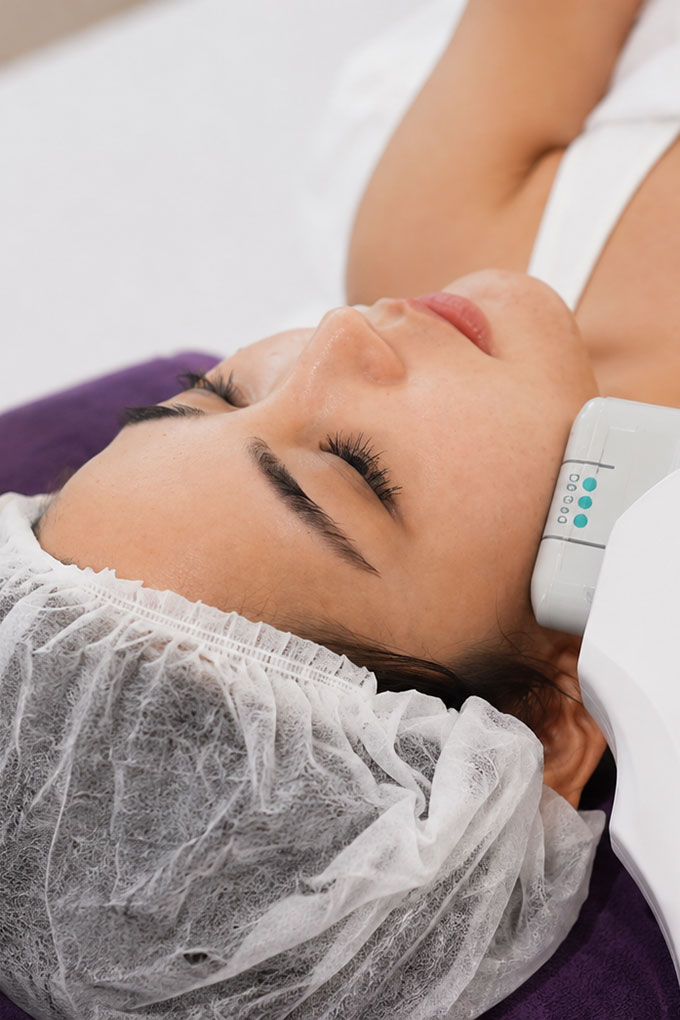
A microcurrent facial is a treatment that uses low-grade electrical currents to boost blood flow, stimulate skin tissue and muscles in your face with the aim of toning, tightening, and lifting. Although it might sound intense, it’s a non-invasive treatment with no pain or downtime associated. Add to that its ability to stimulate collagen and elastin for plumper firmer skin, its efficacy in improving skin tone and texture and lifting the contours of the face and you can see why it’s such a popular treatment for many.
What does a microcurrent facial involve?
Before your practitioner starts using a microcurrent device, your skin will be coated in a layer of conductive gel or a water-based serum. The formula needs to be water-based and oil-free as the electric current can pass easily through water but is blocked by oils. Without a gel, the microcurrent cannot easily penetrate the skin and may cause irritation or discomfort. “The electrical current flows between two conductors, typically slender rods in salon devices or rounded spheres in at-home tools.” explains skin expert Keren Bartov.
“When both conductors make contact with the skin, the current passes through to the underlying facial muscles, helping to both stimulate and retrain them. Rather than acting directly on the skin, the microcurrent works to target the muscles beneath. This re-education of the muscles involves working with 32 facial muscles to improve tone and lift. However, the microcurrent alone isn’t strong enough to move the muscles. That’s why the treatment uses probes to physically guide the muscles into new positions. This manual movement, combined with the electrical stimulation, helps reinforce proper muscle positioning and enhances product absorption.”
Does microcurrent hurt?
Although there is no downtime, some people may experience minimal side effects such as slight redness or tingling but this should subside quickly. “Sometimes you might feel a little muscle twitch, but it’s painless,” adds Bartov.
Why is microcurrent beneficial for skin?
“Microcurrent facials use gentle electrical pulses to stimulate facial muscles, resulting in a lifted, more sculpted appearance, kind of like a workout for your face,” says Bartov. “The effects are both instant and build over time. As well as lifting, microcurrent also boosts circulation, enhances product absorption, and stimulates collagen and elastin, supporting overall skin health and muscle function.”
How often can you have a microcurrent facial?
For best results, microcurrent should be done regularly. As it works to “train” the muscles as to where they should be (i.e. more lifted) repetition is important. “Consistency is key to achieving visible results,” add Bartov. “For in-clinic treatments, frequency can vary depending on factors like age, skin condition, and individual goals. We’ll tailor a treatment plan to suit your needs, but the treatment must be done once a week for four to six times, depending on skin condition. If you’re using an at-home device, aim for three to four sessions per week for best results.” While plenty of local skin clinics now offer microcurrent facials, some that the British Vogue team rate highly are Skin Matters in London’s Holland Park and Skin Work in Soho. Sarah Chapman’s Skinesis Clinic in Chelsea meanwhile offers EMS treatments which use electrical currents in a similar way to contract facial muscles.
When will you start to see results?
“You’ll notice an immediate lift and more defined, tighter features right after your first session,” says Bartov. “With consistent treatments over the following months, as collagen production increases and muscle tone improve, you’ll begin to see longer-lasting, more transformative results.”
What’s the difference between professional microcurrent treatments and at-home devices?
The crucial difference between the devices used in professional microcurrent treatments is the intensity of the electrical current that’s used. While at-home devices are excellent for gentler, more regular use, and for maintaining your professional treatments, if you want immediate lifting and toning, it’s best to book in.
Is there anyone that shouldn’t have microcurrent?
Anyone with metal implants or who has a history of epilepsy or seizures should avoid microcurrent facials. It’s also not a good idea if you have heart issues as the increased blood flow may cause problems. Anyone in their first trimester of pregnancy should also avoid it, as should anyone with active acne pustules. If you have Botox or filler, it’s best to hold off on any microcurrent treatment until they’ve had time to settle, usually a couple of weeks. Doing it any sooner may cause product migration and affect the results.
What products should I use after a microcurrent facial?
After your microcurrent facial has worked hard to stimulate collagen and elastin, try and incorporate a product that can carry on the good work. Dermalogica’s Pro Collagen Banking System is all about preserving and boosting your own natural collagen reserves and so is a great choice, while Rowan Hall-Farrise, international brand ambassador QMS Medicosmetics recommends the Ion Equalizing System, a clever duo that boosts cell communication to improve collagen production. “The Eugenia Gracilis Complex in this product stimulates the skin’s own collagen and elastin fibers by improving communication between skin cells. It also features Matrikine complex which activates the synthesis of the components of the extracellular matrix. Using ingredients such as these after a micro current facial will stimulate your elastin production to give tighter, firmer skin,” she says. If you’re experiencing any slight discomfort or redness, a layer of a soothing, hydrating serum or masque can help.
How should you incorporate microcurrent into your skincare routine?
Microcurrent is a great way to support an existing skincare routine, especially if your goal if firmer, more lifted contours. “For professional treatments, a session every four to six weeks works well for ongoing maintenance,” says Bartov. “At home, aim to use your device three to four times a week, allowing rest days in between. Incorporate it into your routine after cleansing and before applying serums or moisturisers as microcurrent helps enhance product absorption.”
This story was originally published on British Vogue.